Child Development in Months 32–35
Around 2½ to 3 years, your child's thinking noticeably changes. They begin to understand connections better, grasp simple rules, and start to empathize with others. At the same time, they want to make more decisions themselves and actively participate in family life.
You might notice your child frequently asking: “Why?”, wanting to take on tasks, or playing with other children for longer periods. Even if conflicts arise, they are developing important social skills that prepare them for the coming years.
Current Developments
Between 32 and 35 months, language, thinking, and social understanding grow closely together.
Many children begin to:
- understand simple cause-and-effect relationships,
- ask many "why" questions,
- compare and organize objects and situations,
- better comprehend rules,
- become more aware of other children,
- develop their own solutions for small problems,
- want to take responsibility for small tasks.
Each child develops at their own pace.
What You Can Observe Now
In daily life, many new skills become apparent.
You might notice your child:
- playing with concentration for longer periods,
- continuing stories in role play,
- wanting to help set the table or tidy up,
- wanting to make decisions more often,
- asking why things happen,
- beginning to play with other children,
- seeking comfort after disputes or offering comfort themselves.
Even with conflicts, your child is learning important social skills.
Language and Thinking Continue to Develop
Many children can now:
- form longer sentences,
- recount experiences,
- explain simple connections,
- ask questions and demand answers,
- have small conversations.
Through shared conversations, language comprehension develops particularly quickly now.
Social Learning Becomes More Important
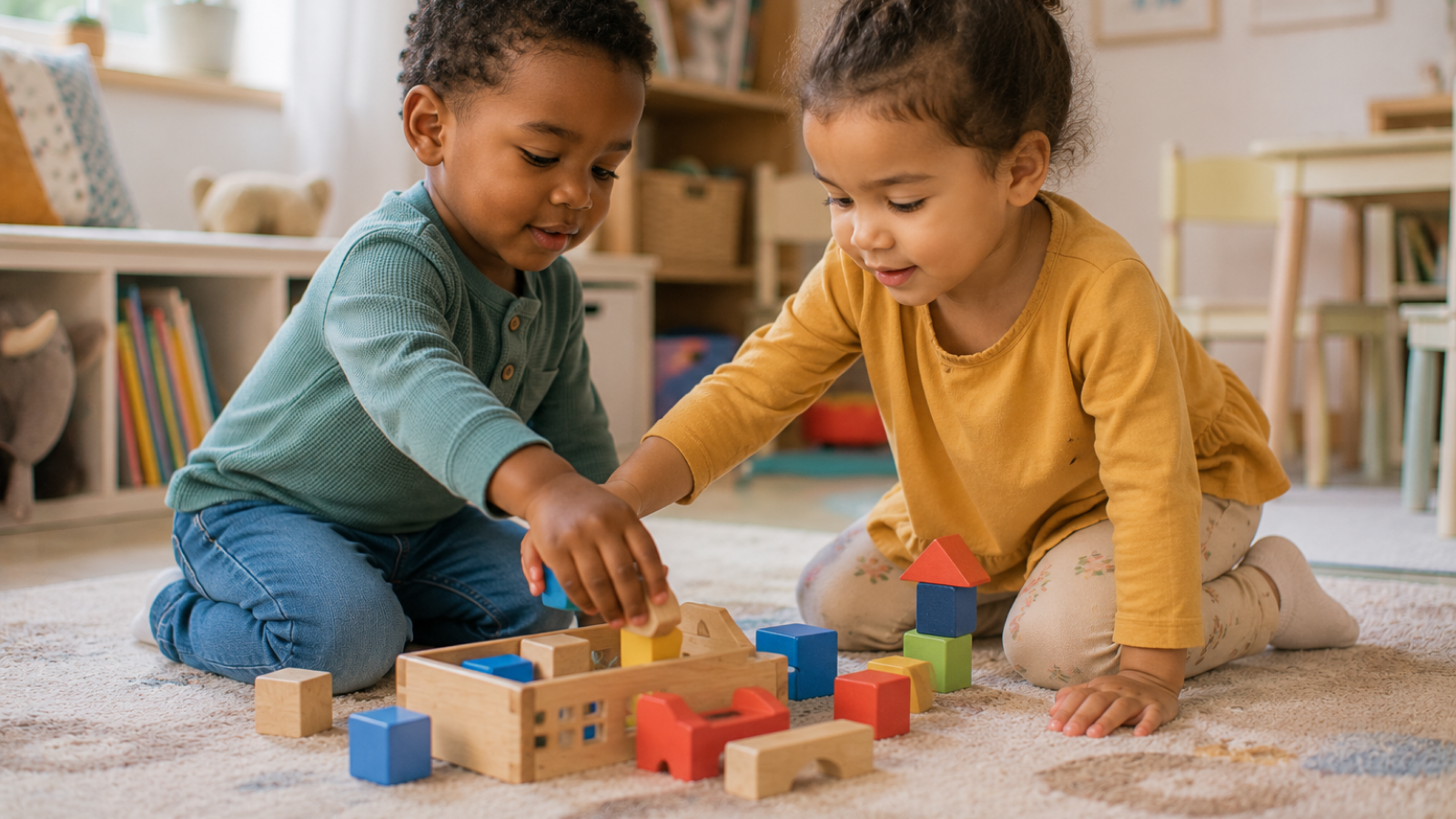
As they approach three years old, interacting with other children becomes increasingly exciting.
Many children begin to:
- play together rather than just alongside each other,
- understand simple rules,
- take turns while playing,
- show consideration,
- display empathy.
At the same time, they often still find it difficult to:
- wait,
- share,
- handle disappointments,
- or resolve conflicts on their own.
This is part of normal development.
Motor Skills Become More Confident
Many children now move with great joy.
They can often:
- walk and run confidently,
- jump,
- balance,
- climb,
- draw simple shapes,
- open cans or screw caps,
- put on and take off simple clothing items themselves.
The more confident your child's movements become, the more they want to participate independently in daily life.
How You Can Support Your Child
During this phase, your child learns a lot through shared experiences.
Helpful activities include:
- Allowing them to take on small tasks in daily life,
- Discussing cause and effect together,
- Patiently answering many "why" questions,
- Engaging in role play,
- Naming emotions,
- Calmly guiding through conflicts instead of solving them immediately,
- Maintaining consistent routines.
Children learn cooperation mainly by experiencing it daily.
What You Should Know
Around the age of three, your child develops a better understanding of relationships, rules, and other people. At the same time, the desire to make decisions and take responsibility grows. Conflicts are still part of the process—they are an important aspect of social learning. Loving guidance, clear boundaries, and many shared conversations help your child become more independent and cooperative step by step.
Milestones
Between 32 and 35 months, many children can:
- Understand simple cause-and-effect relationships (32–40 months)
- Resolve minor conflicts with support (30–40 months)
- Take on small tasks in daily life (30–36 months)
- Draw recognizable figures or simple shapes (32–42 months)
- Switch roles in shared play (32–38 months)
- Put on and take off simple clothing items by themselves (32–38 months)