Baby Development in Weeks 10–13
Around three months old, your baby often seems much more alert and active. They are getting better at holding their head up, tracking things with their eyes, and starting to discover their hands intentionally. Many parents feel that their baby is becoming more interactive—though sleep and daily routines might temporarily become a bit more unsettled.
The most important reassurance first: Every baby develops at their own pace. Some babies can already support themselves on their forearms, while others prefer to watch their hands or respond attentively to voices. What matters is not the exact timing, but that development continues step by step.
What You Might Notice Now
You might observe that your baby:
- can lift their head for longer periods when on their tummy
- supports themselves on their forearms
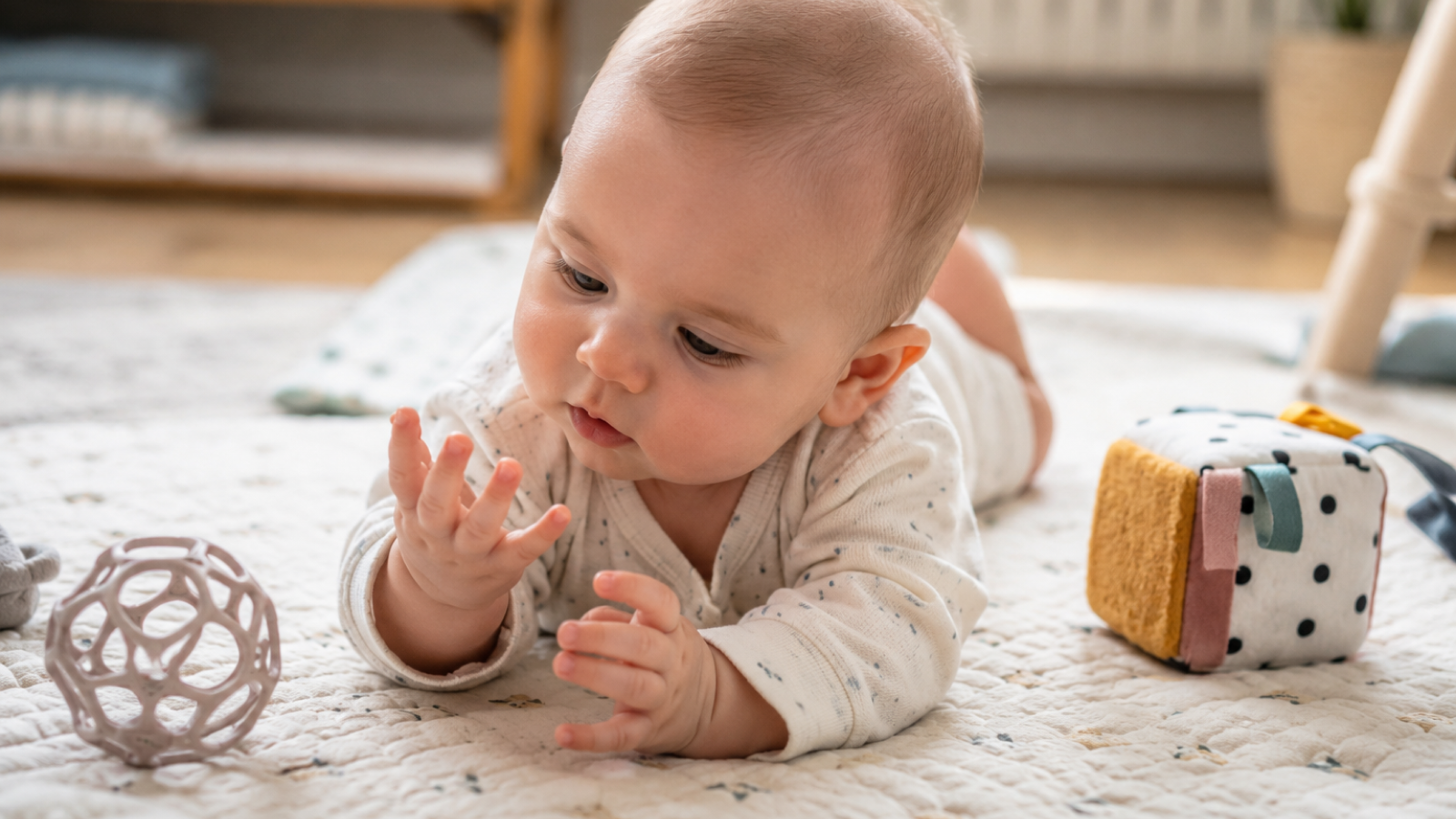
- looks at their hands with interest or brings them to their mouth
- smoothly follows movements and faces with their eyes
- smiles more often or "responds" with early sounds
- has longer awake periods and seems more curious about their surroundings
Many babies discover their own bodies during this time. Hands suddenly become fascinating and are used not just for grasping but also for exploring.
What’s Developing Now
Your baby's movements are becoming more coordinated. Arms, legs, and head work together better, and intentional movements gradually replace the reflexive patterns of the first weeks.
Perception is also advancing. Your baby recognizes familiar faces, responds sensitively to your voice, and starts noticing recurring routines in daily life. This makes many things feel more familiar—though new experiences can also become overwhelming more quickly.
What Your Baby Needs Now
During this phase, your baby benefits especially from time to explore.
Helpful activities include:
- regular tummy time during awake periods
- lots of eye contact and talking together
- smooth transitions between sleeping, playing, and feeding
- plenty of freedom to move on a safe surface
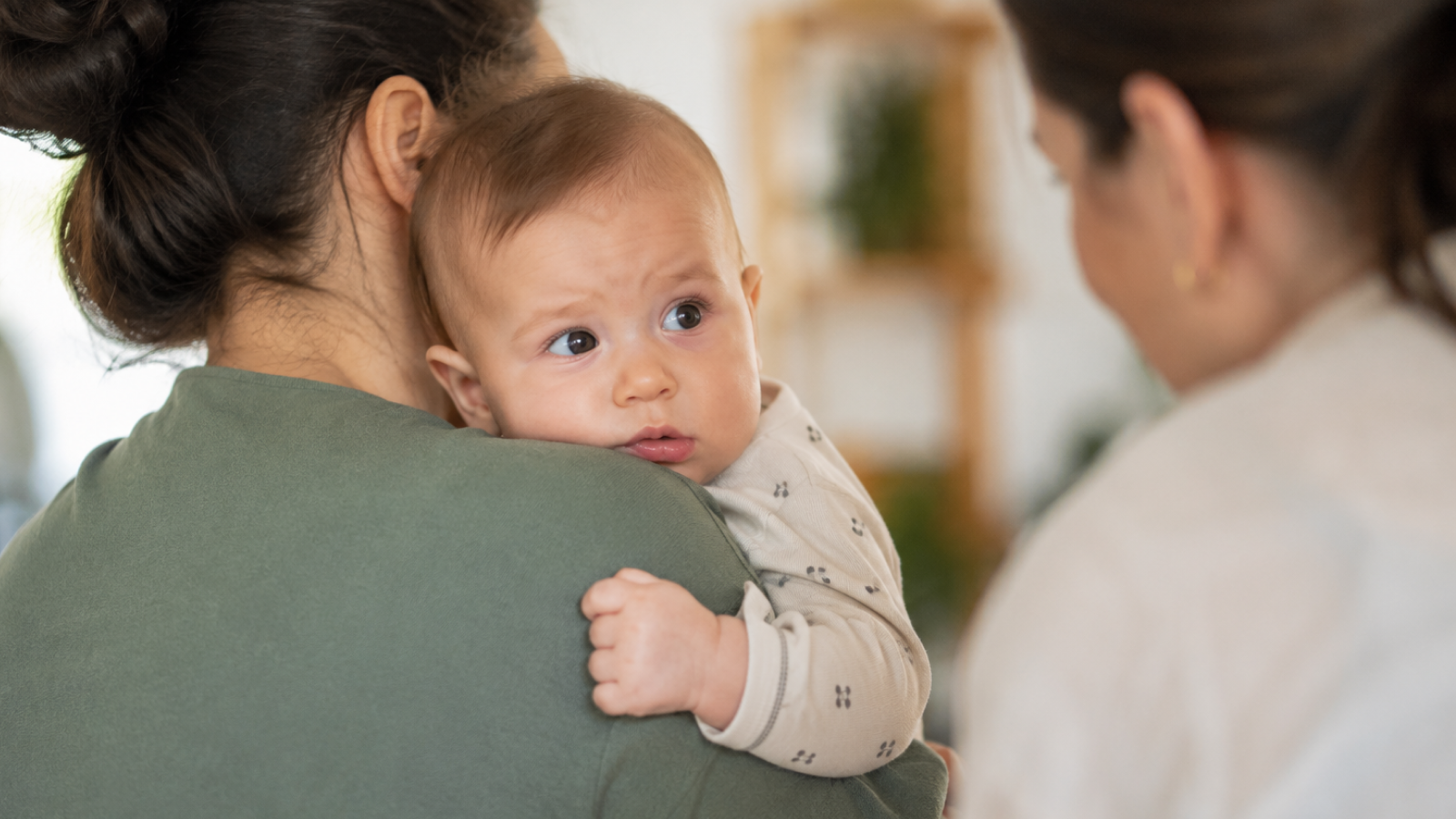
- closeness and physical contact when your baby seems tired or overstimulated
You don't need to do special exercises. Free movement and shared time often best support development.
Motor Skills, Language, and Senses
Between the second and third month, many skills develop simultaneously.
You might often notice that your baby:
holds their head more steadily
supports themselves on their forearms when on their tummy
smoothly follows movements with their eyes
brings their hands to the center of their body
prepares for the first intentional grasping movements
experiments with a growing variety of sounds
responds to your smile or voice with sounds or facial expressions
This development is an important foundation for later skills like grasping, turning, and sitting.
Nutrition and Sleep
Breast milk or infant formula remains the only source of nutrition.
Many babies now feed a bit more regularly, while others still want to nurse or bottle-feed more frequently, even for comfort. Both can be normal.
Some parents also notice increased drooling or that their baby chews on their hands more often. This is often part of normal development and doesn't necessarily mean a tooth is coming or that solid foods are needed.
How You Can Support Your Baby
Give your baby plenty of time to move freely and explore their surroundings.
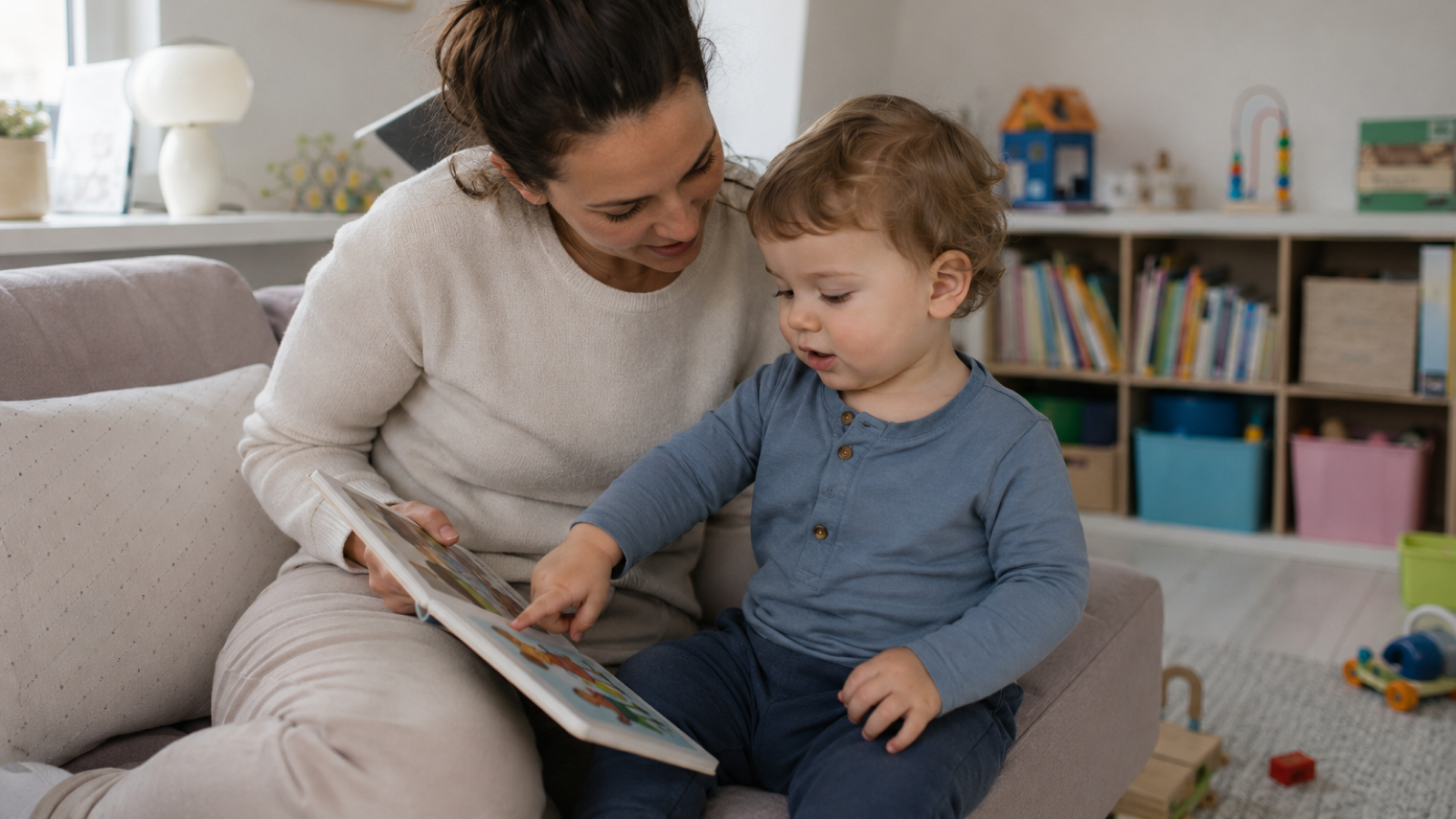
Talk to them about your daily life, sing together, or watch objects and movements together. Even simple play situations promote perception, language, and bonding.
If your baby becomes tired or restless, calm transitions, carrying, and a low-stimulation environment often help.
Milestones
- Increasingly supports themselves on their forearms when on their stomach (2nd–4th month)
- Holds their head more steadily (2nd–4th month)
- Brings hands purposefully to the center of their body or mouth (2nd–4th month)
- Smoothly follows people or objects with their eyes (2nd–4th month)
- Responds to being spoken to with smiles, sounds, or facial expressions (2nd–4th month)
- Tries out more and more different sounds (2nd–4th month)
In Summary
Around three months, your baby is gaining more control over their body. They hold their head more steadily, discover their hands, attentively follow movements, and begin to communicate more actively with their surroundings. At the same time, longer wakeful periods and many new impressions can temporarily make daily life a bit more restless.