Child Development in Months 24 – 27
Between the second and third birthday, your child continues to develop rapidly. Single words turn into small conversations, simple imitation evolves into imaginative role play, and the baby of yesterday becomes a little child with a growing personality.
You might notice that your child suddenly talks non-stop, asks many questions, or wants to make all the decisions. At the same time, emotions become more intense: joy, pride, frustration, or disappointment can change within minutes. This mix is part of normal development.
Current Developments
During this phase, many children make progress in several areas simultaneously.
You might observe that your child:
- speaks in longer sentences
- learns new words daily
- asks many questions
- understands connections better
- starts developing role play
- shows more interest in other children
- expresses their own wishes and feelings more clearly
Each child develops at their own pace. Some children speak a lot already, while others still communicate mainly with single words and gestures.
What You Can Observe Now
Many parents notice similar changes at this age.
Your child:
- uses the word “I” more often
- shares small experiences
- asks questions like “What is that?”, “Why?” or “Where is Daddy?”
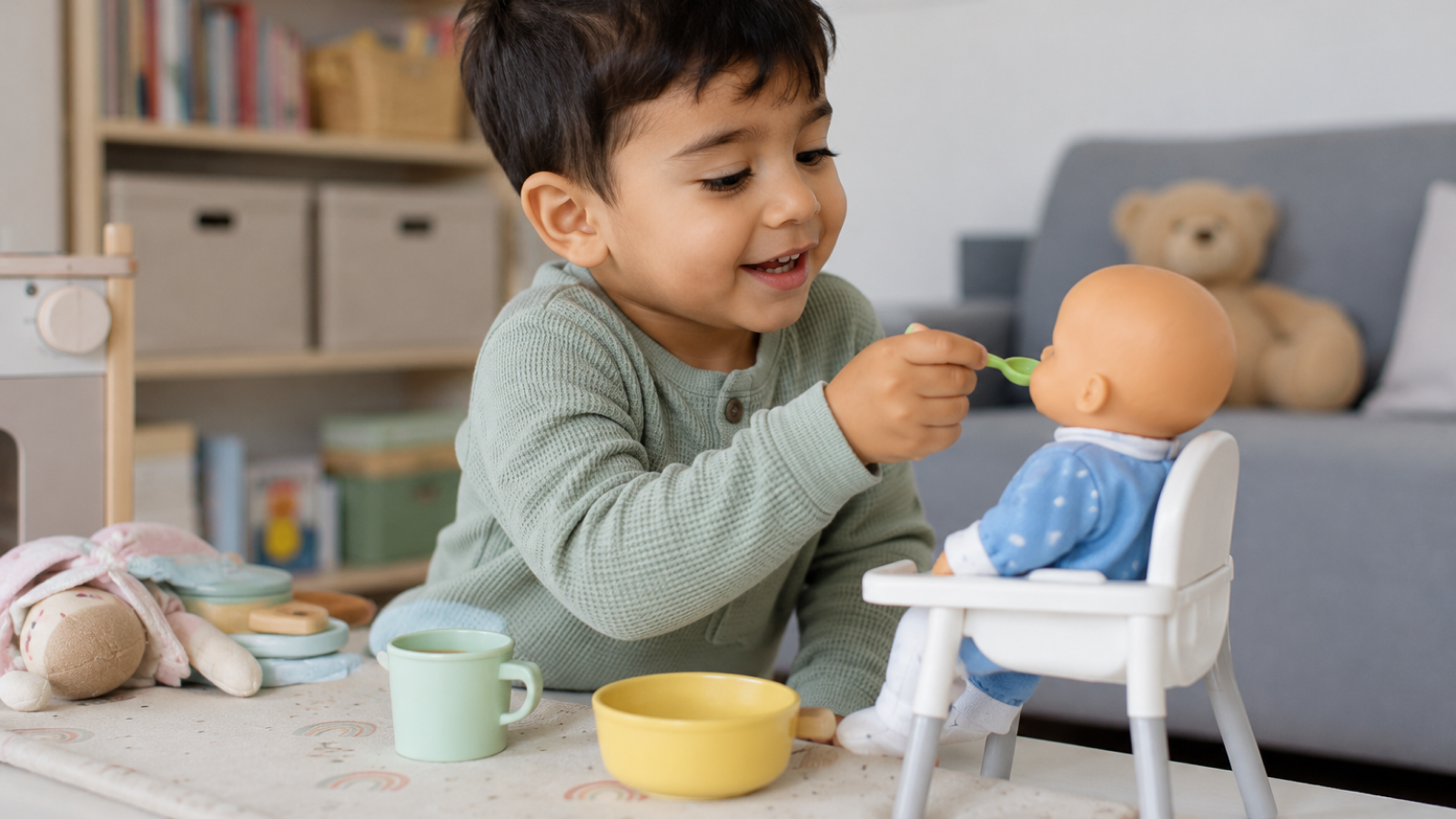
- reenacts everyday situations with dolls, stuffed animals, or vehicles
- wants to include other children or observes them closely
- enjoys praise and proudly shows new skills
- sometimes reacts very emotionally when things don’t go as expected
This interplay of growing independence and strong emotions characterizes this developmental phase.
Rapid Language Development
Between two and three years, many children make a big leap in language development.
Many children:
- form two- and three-word sentences
- expand their vocabulary almost daily
- name people, objects, and activities
- understand increasingly complex instructions
- use language more to express wishes, questions, and feelings
Everyday conversations, reading together, and regular routines naturally support this development.
Imagination and Social Interaction
Play also changes significantly.
Many children:
- cook in their play kitchen,
- take care of dolls or stuffed animals,
- talk on toy phones,
- reenact small everyday situations,
- start playing first games with other children.
In doing so, they gradually learn to empathize with others and find solutions together.
Motor Skills and Fine Motor Skills
Your child is becoming more physically confident.
Many children can now:
- walk and run steadily,
- overcome small obstacles,
- climb the first stairs with support,
- balance on low walls or curbs,
- scribble with crayons and draw first lines or circles,
- solve simple stacking or sorting games.
With each new movement, their confidence in their abilities grows.
How You Can Support Your Child
In everyday life, your child now mainly needs time to try things out.
Helpful actions include:
- talking a lot together
- answering questions patiently
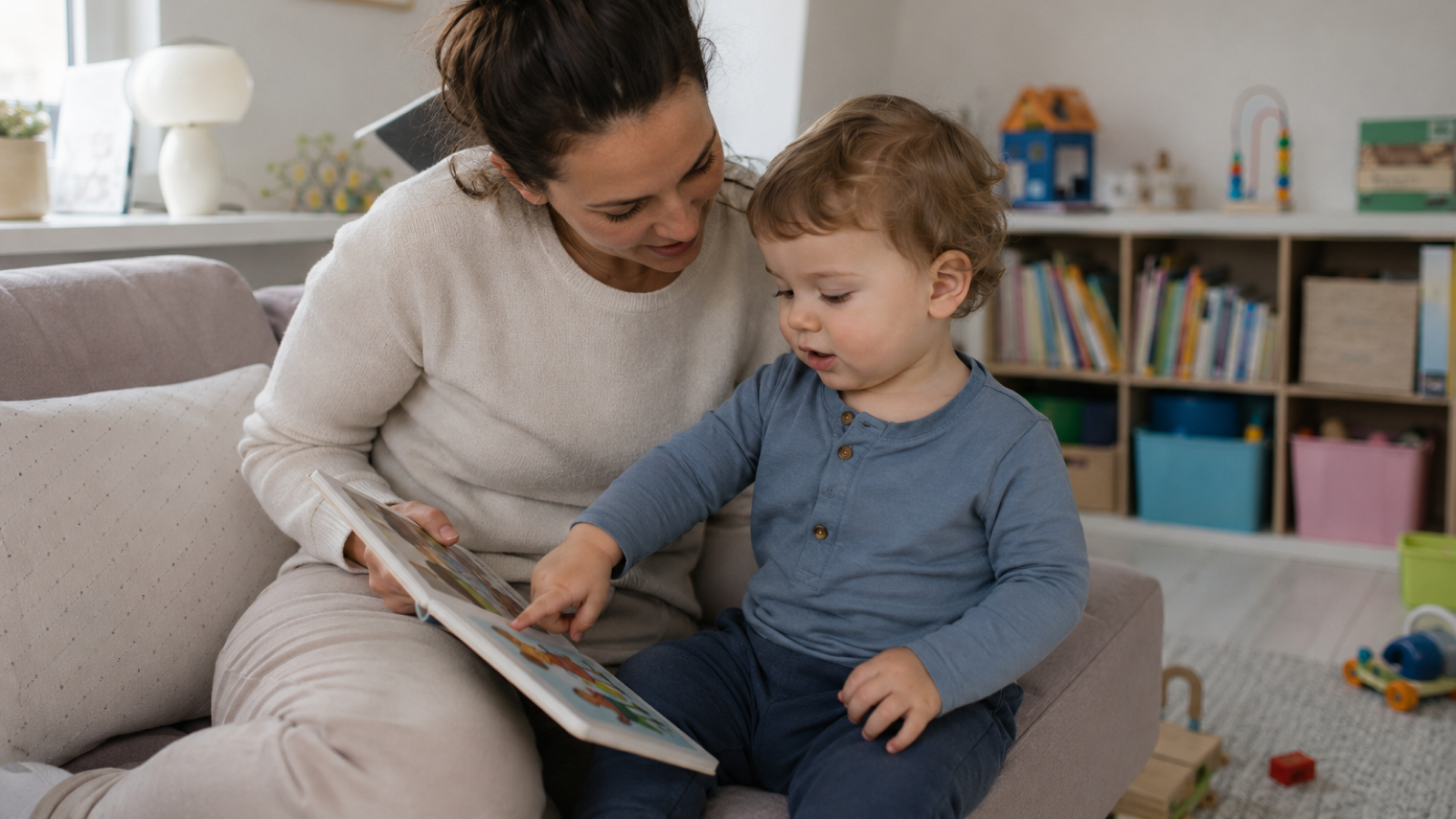
- looking at picture books together
- participating in role-playing games
- naming and taking feelings seriously
- allowing them to take on small household tasks
- providing enough time for free play and movement
You don't need to specifically promote your child. Shared everyday experiences already offer countless learning opportunities.
Common Concerns for Parents
Many parents wonder during this phase:
- Is my child speaking enough?
- Are frequent tantrums still normal?
- Why does my child suddenly want to do everything alone?
- Does my child need to play with other children already?
The answer is often: Yes, these developmental steps are part of toddlerhood. Language, independence, and social skills develop at different rates and influence each other.
What You Should Know
Between 24 and 27 months, your child becomes a more active conversation and play partner. Language, imagination, and social skills often grow simultaneously. Even though tantrums or discussions can be exhausting, they are usually signs of healthy development towards more independence and a better understanding of themselves and others.
Milestones
Between 24 and 27 months, many children can:
- form two- to three-word sentences (24–30 months)
- develop a vocabulary of over 100 words (24–30 months)
- ask first questions like “What is that?” or “Why?” (25–32 months)
- show empathy and respond to the feelings of others (24–30 months)
- actively make contact with other children (24–32 months)
- draw first lines or circles with a crayon (24–30 months)