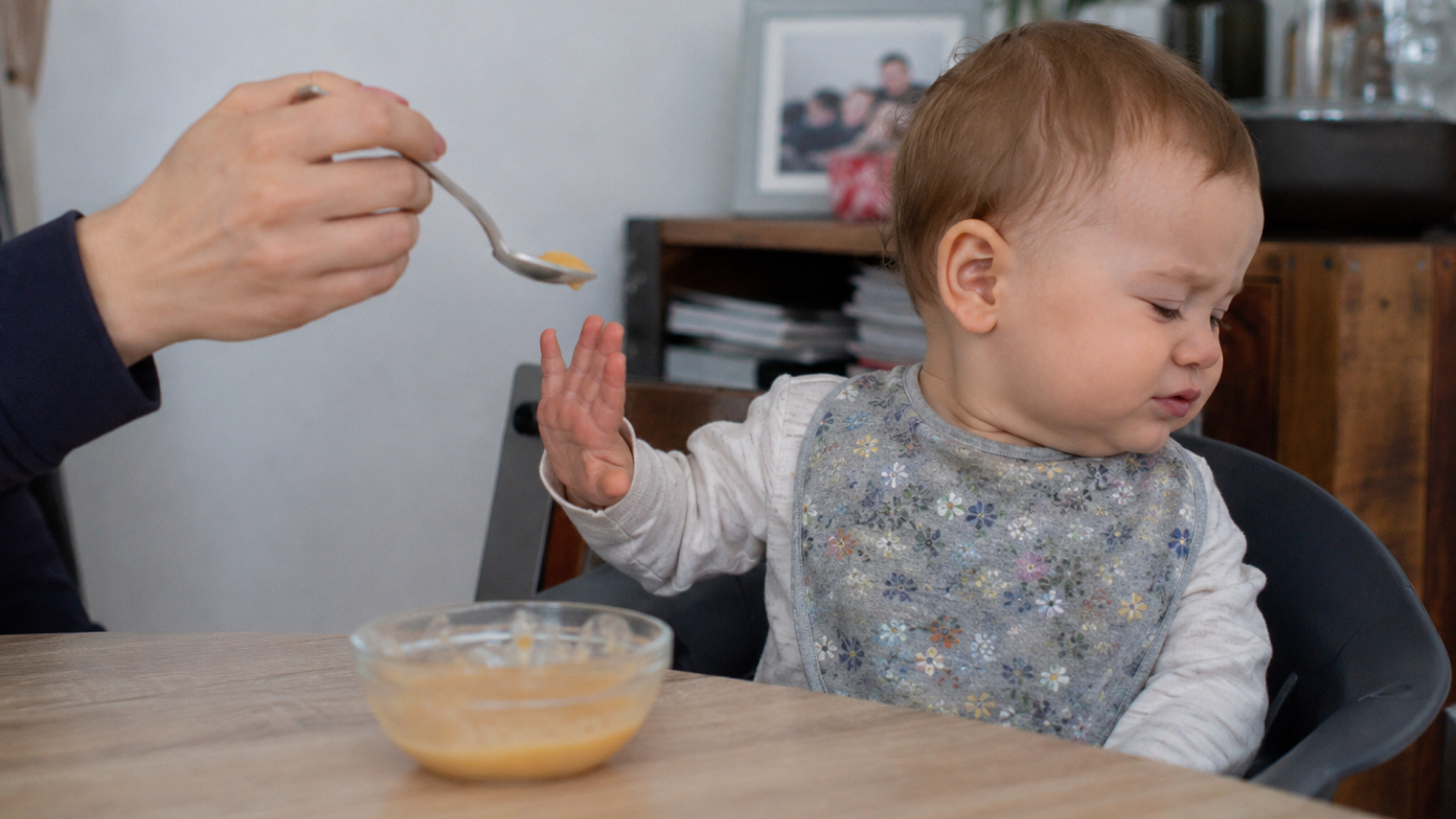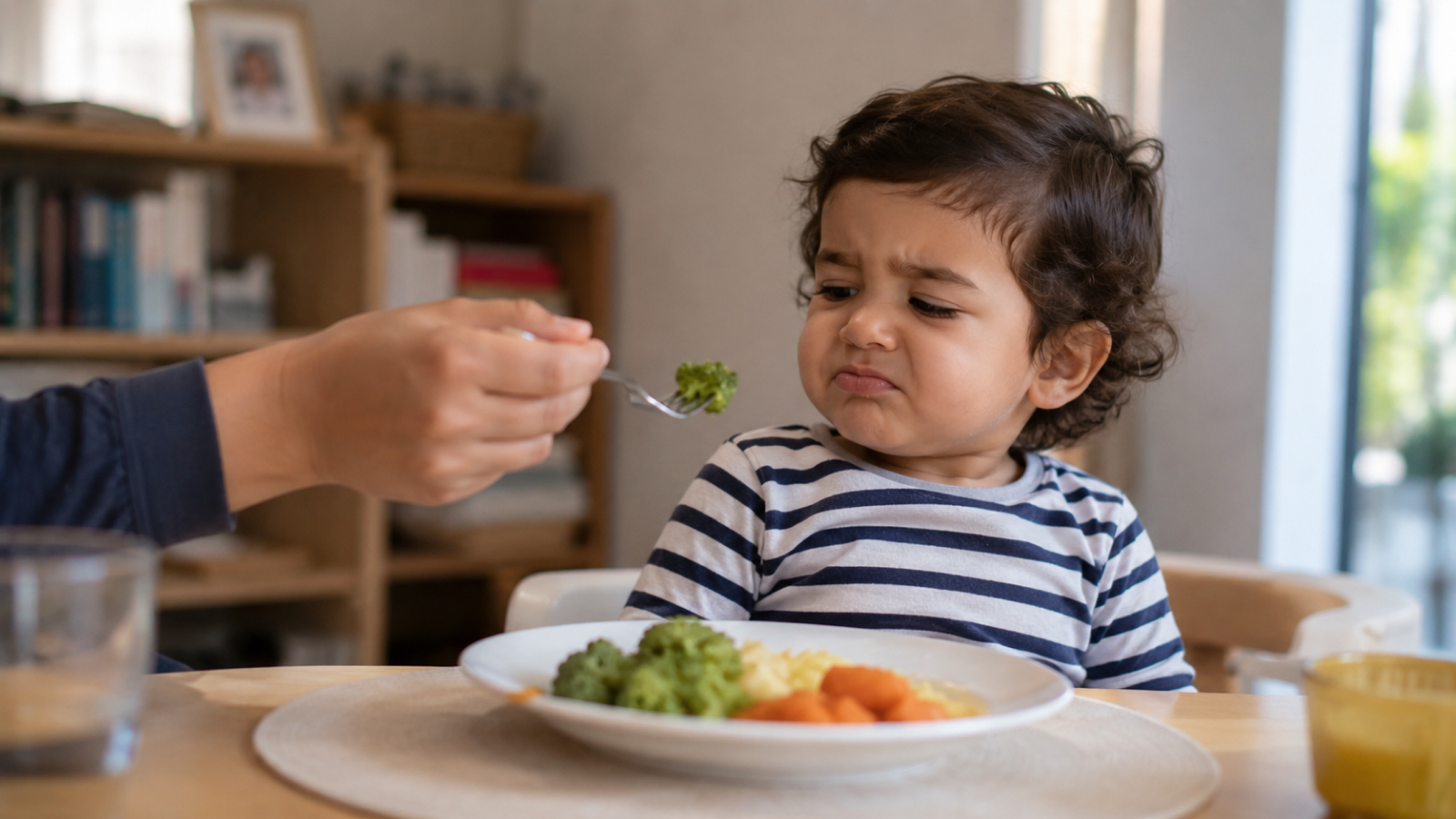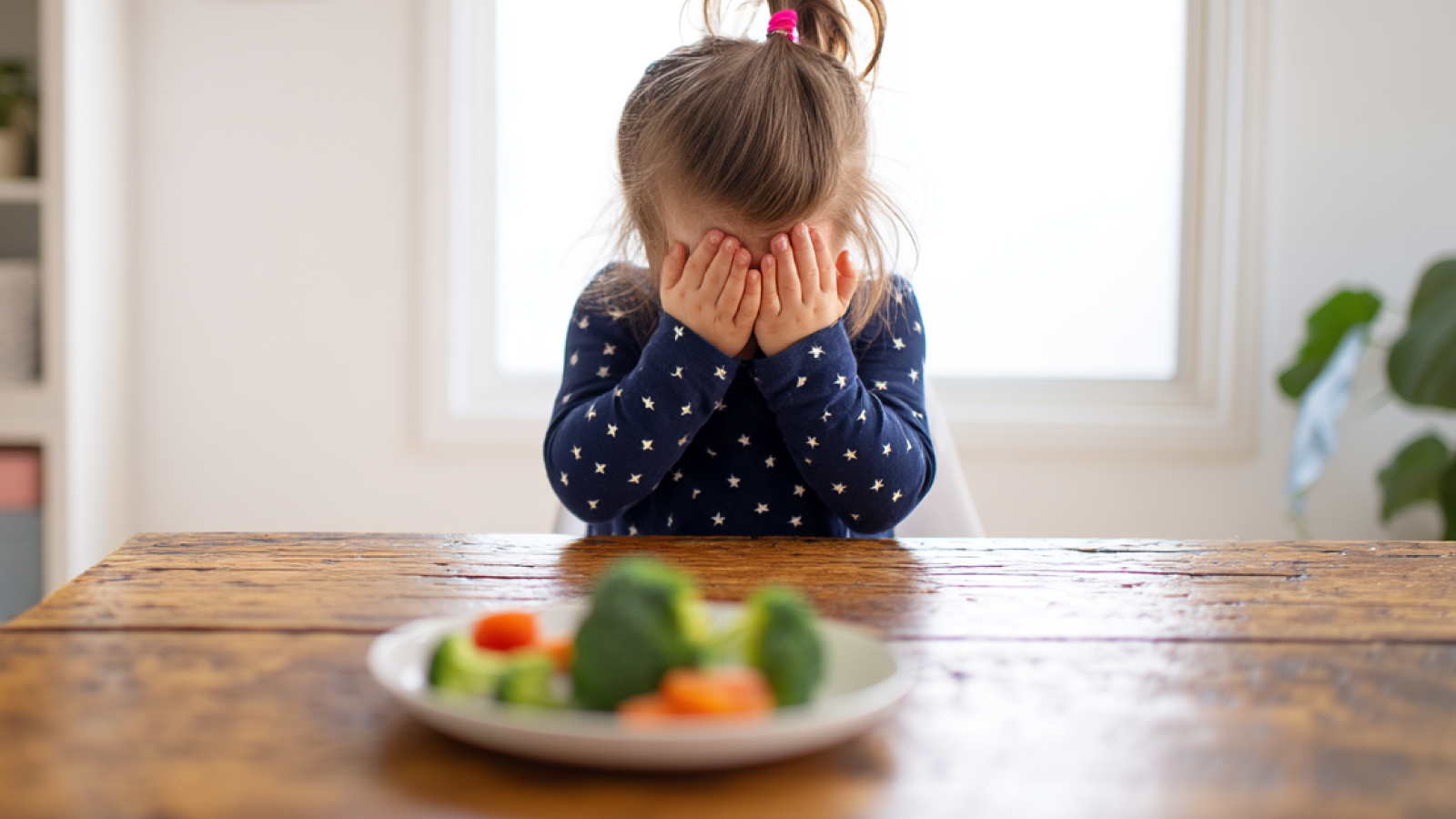
Yesterday, your child ate two plates of pasta – today, they barely touch anything. Instead of vegetables, there’s protest, their favorite food is suddenly refused, and after three bites, they say: “Done!”
This can be unsettling for many parents. Is my child eating enough? Are they missing nutrients? Or is there something else going on?
First, the most important reassurance: Between the first and fourth birthday, many children's eating habits change significantly. During the so-called autonomy phase, they discover their own will – and this often shows at the dinner table. Less appetite, changing preferences, and rejecting familiar foods are often part of normal development.
Why do toddlers suddenly eat less?
Many parents unconsciously compare with the first year of life. Back then, the child seemed to be constantly hungry and grew rapidly.
Around the first birthday, this changes. Growth slows down, and often so does the energy requirement. At the same time, eating becomes more than just nourishment for children: they want to decide for themselves, try things out, and test boundaries.
Therefore, it’s completely normal for a child to:
- eat surprisingly little on some days
- love something today and reject it tomorrow
- accept only a few favorite dishes
- prefer to eat by themselves
- quickly lose interest during a meal
Appetite often fluctuates much more from day to day than it does for adults.
Not every meal needs to be balanced
Many parents worry about what’s on the plate. However, pediatricians emphasize looking at the entire week.
A day with little vegetables or a meal with mostly pasta is usually not a problem. What matters is whether your child eats a varied diet over several days or weeks and develops normally.
A healthy toddler often balances their needs surprisingly well on their own.
What is often normal during the autonomy phase
Around the dining table, many behaviors can appear that initially seem unusual:
- your child eats almost nothing today and twice as much tomorrow
- they suddenly only want a few favorite dishes
- foods must not touch each other
- familiar foods are rejected without an obvious reason
- they want to do everything themselves
- interest disappears after a few bites
- they try new things only after many attempts
This doesn’t automatically mean your child is eating poorly. Many children need 10 to 15 exposures to a new food before they accept it.
Why pressure has the opposite effect
When children eat little, a power struggle can quickly develop.
“Just three more bites.” “For mommy.” “Then there’s no dessert.”
As understandable as these statements are, they often lead to more pressure being associated with eating.
A more helpful approach is a simple division of roles:
- You decide what and when food is offered.
- Your child decides whether and how much to eat.
This approach reduces pressure and helps children recognize their own hunger and fullness cues.
When Appetite Loss Might Indicate More
Not every child eats less due to their autonomy phase. Sometimes there are other reasons.
Children often have temporarily reduced appetites when:
- They have infections or fever
- They are teething
- They are constipated
- They experience significant excitement or changes in their daily routine
Usually, eating habits return to normal once the cause has passed.
When to Consult a Doctor
Talk to your pediatrician if your child:
- Eats very little over an extended period
- Loses significant weight or stops growing
- Refuses to drink
- Frequently experiences pain while eating
- Regularly chokes or gags
- Only accepts a limited range of foods, leading to suspected deficiencies
- Appears generally lethargic or noticeably different
The key is not a single bad week, but the overall trend and development.
What Often Helps at Home
Eating Together
Children learn primarily by observing. Shared meals without distractions often encourage better eating habits than persuasion.
Offer Small Portions
A full plate can be overwhelming for many toddlers. Small portions can be more motivating and can always be refilled.
Keep Offering New Foods
Don't push, but don't give up either. Many children accept new foods only after multiple exposures.
Avoid Using Sweets as Rewards
If vegetables are the duty and chocolate the reward, the desire for sweets usually increases.
Focus on the Big Picture
A single day doesn't say much. It's better to observe how your child eats over several days or a week.
Observations That Help the Pediatrician
If you're concerned about eating habits, these details can be helpful:
- How long has your child been eating less?
- Is it eating less overall or refusing specific foods?
- Is it drinking enough?
- Has there been a change in weight or growth?
- Was there an infection, teething, or changes in daily routine?
- Does your child seem otherwise fit and active?