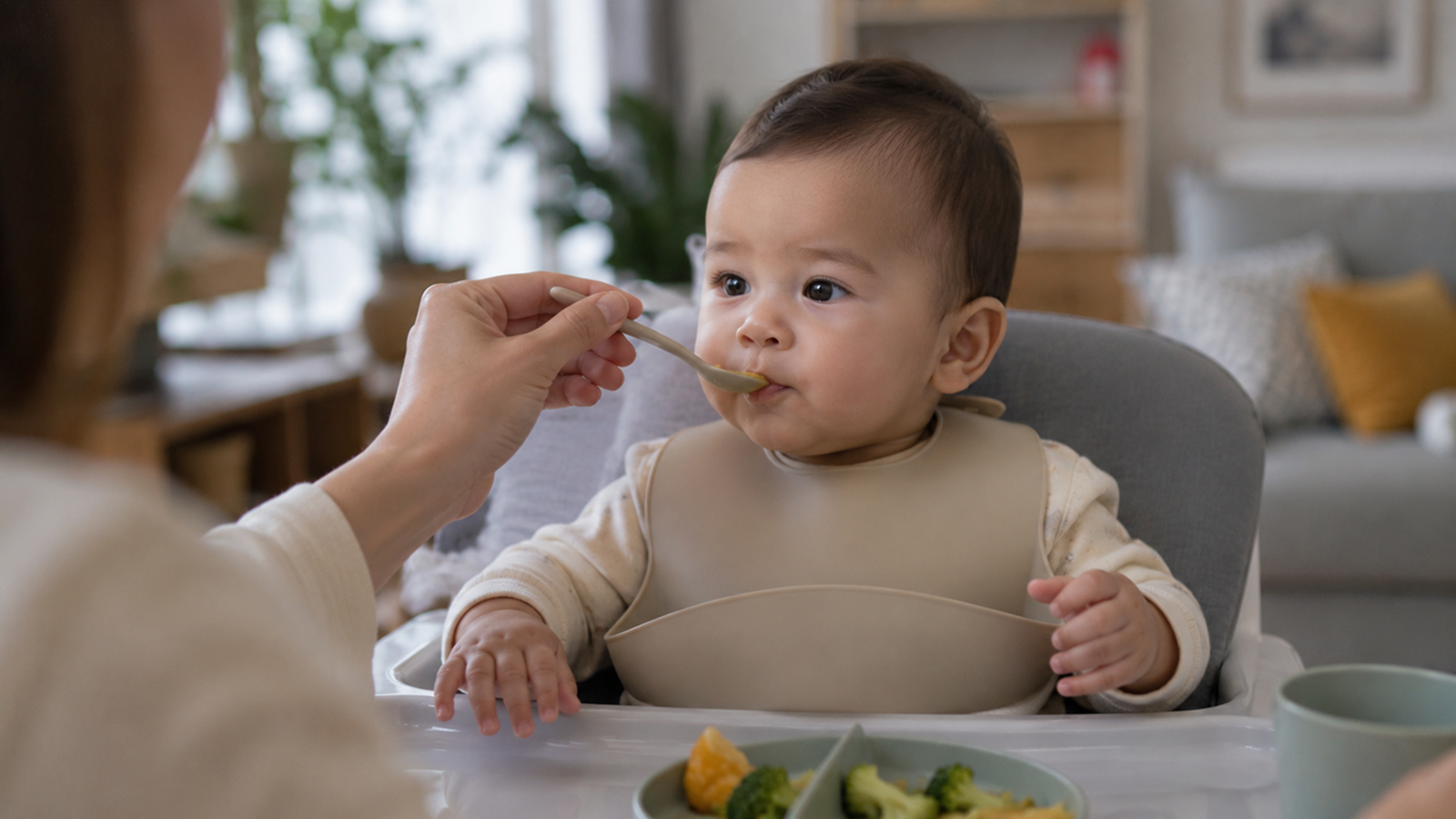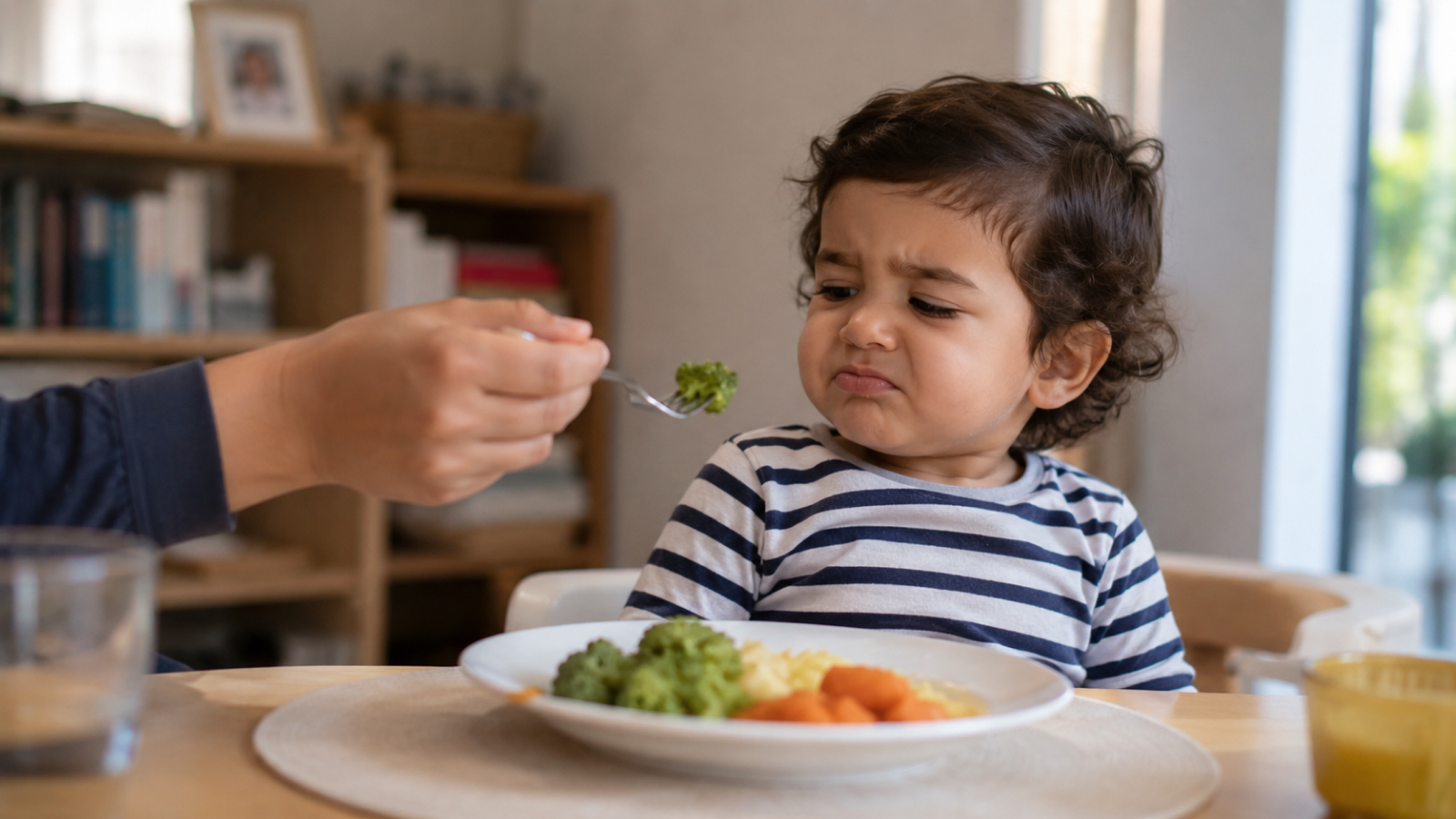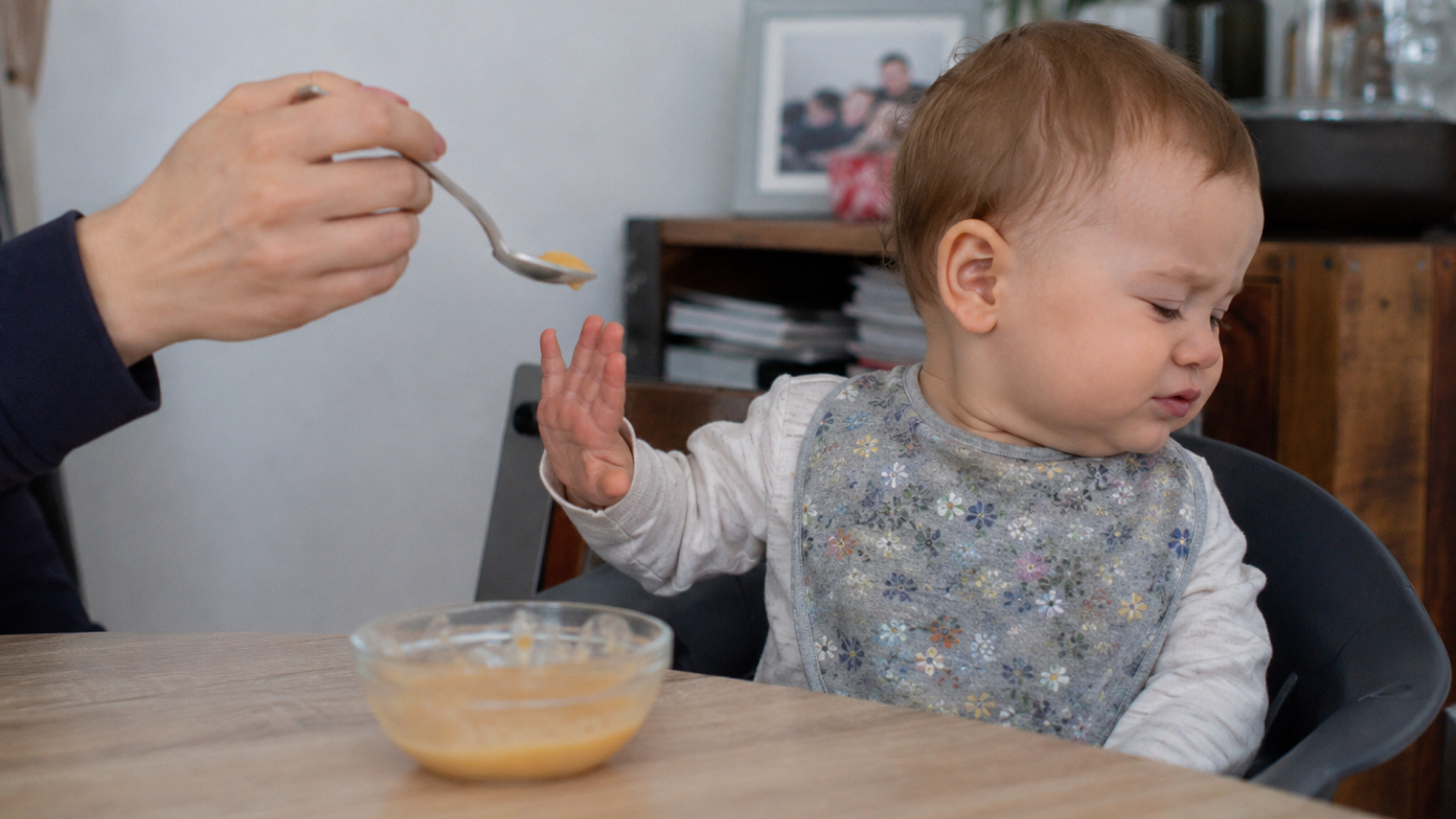
Yesterday, your baby was happily eating vegetable puree – today, they turn their head away, press their lips together, or throw the spoon on the floor. Many parents then wonder: Is my baby not hungry anymore? Do they not like the puree? Or is there something else going on?
A temporary refusal to eat puree is common in the first year of life. Usually, it’s not due to an illness but a normal developmental phase or a temporary change.
Why is my baby suddenly refusing puree?
A baby's appetite changes frequently. Additionally, many developments occur between 6 and 12 months of age.
Common reasons include:
- Teething
- A beginning or recovering infection
- Developmental milestones and increased interest in their surroundings
- The desire to eat independently
- Temporarily reduced hunger
- New textures or tastes
Not every meal needs to be successful.
What is often completely normal
Many babies:
- Suddenly eat much smaller amounts,
- Accept only certain foods,
- Prefer finger foods over puree,
- Play with their food more than they eat it,
- Initially refuse to open their mouth,
- Eat a lot one day and barely anything the next.
These fluctuations are often part of normal development. What matters is not a single meal but the pattern over several days.
Could teething be the cause?
Yes. When gums are sensitive, many babies temporarily eat less.
Typical signs include:
- Increased drooling,
- Frequent chewing on objects,
- Reddened gums,
- More restlessness or poorer sleep.
Once the tooth breaks through, eating habits often return to normal.
An infection can also change appetite
Even before a cough, runny nose, or fever starts, many babies eat less.
Also watch for:
- Fever,
- Runny nose,
- Cough,
- Unusual tiredness,
- Drinking less,
- Vomiting or diarrhea.
Appetite often returns once the infection subsides.
What can help your baby now
Not every refusal to eat puree needs a solution. Often, it helps to relieve pressure from the situation.
Helpful strategies include:
- Offering small portions,
- Letting your baby decide how much they want to eat,
- Eating together as a family,
- Repeatedly offering new foods,
- Trying soft finger foods if your baby wants to eat independently,
- Continuing to offer breast milk or formula as needed.
Many babies need several attempts before accepting new foods or textures.
What to avoid
When your baby eats poorly, the urge to encourage them to eat can arise.
Usually, the following are not helpful:
- Pressure or persuasion,
- Distraction with a phone or TV,
- Forcing to finish meals,
- Constantly changing substitute meals.
A relaxed atmosphere often helps more than an extra spoonful.
When should you contact the pediatrician?
Have your baby examined by a pediatrician if they:
- eat almost nothing for several days,
- drink significantly less,
- lose weight or don't gain enough,
- regularly gag or choke,
- seem to have pain while eating,
- repeatedly vomit after eating,
- or appear generally unwell and lethargic.
The key is not a single difficult meal, but the overall pattern.