Child Development in Months 21–23
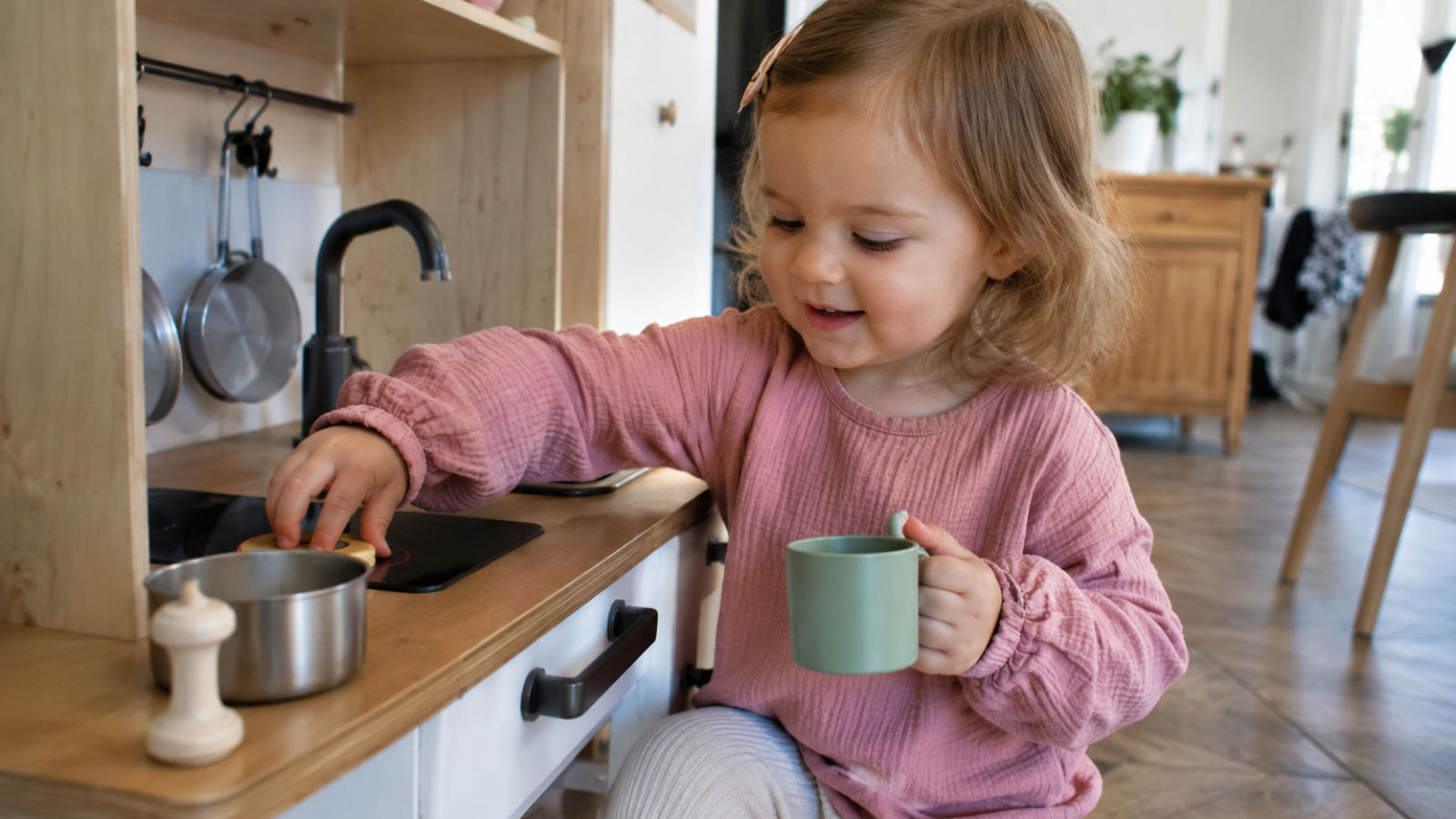
Is your child suddenly surprising you with full sentences, playing "make coffee" with a play kitchen, or proudly showing you what they've just learned? Between 21 and 23 months, many children make significant developmental strides, especially in language, imagination, independence, and movement.
Your little explorer is becoming more of an active conversational and play partner. Your child wants to be understood, make their own decisions, and increasingly participate in family life.
What's Developing Now
During this phase, many areas of development are interconnected.
You might notice that your child:
- uses new words every day and forms short sentences
- names objects and people intentionally
- engages more often in role play
- consciously imitates adults
- wants to become more independent
- clearly expresses their feelings
- walks confidently, climbs, and tries new movements
Every child develops at their own pace. Some speak a lot, while others still mostly communicate with gestures and single words.
What You Can Observe Now
Many children show similar developmental steps at this age.
Your child:
- proudly tells you about new discoveries
- invites you to join in play
- feeds dolls or stuffed animals
- "talks" on a building block phone or "cooks" in the play kitchen
- closely watches how adults do things and imitates them
- uses language more purposefully to express desires or refusals
- wants to do many things independently and gets frustrated when it doesn't work out
This interplay of curiosity, independence, and strong emotions is typical for this age.
What Your Child is Learning Now
Between the second and third birthdays, your child develops important skills for everyday life and communication.
Key areas now include:
- Language, to express thoughts, desires, and feelings
- Imagination, through early role play and symbolic play
- Independence in daily tasks
- Social skills, by observing and imitating others
- Problem-solving through trial and error
Many children learn a lot during this time through their own actions.
Motor Skills and Movement
Physically, your child is also making further progress.
Many children can now:
- walk confidently and change direction quickly
- walk backward
- stand up safely from a squat
- climb low steps or furniture
- carry or push larger objects
- open doors or operate drawers
With each new movement, their self-confidence grows.
How You Can Support Your Child
Your child learns best through shared experiences right now.
Helpful activities include:
- Talking a lot together and introducing new words
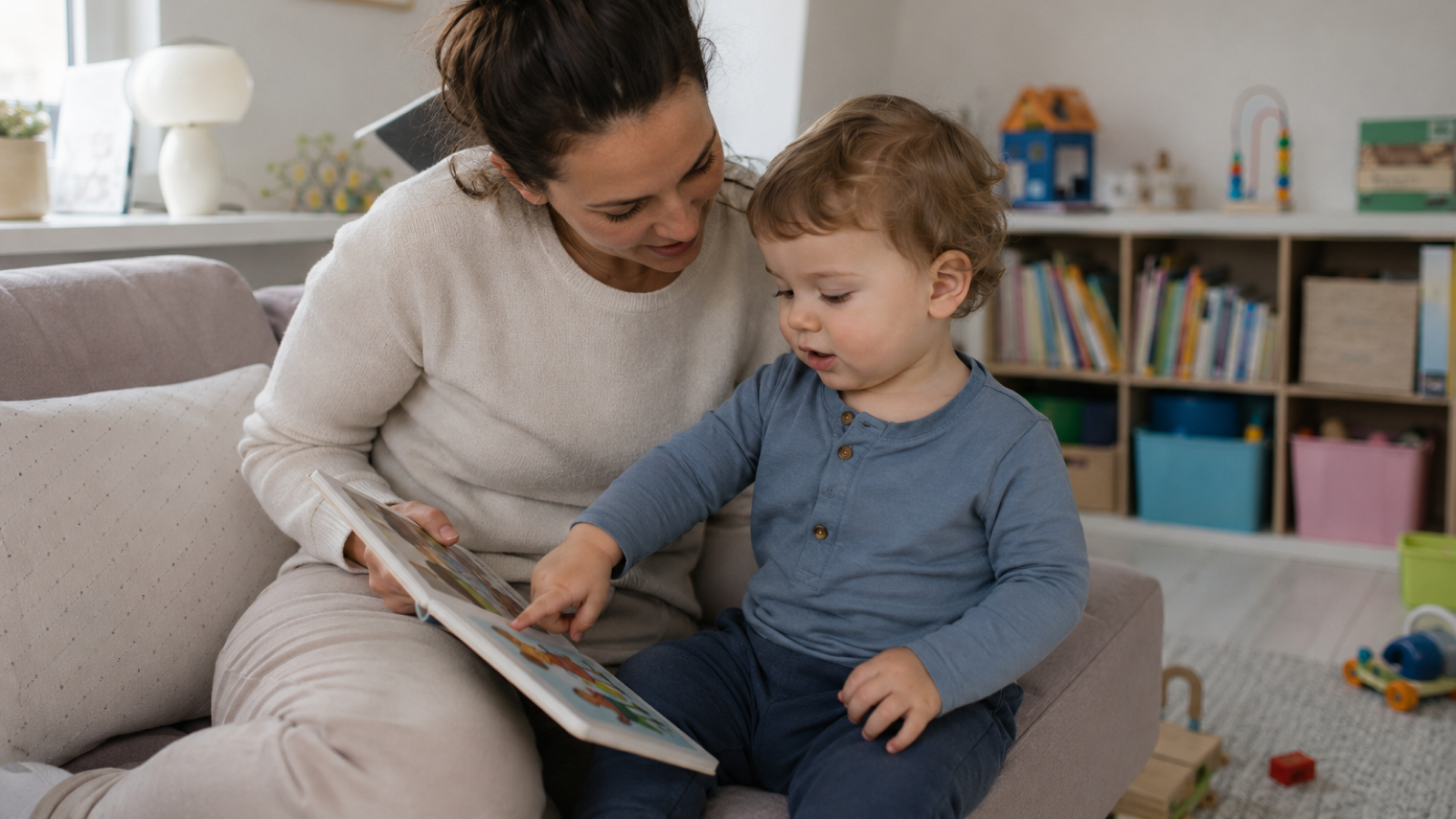
- Looking at picture books together
- Engaging in role play with dolls, vehicles, or everyday objects
- Allowing them to take on small household tasks
- Giving them plenty of time to try things independently
- Naming emotions and calmly guiding them
Repetition is particularly valuable. Even if your child wants to read the same book or play the same game repeatedly, this supports their learning.
What You Should Know
Between 21 and 23 months, language, imagination, and independence often develop simultaneously. This can make your child seem surprisingly grown-up at times, while at other moments they may still rely heavily on your support.
This mix of growing independence and the need for security is a natural part of this developmental phase. With patience, closeness, and many shared everyday experiences, you provide your child with the best foundation for continued learning.
Milestones
Between 21 and 23 months, many children can:
- Walk confidently and attempt their first climbs (18–24 months)
- Actively use about 20 to 50 words or more (20–26 months)
- Form their first simple two- or three-word sentences (21–28 months)
- Engage in symbolic play, like feeding a doll or pretending to make a phone call (20–26 months)
- Imitate adults intentionally and reenact daily routines (20–24 months)