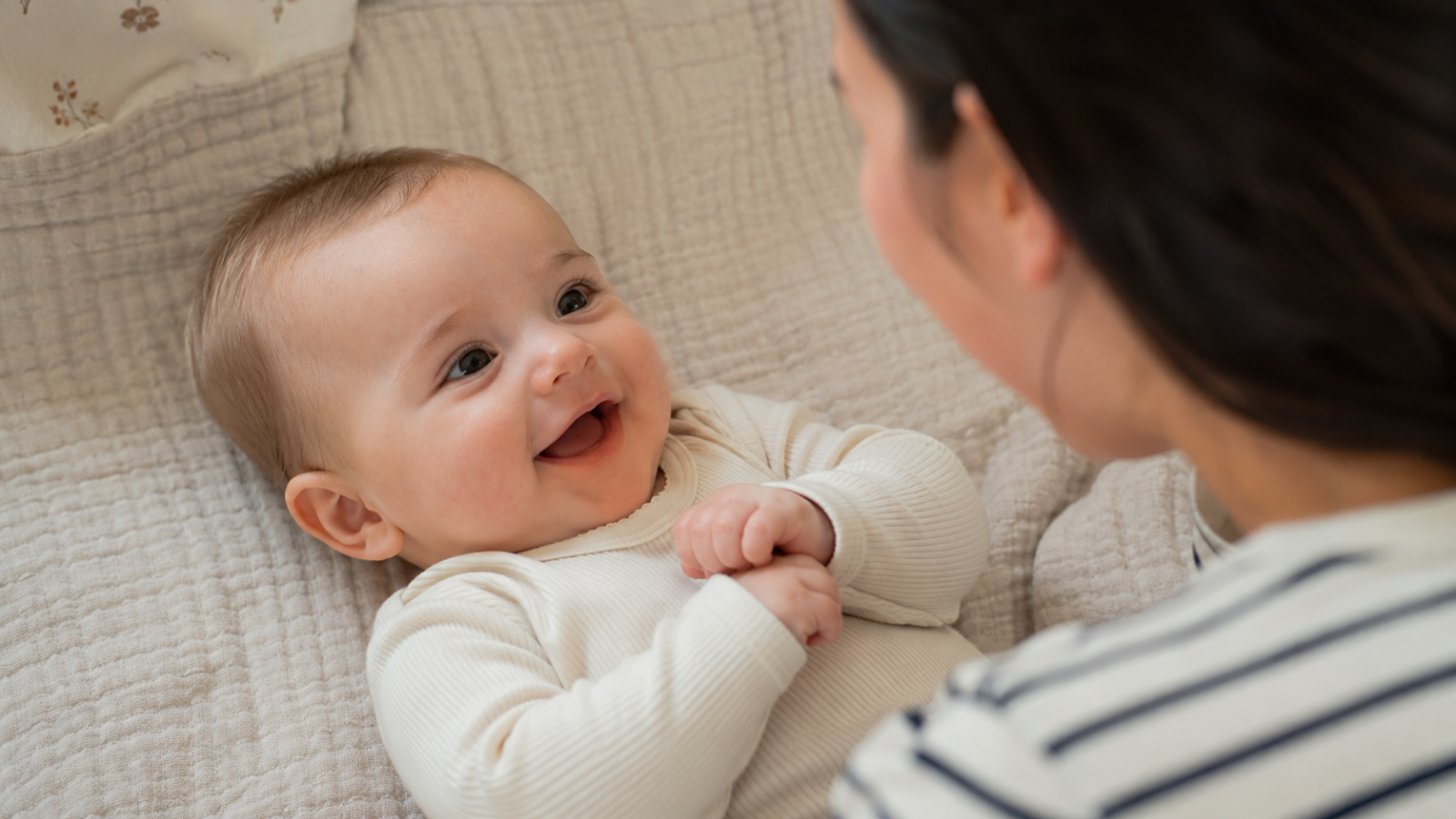
Development in Weeks 7 – 9
Around two months old, your baby often seems suddenly more alert. They look at you longer, respond to your voice, start to smile, or make their first sounds. At the same time, many babies sleep a bit more restlessly during this phase or need more closeness again.
The most important reassurance first: Every baby develops at their own pace, even now. Some babies smile earlier, while others observe more initially. What matters is not the exact timing but that your child gradually develops new skills and increasingly interacts with their surroundings.
What You Can Observe Now
You might notice that your baby:
- looks attentively at your face
- follows you with their eyes for longer
- responds to voices with cooing or gurgling
- smiles more consciously
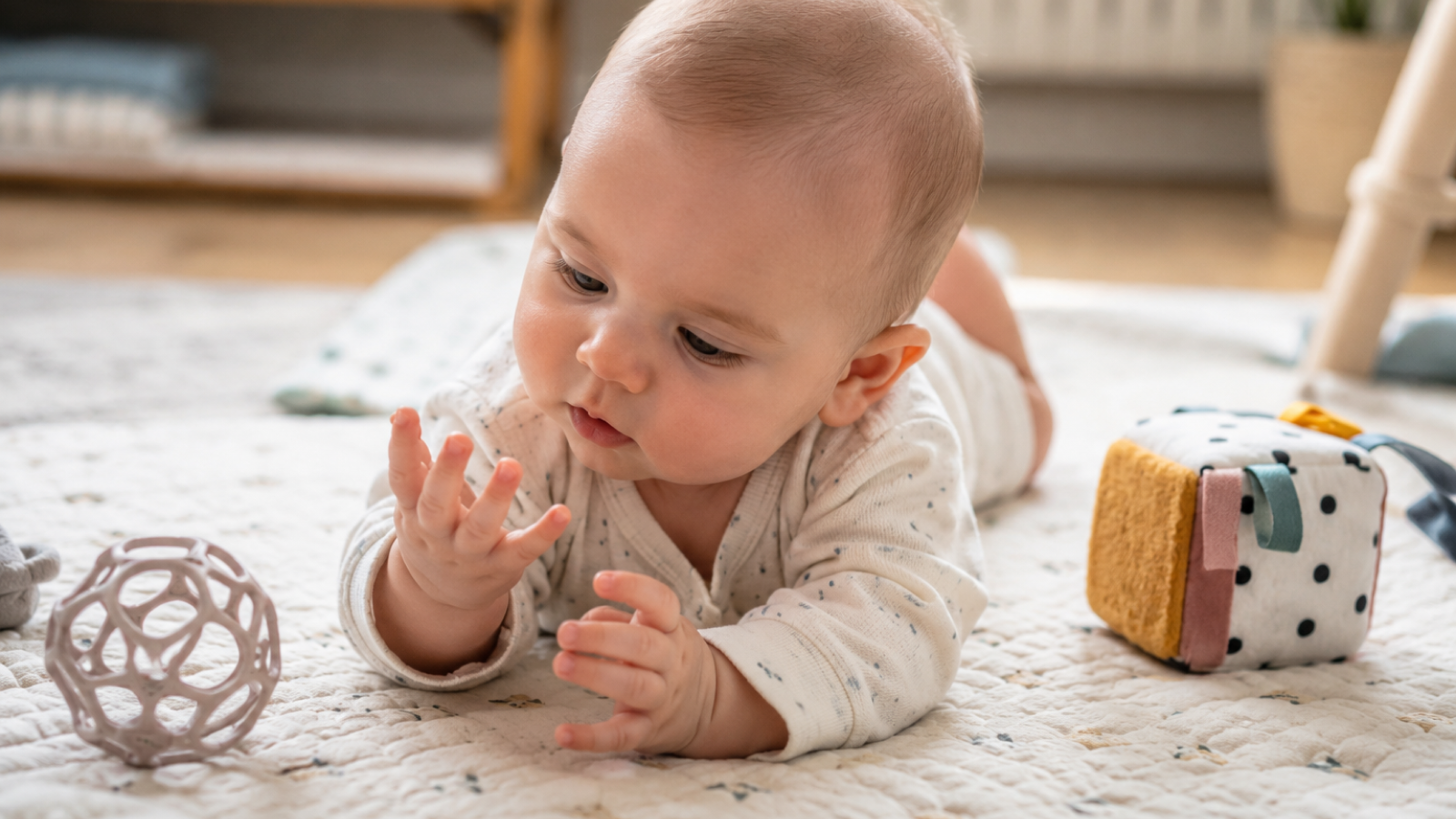
- discovers their hands and brings them to their mouth
- seems more awake but also gets overstimulated more quickly
Many babies now have longer awake periods. This allows them to perceive their surroundings more intensely, but they often need more rest afterward.
What Is Developing
Around two months, your baby begins to perceive connections better.
They recognize familiar voices and faces more confidently, track movements with their eyes, and respond to recurring routines. At the same time, body awareness continues to develop: Many babies watch their hands, kick more purposefully, or bring their hands to their mouth more often.
Communication also makes great strides. First sounds turn into little “conversations” where your baby responds to your voice or smile.
What Your Baby Needs Now
Your baby still benefits most from calm, closeness, and consistent routines.
Especially helpful are:
- lots of eye contact and talking together
- loving routines for sleeping, changing, and feeding
- quiet play moments with few stimuli
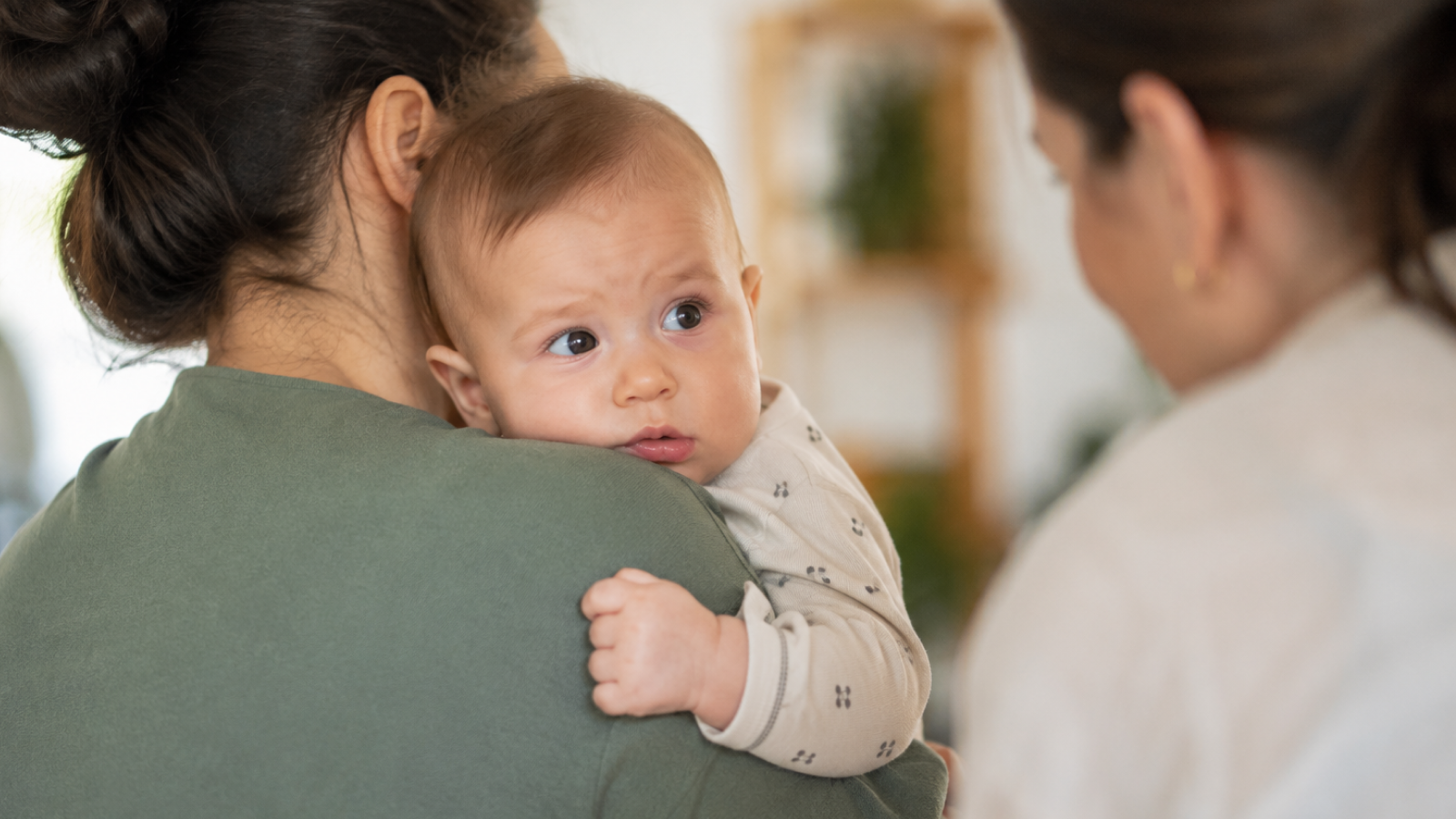
- carrying and physical contact when restless
- plenty of time to rest between awake periods
You don't need to actively promote your baby’s development. Shared time, your voice, and your attention support their growth every day.
Motor Skills, Language, and Senses
In the coming weeks, you may often observe that your baby:
- lifts their head a bit longer when on their tummy
- moves arms and legs more vigorously
- brings their hands to the center of their body more often
- makes first cooing and gurgling sounds
- follows moving objects with their eyes
- reacts to familiar voices or faces
These skills develop step by step and not at the same time for all babies.
Nutrition and Sleep
Breast milk or infant formula remains the only source of nutrition.
Many babies now want to feed more frequently in phases—especially in the evening. This so-called cluster feeding is common in the first few months and is usually not a cause for concern.
Sleep patterns are also changing. Some babies are starting to sleep a bit longer at a stretch, while others continue to wake frequently or become more easily overstimulated due to longer wakeful periods.
How You Can Support Your Baby
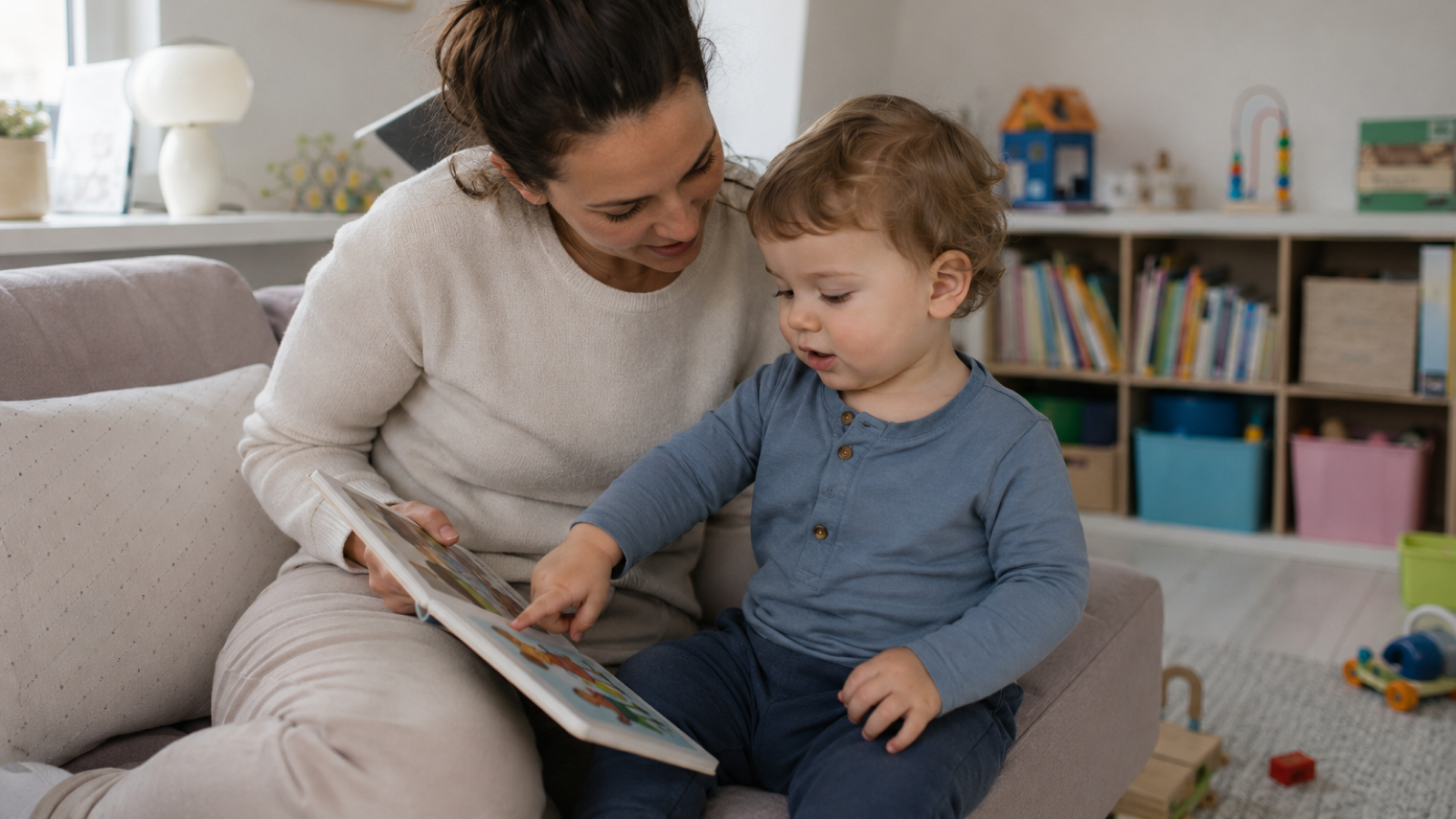
Talk to your baby often and give them time to observe your face and expressions.
Sing simple songs together or repeat short rhymes. Offer high-contrast images or toys without overwhelming your baby with too many stimuli at once.
If your baby becomes restless, closeness, carrying, and a calm environment often help more than additional activities.
Milestones
- Attentively watching and following faces with their eyes
- Smiling deliberately and responding to interaction
- Making initial cooing and gurgling sounds
- Bringing hands to the center of their body
- Lifting their head briefly while on their tummy
In Summary
At around two months, your baby becomes more attentive. They recognize familiar people better, start to smile deliberately, make their first sounds, and gradually discover their own body. At the same time, sleep and daily routines may temporarily become more unsettled. This is a normal part of development for many babies.