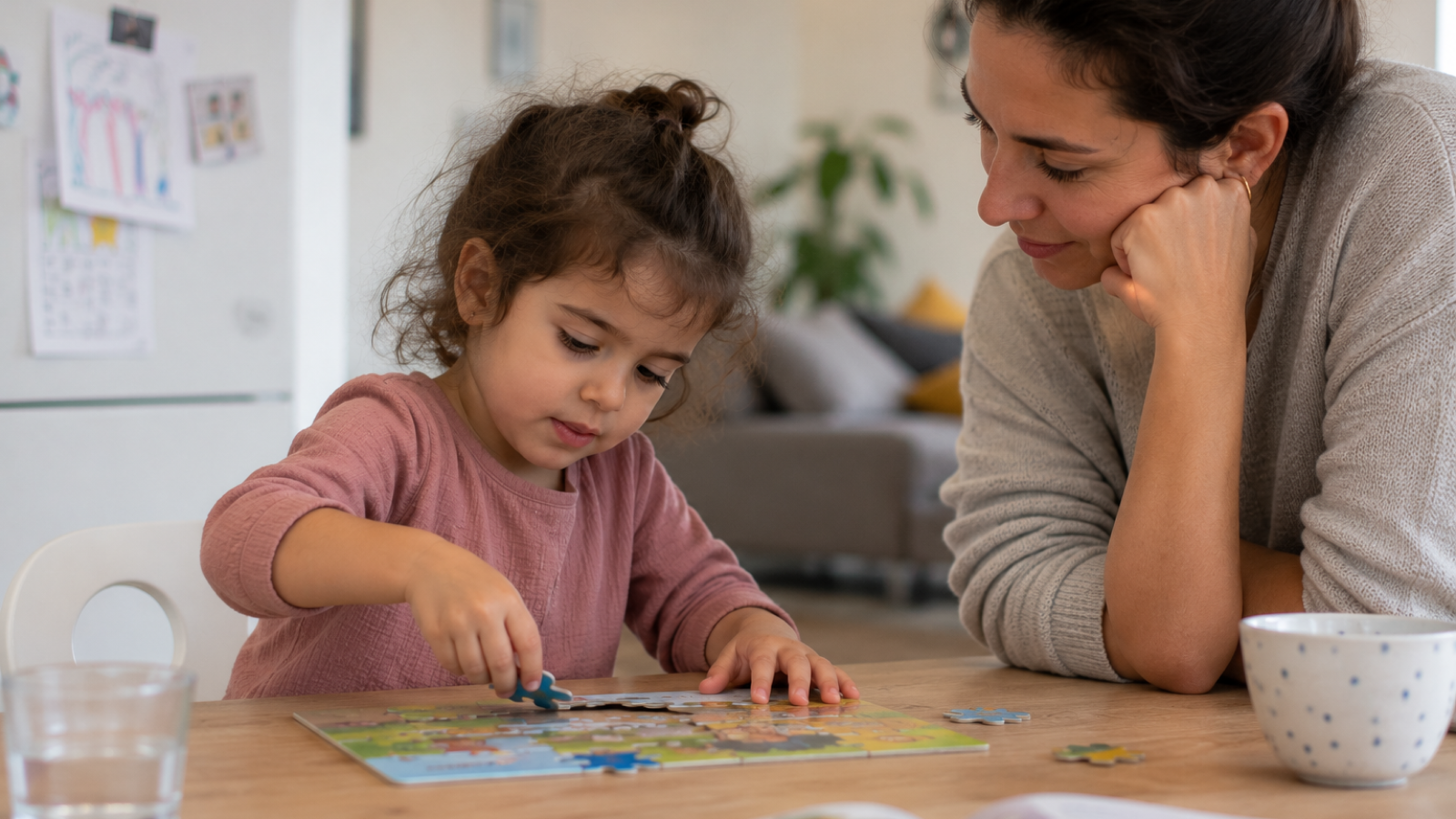
Child Development in Months 41–44
At around three and a half years old, your child's thinking develops significantly. They can remember sequences better, carry out tasks step by step, and start planning actions consciously. Spontaneous ideas turn into small projects, and your child increasingly wants to accomplish these independently.
You might notice your child following a plan while playing, executing multiple instructions in sequence, or proudly recounting how they achieved something on their own. At the same time, their understanding of rules, connections, and the consequences of their actions grows.
Current Developments
Between 41 and 44 months, thinking, language, and actions become more interconnected.
Many children now begin to:
- understand multi-step instructions,
- plan tasks step by step,
- better recognize cause and effect,
- confidently sequence events,
- develop their own solutions,
- take responsibility for small tasks,
- follow rules more consciously.
These skills develop gradually and vary from child to child.
What You Can Observe Now
In daily life, many new skills become apparent.
You might notice your child:
- completing multiple tasks in a row,
- following a clear plan while playing,
- telling stories with a beginning, middle, and end,
- wanting to solve small problems independently,
- proudly taking on responsibility,
- organizing routines like dressing or brushing teeth more independently,
- explaining why things happen more often.
Even if everything doesn't always go smoothly, confidence in their abilities grows.
Language and Thinking Continue to Develop
At nearly four years old, your child can understand increasingly complex concepts.
Many children:
- comprehend longer explanations,
- use words like "because," "therefore," or "then,"
- ask specific questions,
- narrate experiences chronologically,
- describe simple plans.
Everyday conversations particularly support this development.
Logical Thinking Becomes More Tangible
Your child increasingly connects cause and effect.
For example, they understand:
- "If it rains, we get wet."
- "If we water the plants, they grow."
- "First we tidy up, then we continue playing."
Temporal sequences also become clearer. Terms like before, after, tomorrow, or yesterday slowly gain meaning, even if they aren't always used correctly yet.
Growing Independence
Many children now want to actively take on responsibility.
For example:
setting the table,
helping with shopping,
packing their bag,
choosing their clothes,
make small decisions independently.
These experiences boost self-confidence and encourage independent actions.
Motor Skills Become More Skillful
Your child is also developing physically.
Many children can now:
- run and jump confidently,
- balance,
- play simple ball games,
- throw or catch a ball accurately,
- draw circles and first human figures,
- use scissors, pencils, or cutlery with increasing confidence.
Fine and gross motor skills are becoming more coordinated.
How You Can Support Your Child
During this phase, your child benefits from implementing their own ideas.
Helpful actions include:
- assigning small tasks in daily life,
- planning routines together,
- asking questions instead of providing solutions,
- giving time to experiment,
- appreciating successes,
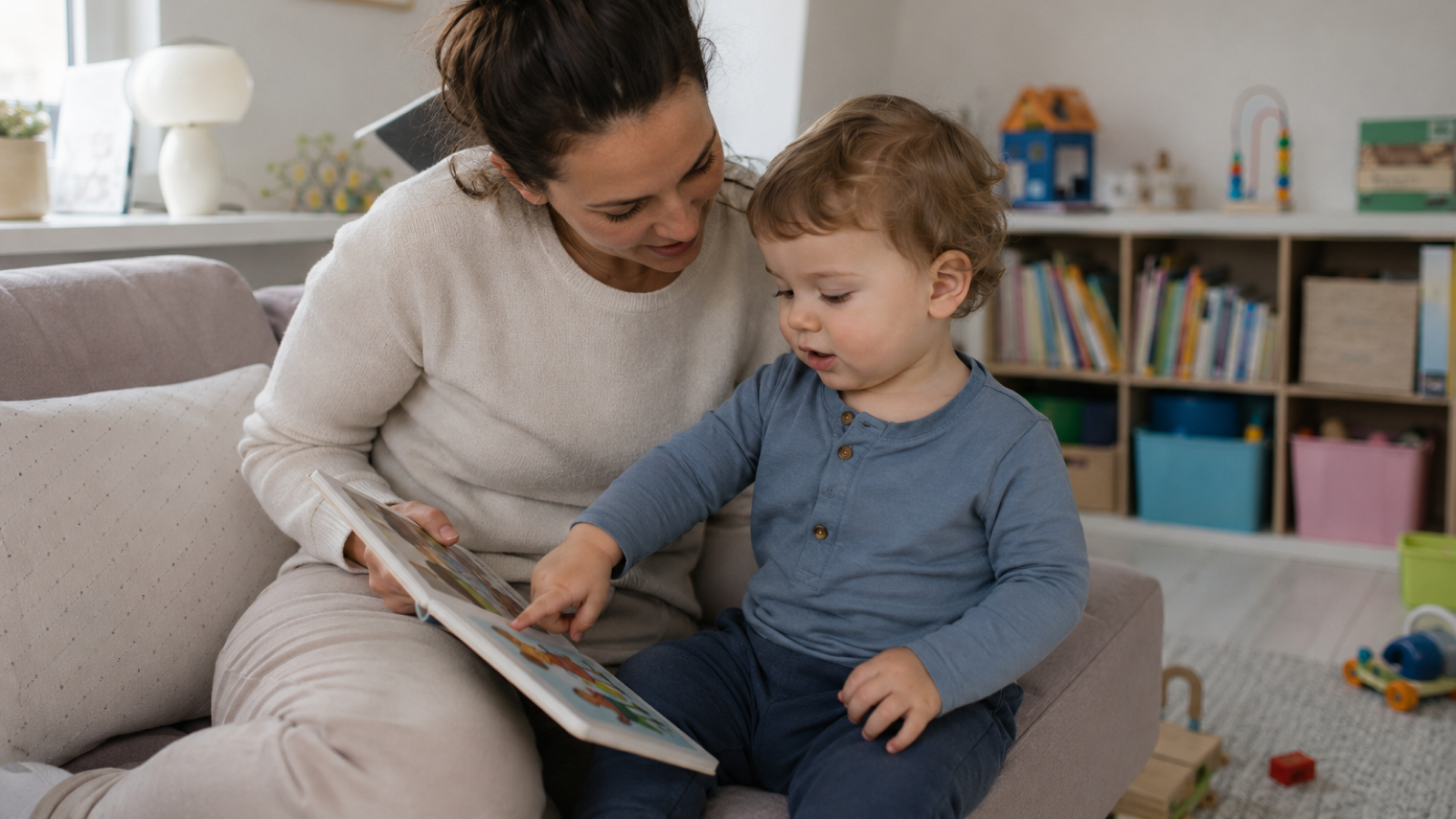
- reading books together and discussing stories,
- being patient when something doesn't work right away.
The goal is not perfection, but the joy of finding solutions independently.
What You Should Know
Around three and a half years old, your child is developing more abilities to think ahead, understand connections, and act independently. They want to plan tasks, take responsibility, and realize their own ideas. Small challenges in everyday life often promote this development more than targeted exercises. With trust, time, and loving guidance, your child's self-confidence grows step by step.
Milestones
Between 41 and 44 months, many children can:
- understand and follow multi-step instructions (40–48 months)
- consciously plan and organize play situations (41–49 months)
- explain simple cause-and-effect relationships (42–50 months)
- perform small movement sequences confidently (38–46 months)
- draw closed circles and first human figures (42–50 months)
- form sentences with "because" or other reasons (42–50 months)