Many parents wonder after their child's first birthday: Should my child continue to drink milk? How much milk is appropriate? And what about yogurt or cheese?
Milk and dairy products can still be a valuable part of a balanced diet after the first birthday. However, more milk is not automatically better. As children grow, a varied diet becomes increasingly important.
How much milk is recommended for toddlers?
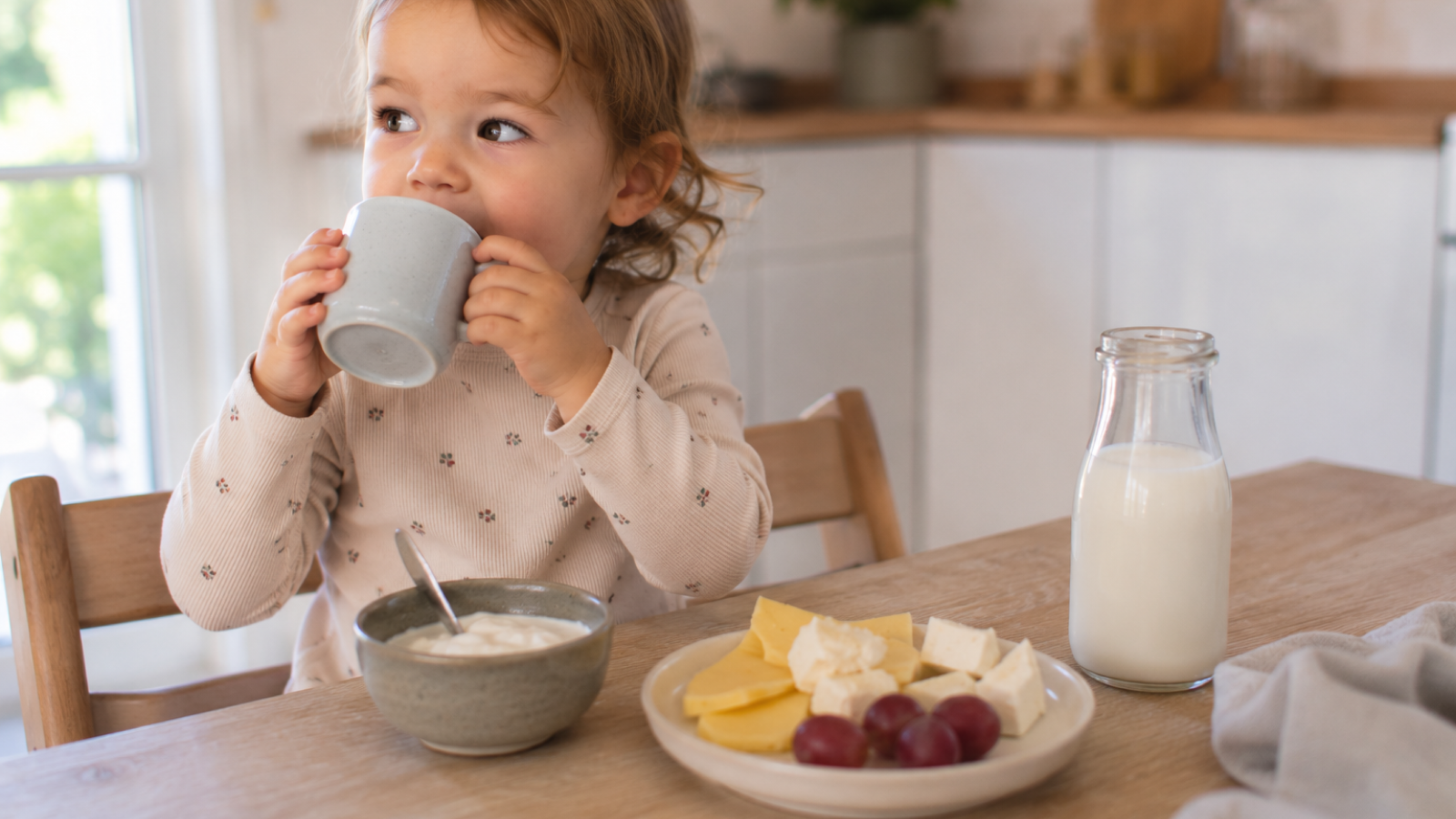
For children between 1 and 3 years, experts recommend a total of about 300 to 350 milliliters of milk or equivalent dairy products per day.
This includes, for example:
- Milk
- Natural yogurt
- Cheese
- Quark
The amount doesn't have to be consumed solely as a drink. Dairy products included in meals also count.
Why is too much milk not advisable?
Many children love to drink milk. However, larger amounts can lead to other important foods being neglected.
Too much milk can:
- Reduce appetite for other meals,
- Impair iron absorption,
- Make a varied diet more difficult.
Children who drink significantly more than half a liter of milk daily often benefit from reducing the amount a bit.
What kind of milk is suitable after the first birthday?
After the first birthday, most children can drink regular pasteurized cow's milk.
Suitable options include:
- Whole milk
- Low-fat milk (depending on individual diet)
- Natural yogurt
- Cheese
Raw milk should still not be given to toddlers.
Does my child still need follow-on milk or toddler milk?
For healthy children, special toddler milk is generally not necessary after the first birthday.
A balanced diet usually provides most nutrients sufficiently. If there are special dietary needs, your pediatrician can provide individual advice.
What about plant-based alternatives?
Oat, almond, rice, or other plant-based drinks are not nutritionally comparable to cow's milk.
They often contain:
- Significantly less protein,
- Different fat compositions,
- Sometimes less calcium, unless fortified.
If your child only consumes plant-based alternatives, the diet should be well planned. It's best to discuss this with your pediatrician.
Does my child need to drink milk at all?
No. The key is not the drink itself, but the overall diet.
Calcium and other important nutrients can also be obtained from various dairy products or – depending on the diet – other suitable foods.
What belongs to a balanced diet?
After the first birthday, family meals become increasingly important.
These include:
- Vegetables and fruits
- Potatoes, grains, and whole grain products
- Milk and dairy products in age-appropriate amounts
- Protein-rich foods like legumes, fish, or meat
- Plenty of water as the main drink
Milk complements the diet – it does not replace a varied diet.
When should you consult the pediatrician?
It is advisable to seek advice if your child:
- only wants to drink milk,
- hardly accepts other foods,
- drinks very large amounts of milk,
- is not gaining weight well,
- or if you are unsure about a vegetarian or vegan diet.
If you suspect a cow's milk protein allergy or lactose intolerance, the cause should be clarified by a doctor.
Key points to remember
After the first birthday, milk remains a valuable part of the diet – but in moderation. About 300 to 350 milliliters of milk or equivalent dairy products per day are sufficient for most toddlers. More important than the exact amount of milk is a varied diet with many different foods.