Baby Development in Months 10 – 11
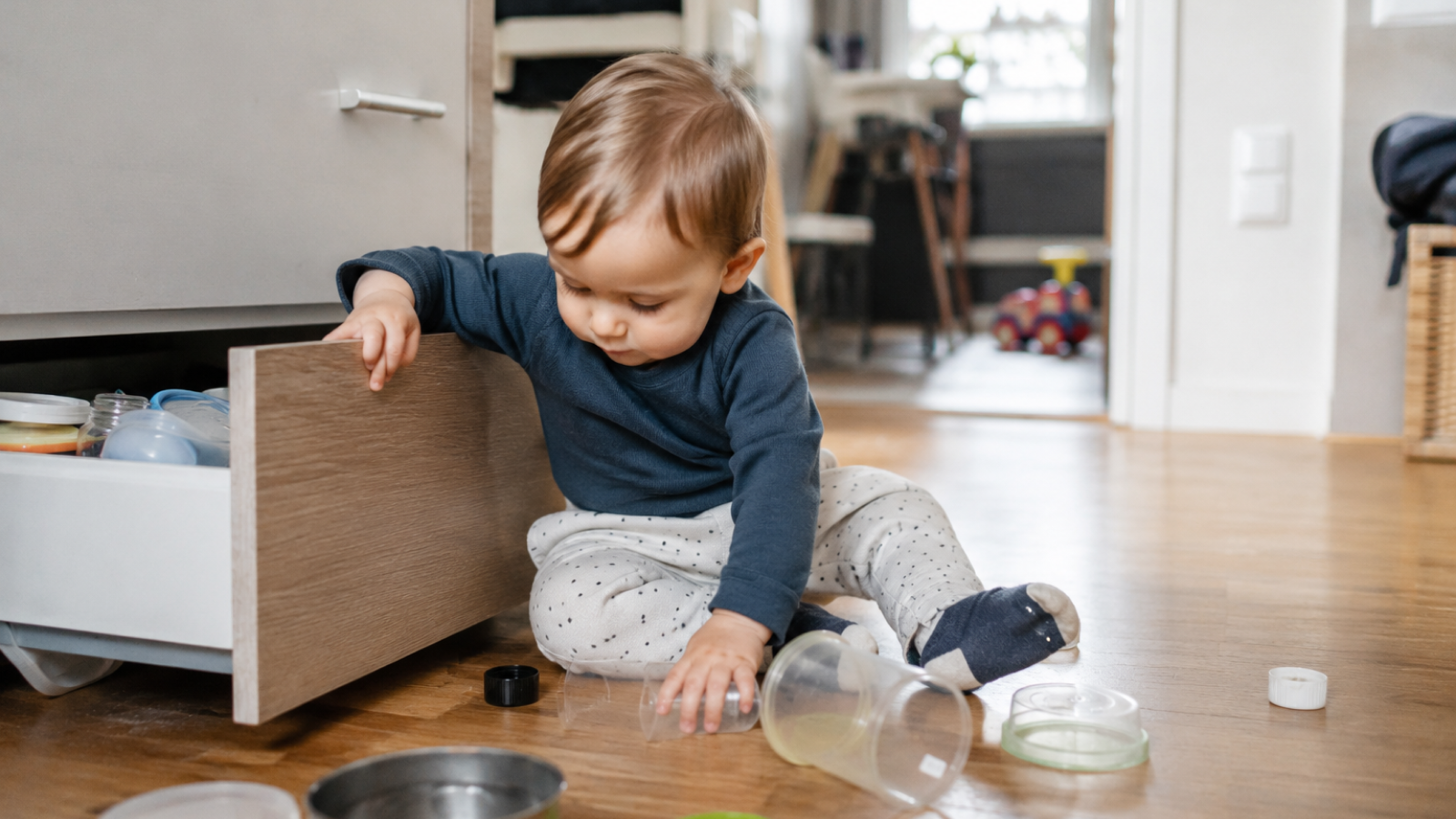
Is your baby suddenly wanting to do everything on their own, pulling open drawers, emptying things out, or trying to eat with a spoon by themselves? Many parents notice their child becoming much more active and determined between the 10th and 11th month than just a few weeks ago.
The most important relief first: In this phase, your baby is not only developing new motor skills. They are also beginning to understand the connections between several steps in a process. This makes them more curious and persistent – but sometimes also more quickly frustrated when something doesn't work out yet.
What You Can Observe Now
You might notice that your baby:
- connects several steps in a process
- repeatedly opens and closes drawers, boxes, or lids
- actively searches for you or hidden objects
- deliberately drops things or experiments with what happens
- imitates you more frequently in daily life
- shows more frustration when something doesn't work
- wants to try many things on their own
Many babies now seem much more persistent and spend longer on one activity than they did a few weeks ago.
What Is Developing
In this phase, your baby begins to understand that actions consist of multiple steps.
For example, they realize:
- First, I need to pull myself up, then I can reach the toy.
- First, I open the box, then I can get to the contents.
- When I press a button, something happens.
These experiences promote thinking, problem-solving skills, and confidence in their own abilities.
At the same time, the first small moments of frustration often arise: Your baby often knows what they want to achieve – but can't always execute it motorically yet.
Movement and Motor Skills
Between the 10th and 11th month, many children become increasingly mobile.
You might see:
- confident crawling or their own unique way of moving
- sitting up independently
- pulling up on furniture
- taking first steps along furniture
- purposeful grasping of small objects
- transitioning between different positions without help
Not every child develops in the same way. Some crawl early, while others almost skip this phase and go straight to pulling up or taking their first steps.
Language and Communication
A lot is happening linguistically as well.
Many babies:
- confidently recognize their name
- respond to simple requests
- point to interesting things
- use gestures to express desires
- babble long sequences of syllables like "ba-ba" or "da-da"
- sometimes consciously use “Mama” or “Papa”
Your baby usually understands much more than they can say themselves.
Nutrition and Sleep
Many children now want to eat more independently.
Typical developments include:
- Interest in using a spoon
- Finger foods become more exciting
- First likes and dislikes
- Practicing drinking from a cup
Sleep patterns might change again. New movements and the day's many impressions can sometimes make it harder for your baby to fall asleep or cause more frequent night awakenings.
How to Support Your Baby
During this phase, your baby learns a lot through personal exploration.
Helpful tips:
- Plenty of space for safe exploration
- Experience simple daily activities together
- Patience when things don't work out yet
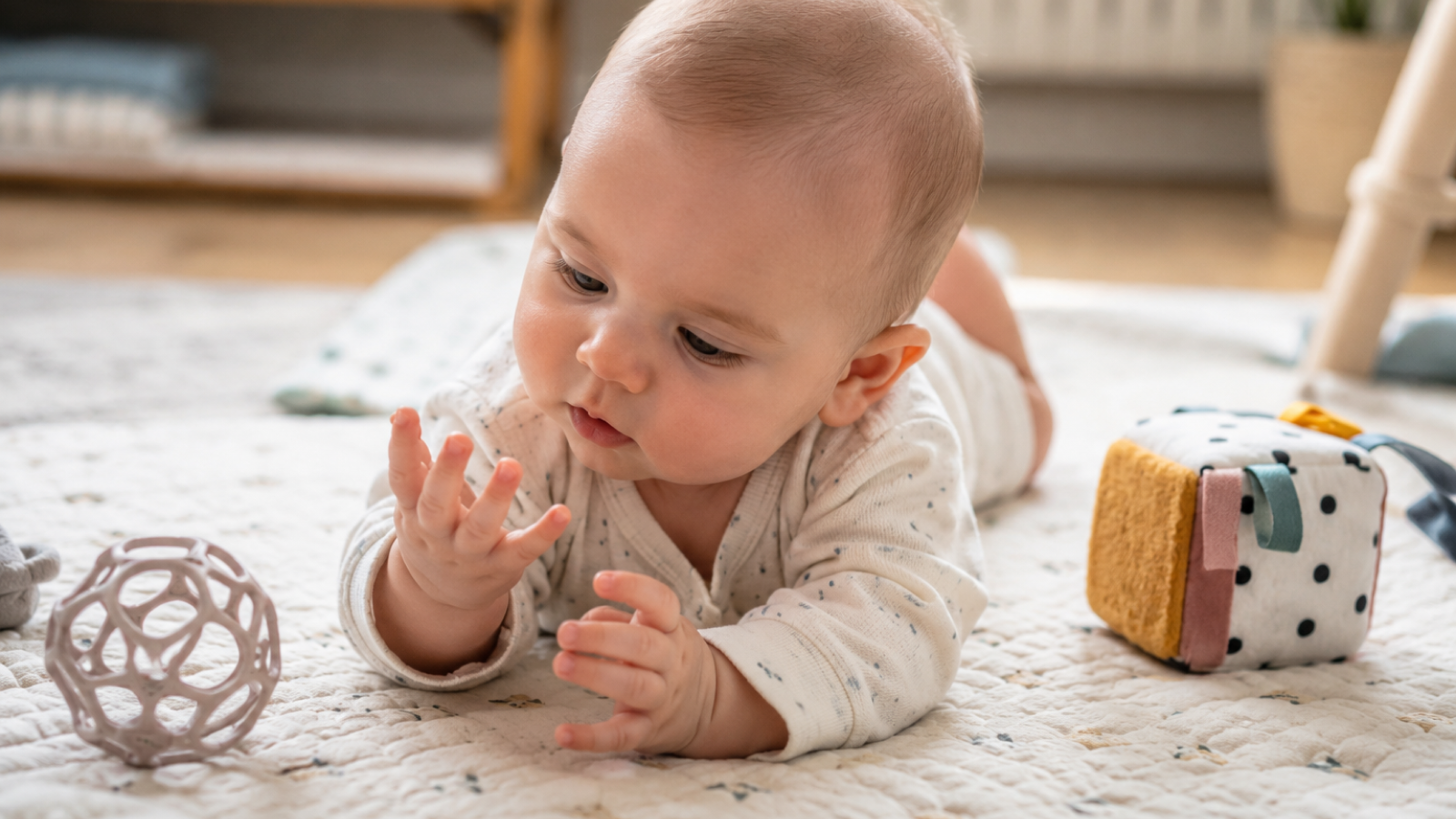
- Toys for stacking, opening, or sorting
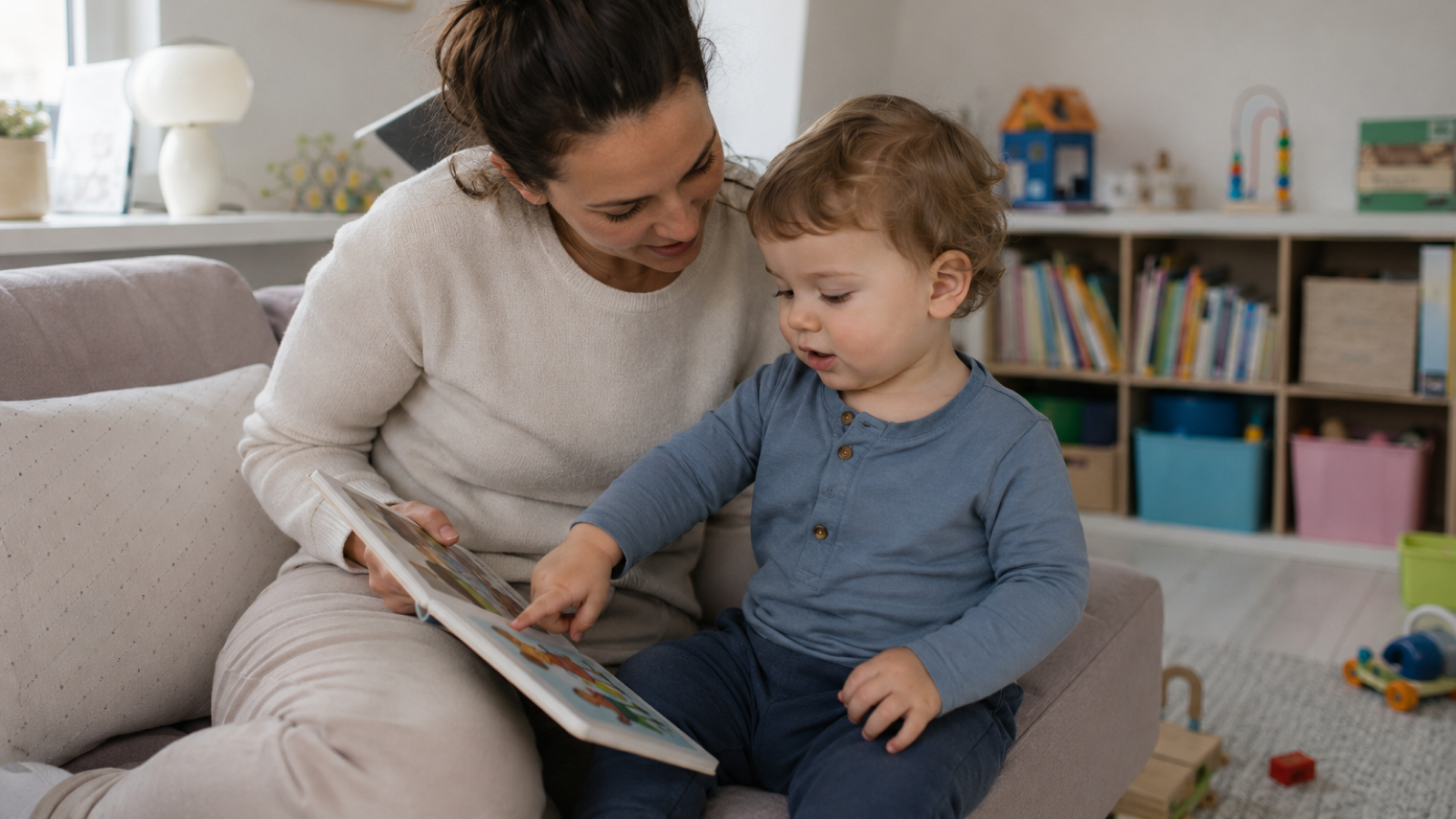
- Clear language during daily routines
- Loving support during moments of frustration
You don't need to actively promote your baby's development. It's more important to provide enough time and opportunities for them to gain their own experiences.
Milestones
- Crawls or moves independently in their own way
- Pulls up on furniture to stand and takes first sideways steps
- Actively searches for hidden objects or familiar people
- Understands simple commands and recognizes familiar words
- Points to interesting things and increasingly communicates with gestures
- Wants to eat independently more often and imitates daily routines
In Summary
Between the 10th and 11th month, your baby becomes more independent. They combine multiple actions, imitate adults, and want to try many things on their own. At the same time, they may experience frustration when things don't work out yet. With patience, closeness, and a safe environment, you help your child develop confidence in their abilities.