Baby Development in Months 3–6
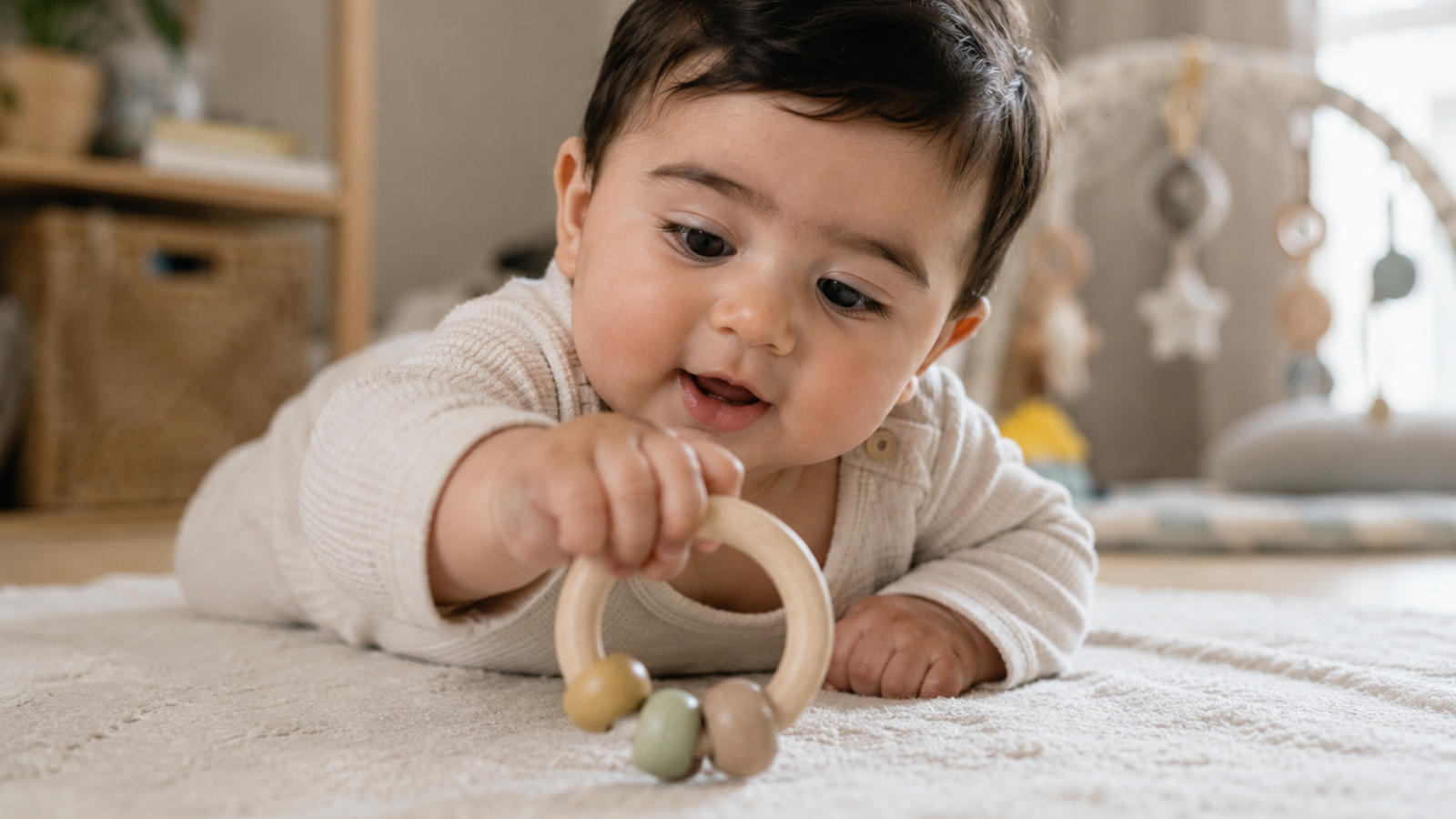
Between the third and sixth month, your baby often changes noticeably. They reach for toys more deliberately, watch their hands, put many things in their mouth, and gradually discover that they can make things happen.
Many parents also notice during this time that their baby seems more alert, wants to play more, or suddenly rolls over more often. At the same time, sleep and mood can temporarily become more unsettled.
The most important reassurance first: Every baby develops at their own pace. Not all developmental milestones happen simultaneously, and small differences are usually completely normal.
What You Can Observe Now
You might notice that your baby:
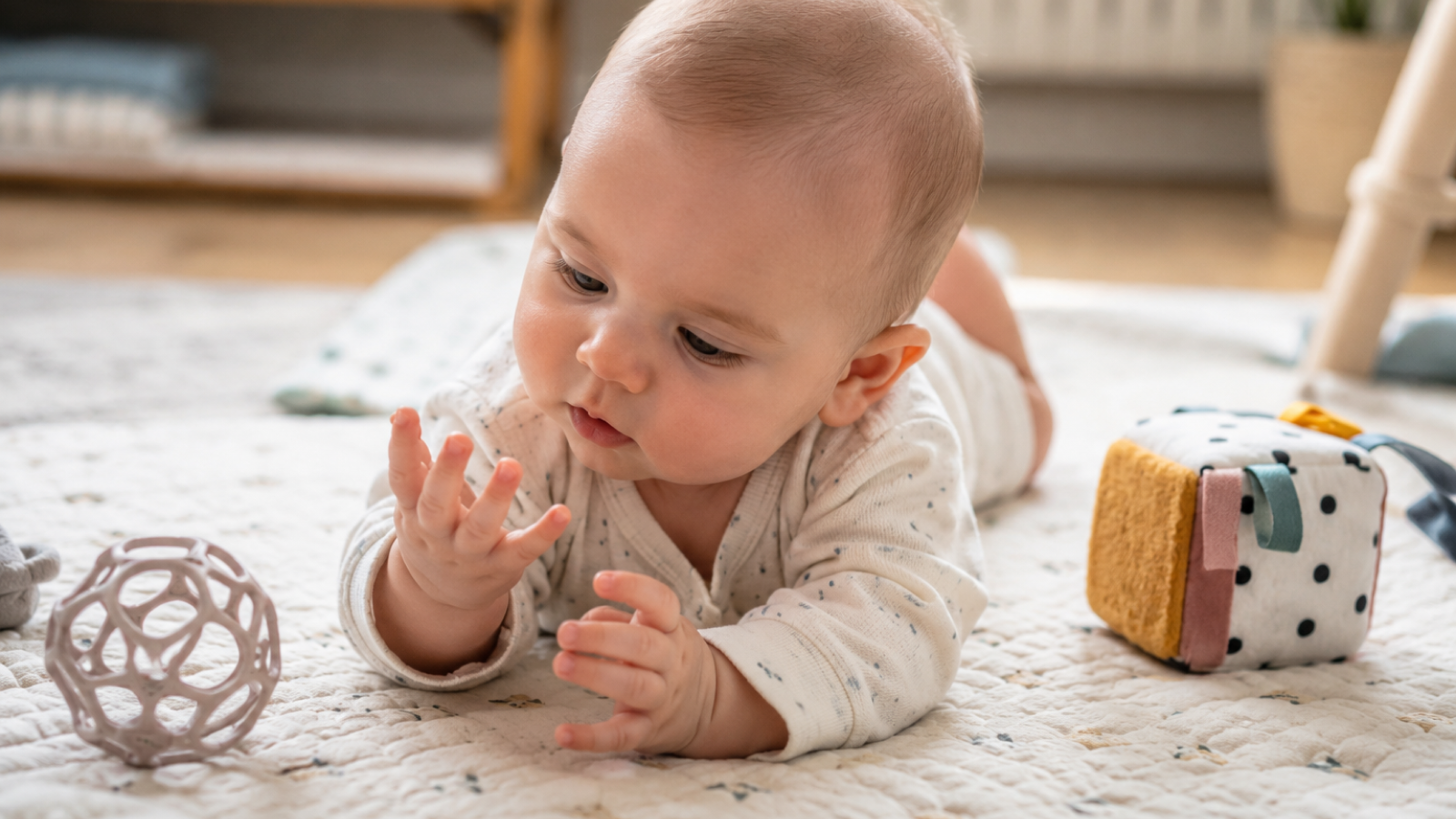
- deliberately reaches for objects and examines them
- transfers toys from one hand to the other
- explores many things with their mouth
- discovers their feet and reaches for them
- increasingly supports themselves on their arms and hands
- makes initial rolling movements to the side or from tummy to back
- attentively watches how people or objects move
With each week, movements become more coordinated. Many babies now engage with an object for much longer than just a few weeks ago.
What Is Changing
In this phase, your baby is learning more and more that their actions have effects.
For example, they realize:
- If I reach for a toy, I can hold it.
- If I let go of something, it falls.
- If I move a rattle, it makes noise.
- If I try hard, I might reach my goal.
These experiences are important building blocks for motor and cognitive development.
What Your Baby Needs Now
With growing curiosity comes the desire to be active.
Helpful now are:
- plenty of time for free play on a safe surface
- toys that are easy to grasp
- lots of floor time instead of prolonged sitting in a bouncer or car seat
- loving support when something doesn't work out yet
- regular routines for sleep and daily life
You don't need to constantly entertain your baby. Often, it's enough to attentively accompany their discoveries.
Nutrition and Health
Breastfeeding or infant formula remains the primary source of nutrition.
Many babies now begin to:
- bring objects to their mouth,
- watch you eat attentively,
- show interest in food.
However, this doesn't automatically mean your baby is ready for solid foods.
Signs of readiness for solids include:
- stable head control,
- interest in food,
- deliberate reaching for the mouth,
- the tongue-thrust reflex diminishes.
Whether these milestones are reached varies from child to child.
How You Can Support Your Baby
Everyday situations can already boost development.
For example:
- Offer different materials for grasping
- Sing finger games or simple songs together
- Let your baby play on their tummy regularly
- Place toys so they can reach for them
- Pay attention to signs of tiredness or overstimulation
- Celebrate successes with joy, rather than helping too much
At this age, children learn primarily through their own experimentation.
Milestones
Between 3 and 6 months, many babies can:
- Intentionally reach for objects (around 4–5 months)
- Bring toys to their mouth (around 4–6 months)
- Support themselves on their forearms or hands while on their tummy (around 3–5 months)
- Show first rolling movements to the side or from tummy to back (around 4–6 months)
- Discover and grasp their feet (around 4–6 months)
- Follow people and objects attentively and observe them for longer periods