Child Development in Months 49 – 54
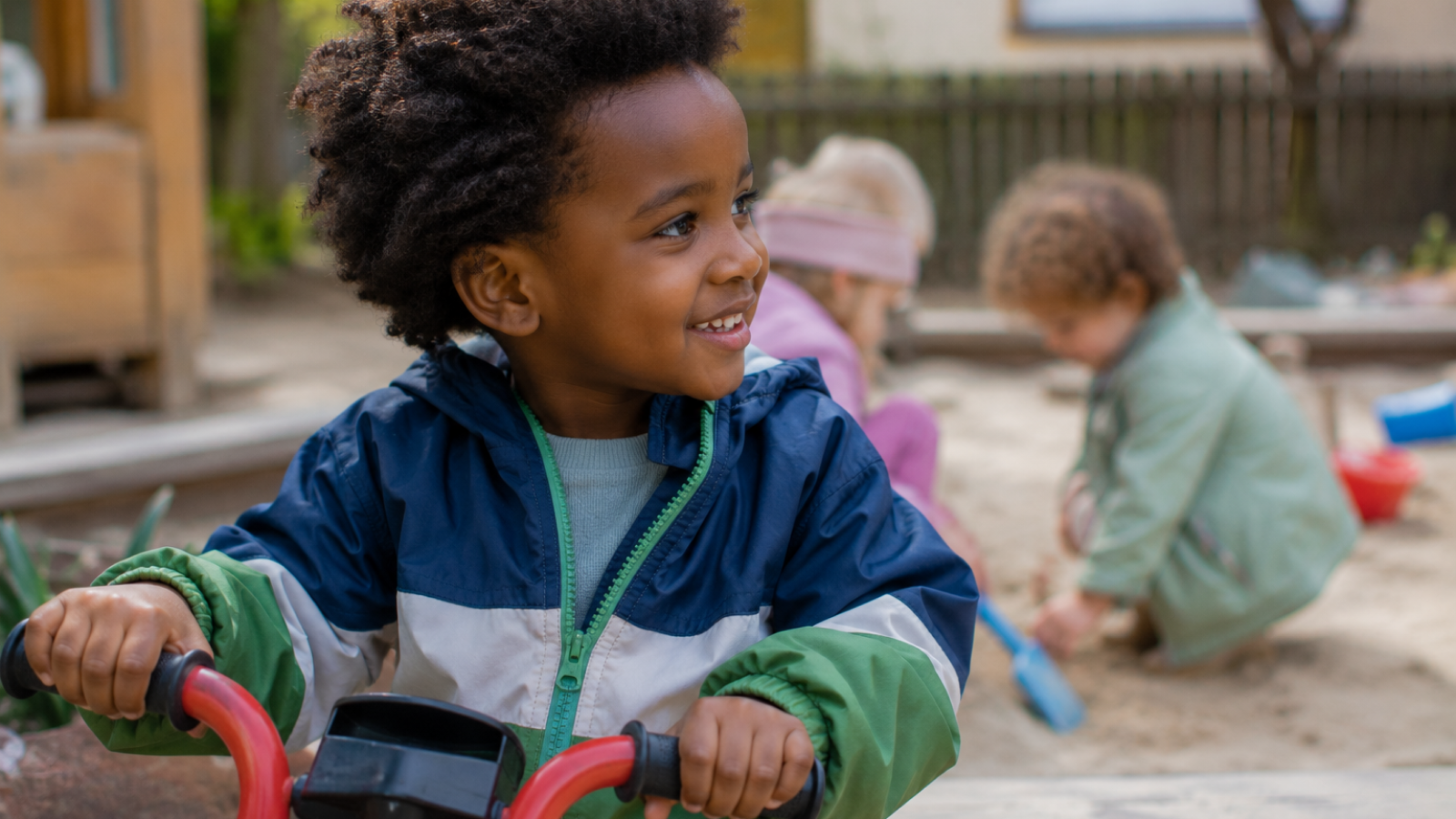
At around four to four and a half years old, your child's world becomes increasingly social. Friendships become more important, playtime lasts longer, and rules gain significance. At the same time, your child is developing a clearer sense of self: discovering what comes easily, what they are proud of, and how others react to their behavior.
Your child might suddenly talk about the same friend every day, want to be part of the group, or feel sad if they can't join in. These experiences are part of an important developmental phase and help build social skills step by step.
What's Developing Now
Between 49 and 54 months, many social and emotional skills continue to mature.
Many children begin to:
- form close friendships,
- see themselves as part of a group,
- better understand rules in group play,
- show empathy more consciously,
- express their own feelings more accurately,
- feel proud of their achievements,
- become more aware of criticism or disappointments.
Children learn daily through experiences with others.
What You Might Observe
In everyday life, many new developments become apparent.
You might notice that your child:
- refers to certain children as friends,
- looks forward to playdates,
- experiences conflicts with other children more intensely,
- is especially happy with praise,
- asks for your opinion,
- proudly shows what they have accomplished,
- reacts with sadness or disappointment when things don't go as planned.
With each new experience, their self-image continues to develop.
Friendships Become More Important
While younger children often play side by side, genuine friendships are now forming.
Many children:
- seek out specific playmates,
- develop shared play ideas,
- make compromises,
- argue and make up again,
- learn to be considerate.
Conflicts are as much a part of development as harmonious play phases.
Growing Self-Confidence
Your child now compares themselves more with others.
They want to know:
- Am I fast?
- Am I good at this?
- Do others like me?
- Can I join in?
Therefore, recognition, encouragement, and a respectful approach are especially important now.
Emotions Become More Complex
Emotionally, your child is also developing further.
Many children now experience more consciously:
- pride,
- shame,
- disappointment,
- empathy,
- envy,
- joy in shared successes.
These feelings can be very intense and still need your support.
Motor Skills Become More Confident
Physically, your child is also making great strides.
Many children can now:
- run and jump confidently,
- balance over longer distances,
- climb and overcome obstacles,
- throw and catch a ball accurately,
- handle scissors and pencils with increasing skill,
- cut out or trace simple shapes.
These new skills often boost confidence in their own abilities.
How You Can Support Your Child
Your child learns a lot through interaction with others.
Helpful activities include:
- scheduling playdates with other children,
- talking about feelings,
- calmly guiding through conflicts instead of solving them immediately,
- praising effort and progress—not just the result,
- assigning small tasks and responsibilities,
- discussing friendship, fairness, and consideration together.
This helps your child gradually develop social confidence and self-esteem.
What You Should Know
Around four to four and a half years old, friendships, belonging, and self-image become increasingly important. Your child learns to collaborate with others, endure conflicts, and better understand their own feelings. At the same time, the need for recognition and appreciation grows. Loving guidance, clear boundaries, and many positive experiences with other children strengthen this development sustainably.
Milestones
Between 49 and 54 months, many children can:
- intentionally build and maintain friendships (48–60 months)
- clearly express pride, shame, and empathy (48–58 months)
- increasingly understand their role within a group (50–60 months)
- manage fine motor tasks like cutting or more precise drawing (49–60 months)
- better articulate their own feelings and needs (50–60 months)