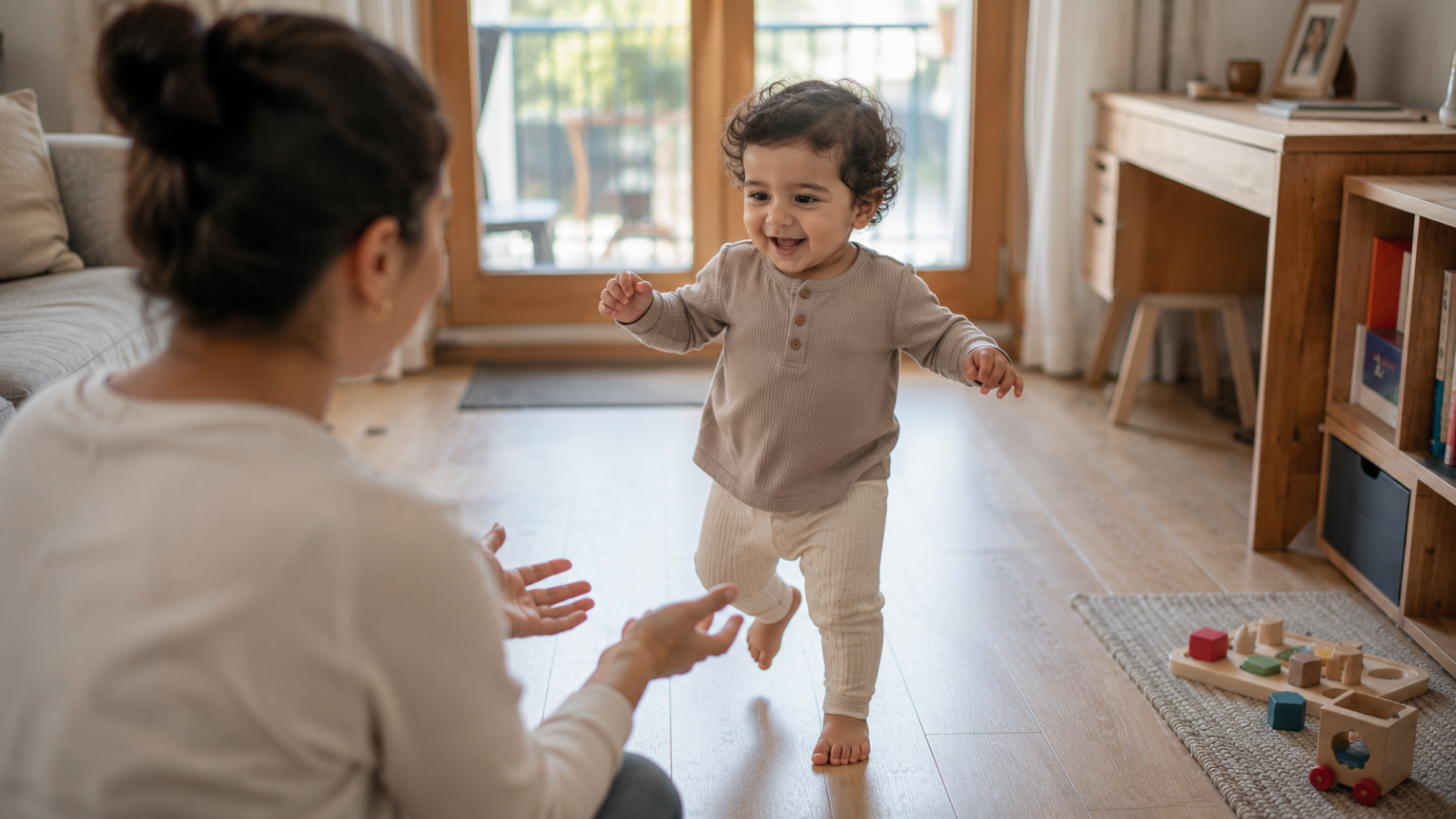
Child Development in the 12th – 13th Month
Is your child suddenly wanting to do everything on their own, pointing at things, imitating you, or maybe even taking their first independent steps? Around the first birthday, development often becomes particularly noticeable. Your baby gradually becomes a toddler.
First, an important note: Every child develops at their own pace. Some are already walking independently, while others may crawl for a few more weeks or months. Some speak their first words, while others communicate mainly through gestures. The key is not the exact timing of individual milestones, but that your child is developing overall and curiously exploring their environment.
What You Can Observe Now
You might notice that your child:
- wants to try many things on their own
- attentively observes and imitates daily routines
- points at things more often to show you or express a desire
- uses first words or understands significantly more
- reacts more sensitively to changes in daily life
- is proud of tasks they accomplish on their own
- signals "No" more often or protests
Many children now develop a strong desire for independence.
What Is Developing Now
Around one year old, your child increasingly understands that many actions consist of several steps.
For example, they recognize:
- how to use a spoon,
- how to open doors,
- that objects have a specific purpose,
- or how daily routines work.
That's why they want to help more often, try things out, and be active themselves.
At the same time, the need for fixed routines grows. Repetitive routines provide security and orientation.
Movement and Motor Skills
Between the 12th and 13th month, balance and coordination develop rapidly.
Many children:
- confidently pull themselves up on furniture
- walk along furniture
- take their first independent steps
- sit down in a controlled manner
- pick up small objects deliberately
- explore their environment more independently
Some children are already walking confidently, while others start a few months later. Both can be completely normal.
Language and Communication
Communication also develops noticeably further.
Many children:
- understand simple instructions
- recognize familiar words
- point at things intentionally
- wave or shake their head
- say first words like "Mama," "Papa," or other familiar terms
- imitate sounds and words
Often, children understand much more than they can express themselves.
Play and Independence
Play changes significantly now.
Many children:
feed their stuffed animal
talk on a toy phone
push a doll stroller
putting things in and taking them out
eagerly helping with small everyday tasks
Children learn a lot about their environment through imitation at this stage.
Nutrition and Sleep
Many children are now starting to eat more independently.
The following changes are quite normal:
- fluctuating appetite
- first preferences and dislikes
- interest in eating with a spoon or fingers
- occasionally more restless nights due to many new impressions or teething
Around the first birthday, sleep and eating habits often change again.
How You Can Support Your Child
It's important to give your child as many opportunities as possible to have their own experiences.
Helpful strategies include:
- letting them take on small tasks in daily life
- allowing enough time for independent experimentation
- using simple language and consistent routines
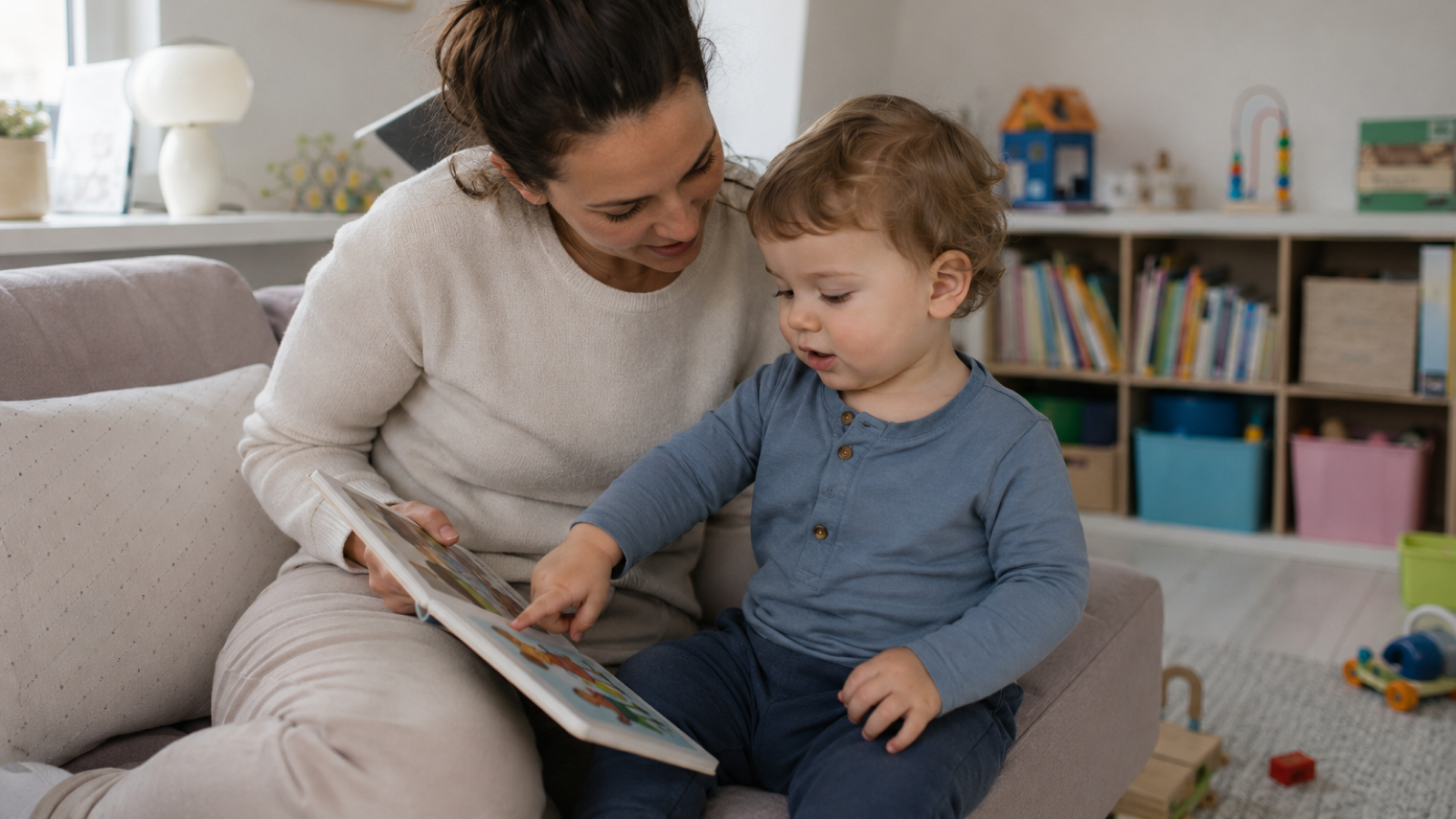
- looking at and naming objects together
- using books, finger games, and role-playing
- providing loving support during moments of frustration
The focus is not on perfection now, but on discovering things independently.
Milestones
- confidently pulls up to stand and often walks along furniture
- some children take their first independent steps
- points to objects to communicate attention or desires
- understands simple instructions and recognizes many familiar words
- some children speak their first meaningful words
- imitates everyday actions like talking on the phone, feeding, or cleaning
- increasingly tries to eat independently and help with daily tasks
In Summary
Around the age of one, your child is becoming more independent. They want to help, understand connections, and actively participate in daily life. At the same time, they still need a lot of guidance, patience, and encouragement. By providing secure routines and opportunities for self-exploration, you support your child in becoming more independent step by step.