Child Development in Months 55 – 60
At about four and a half to five years old, your child is becoming an increasingly independent little person. They want to take on tasks, bear responsibility, and show what they can do. At the same time, friendships, rules, and group interactions become more important. Many children are naturally preparing for school life during this phase—not through worksheets, but through play, experimentation, and daily life.
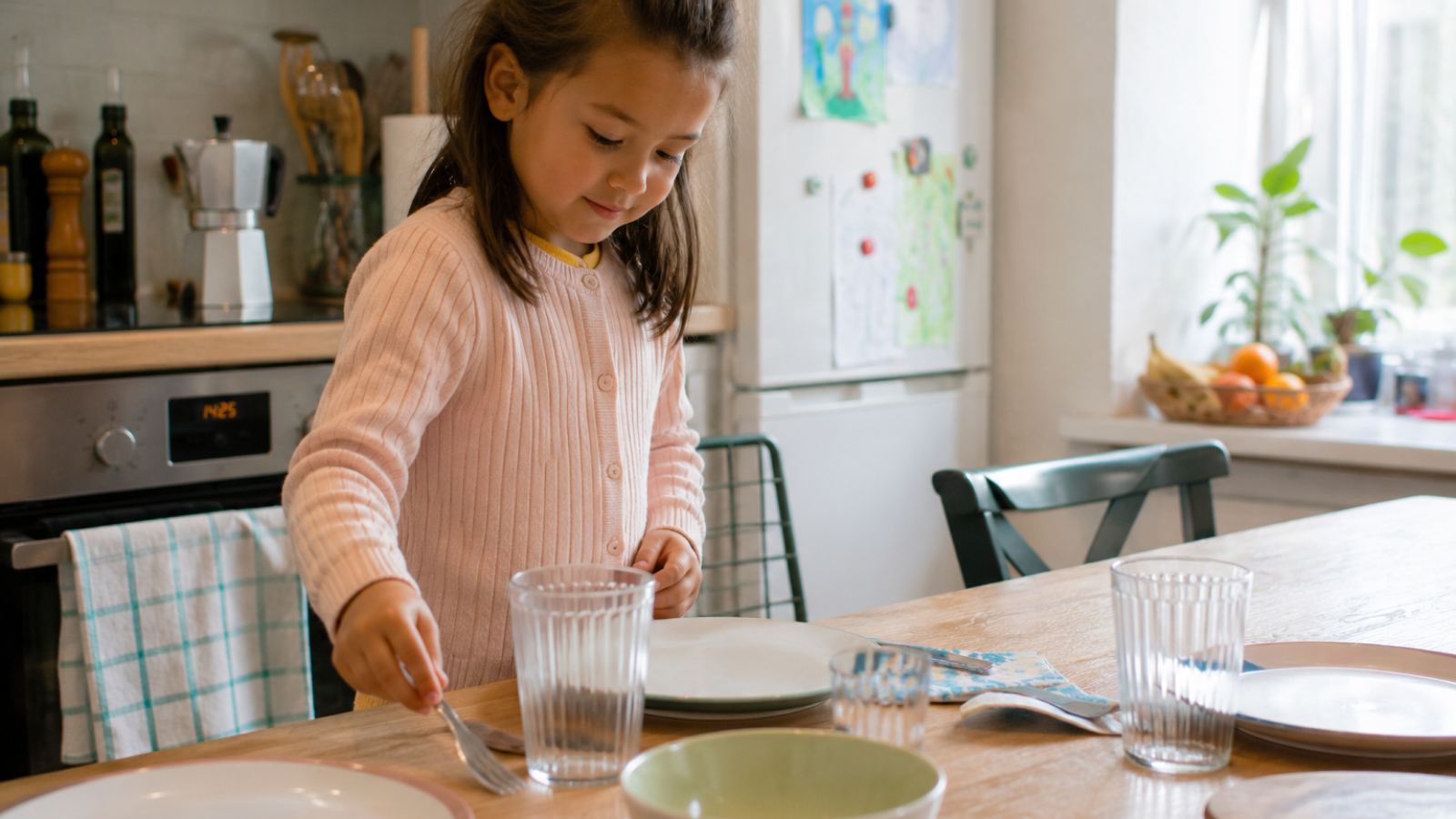
You might notice that your child wants to set the table, proudly shares stories from kindergarten, or asks why certain rules exist. All these are important developmental steps on the path to school readiness.
What’s Developing Now
Between 55 and 60 months, independence, concentration, and a sense of responsibility continue to grow.
Many children begin to:
- Take on tasks independently,
- Plan and carry out longer sequences,
- Better understand and question rules,
- Take responsibility for small tasks,
- Concentrate longer on games or projects,
- Contribute their own ideas in groups,
- Develop early skills for writing and drawing.
It's not about doing everything perfectly—it's about trying things out more independently.
What You Can Observe Now
In everyday life, many new skills become apparent.
You might notice that your child:
- Wants to help around the house voluntarily,
- Proudly takes on responsibility,
- Tells longer, coherent stories,
- Remembers rules in games,
- Wants to resolve conflicts with other children more independently,
- Listens attentively and completes tasks step by step,
- Asks more frequently why certain rules exist.
Endurance also increases significantly now.
Responsibility Brings Pride
Many children now want to show that they are "big" already.
They enjoy taking on tasks like:
- Setting the table,
- Watering plants,
- Packing their backpack,
- Choosing clothes,
- Helping with cooking,
- Tidying up toys.
These everyday experiences strengthen self-confidence and personal responsibility.
Concentration Continues to Develop
At nearly five years old, many children can focus on one thing much longer than they could a year ago.
For example:
- Solving puzzles,
- Crafting,
- Building,
- Listening to stories,
- Playing board games,
- Baking or cooking together.
The attention span naturally grows with each new experience.
Laying the Foundation for School
School readiness begins long before the first day of school.
Many important skills are developing now in everyday life:
Listening,
Waiting,
Finding solutions together,
Complete tasks,
Understand rules,
Hold pencils securely,
Trace lines, curves, and simple patterns.
These skills are often more important than early reading or math.
Motor Skills Become More Precise
Your child is also making further progress in fine and gross motor skills.
Many children can now:
- Walk, run, and balance confidently,
- Hop and climb,
- Cut and glue with precision,
- Trace simple shapes and patterns,
- Control pencils more steadily,
- Complete small craft projects independently.
These skills will later support learning to write.
How You Can Support Your Child
Your child learns a lot now by taking on responsibility.
Helpful activities include:
- Assigning small tasks in daily family life,
- Cooking or baking together,
- Playing board games,
- Telling and reading stories,
- Crafting, painting, and building,
- Allowing plenty of time for free play,
- Valuing successes and viewing mistakes as learning opportunities.
Perfection isn't key, but the experience: “I can do this.”
What You Should Know
Around five years old, your child develops more independence, perseverance, and a sense of responsibility. They want to participate, take on their own tasks, and feel included. At the same time, important foundations for school are being laid—especially through play, movement, language, and family life. The more your child is allowed to try things out and is lovingly supported, the more confidently they will trust in their own abilities.
Milestones
Between 55 and 60 months, many children can:
- Voluntarily take on small tasks in daily life (54–64 months),
- Understand rules and increasingly question their purpose (55–65 months),
- Concentrate on games or projects for longer periods (54–62 months),
- Confidently trace simple patterns, curves, and shapes (55–65 months),
- Tell stories with a beginning, middle, and end coherently (55–66 months).