Child Development in Months 45–48
At around four years old, your child is often bursting with ideas. They create stories, develop their own play worlds, and find surprising solutions to small everyday problems. At the same time, their language becomes more nuanced: sentences get longer, explanations more logical, and conversations more engaging.
You might notice your child inventing new rules during play, telling imaginative stories, or increasingly explaining why things are the way they are. Creativity, language, and thinking are now closely intertwined and support each other.
What’s Developing Now
Between 45 and 48 months, your child makes significant progress in creative and linguistic thinking.
Many children begin to:
- develop their own ideas and stories,
- create imaginative role plays,
- want to solve problems independently,
- form longer and more complex sentences,
- explain connections clearly,
- increasingly distinguish between reality and fantasy,
- discover humor and wordplay.
Each child develops these skills at their own pace.
What You Can Observe Now
In everyday life, many new skills become apparent.
You might notice your child:
- telling long fantasy stories,
- evolving role plays over time,
- inventing their own game rules,
- finding unusual solutions to small problems,
- asking many questions and seeking their own answers,
- starting to understand jokes or tell their own,
- getting better at distinguishing between real experiences and made-up stories.
Especially in free play, you can see how creatively your child thinks.
Language Develops Rapidly
At around four years old, conversations become increasingly varied.
Many children:
- speak in longer sentences,
- use words like because, if, although, or but,
- tell stories with a clear beginning, middle, and end,
- describe their thoughts more precisely,
- ask more complex questions.
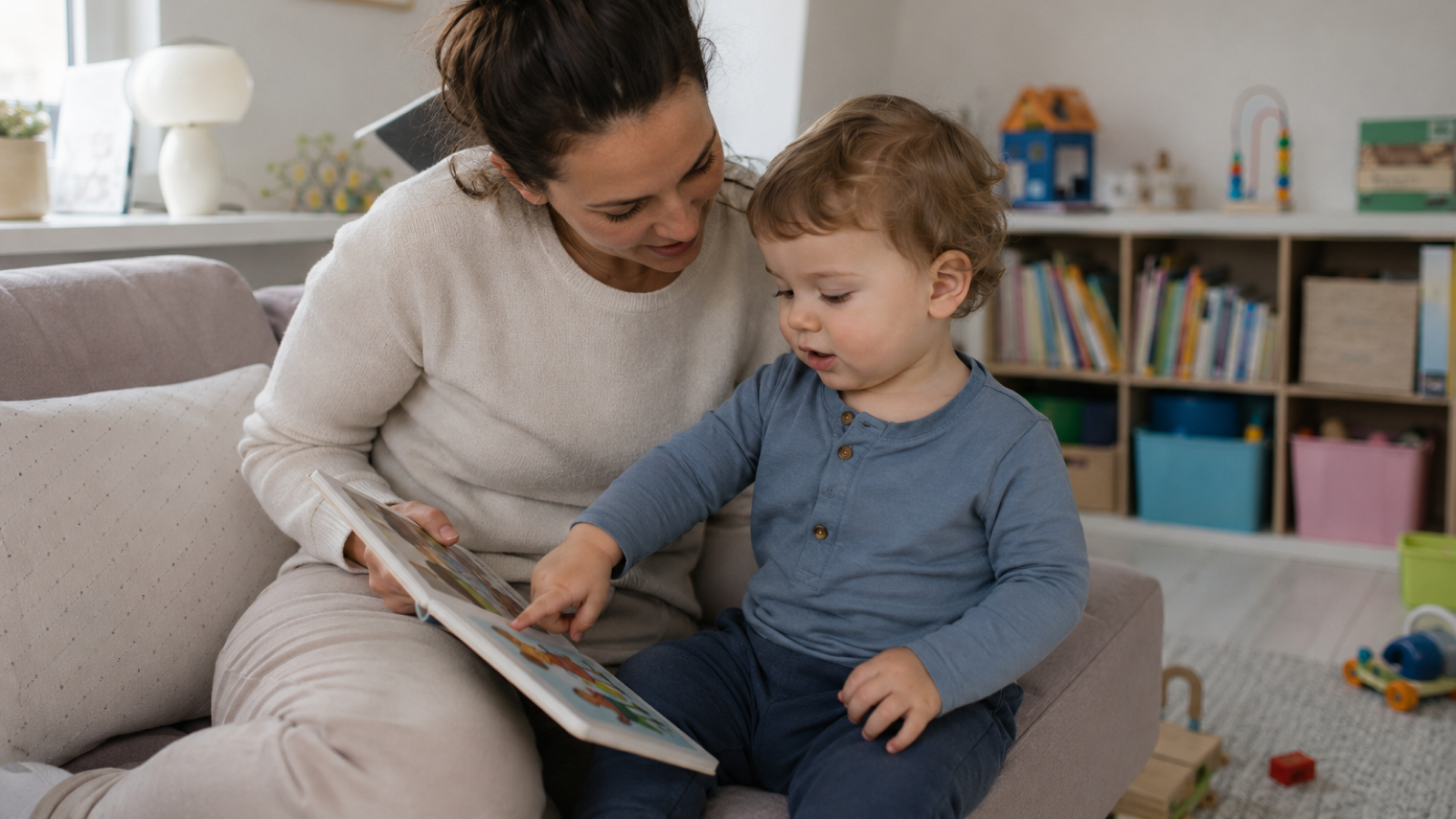
Shared conversations, reading aloud, and storytelling particularly support this development.
Imagination Becomes a Learning Engine
Role plays are now much more than just a pastime.
Many children:
- play family, doctor’s office, or fire station,
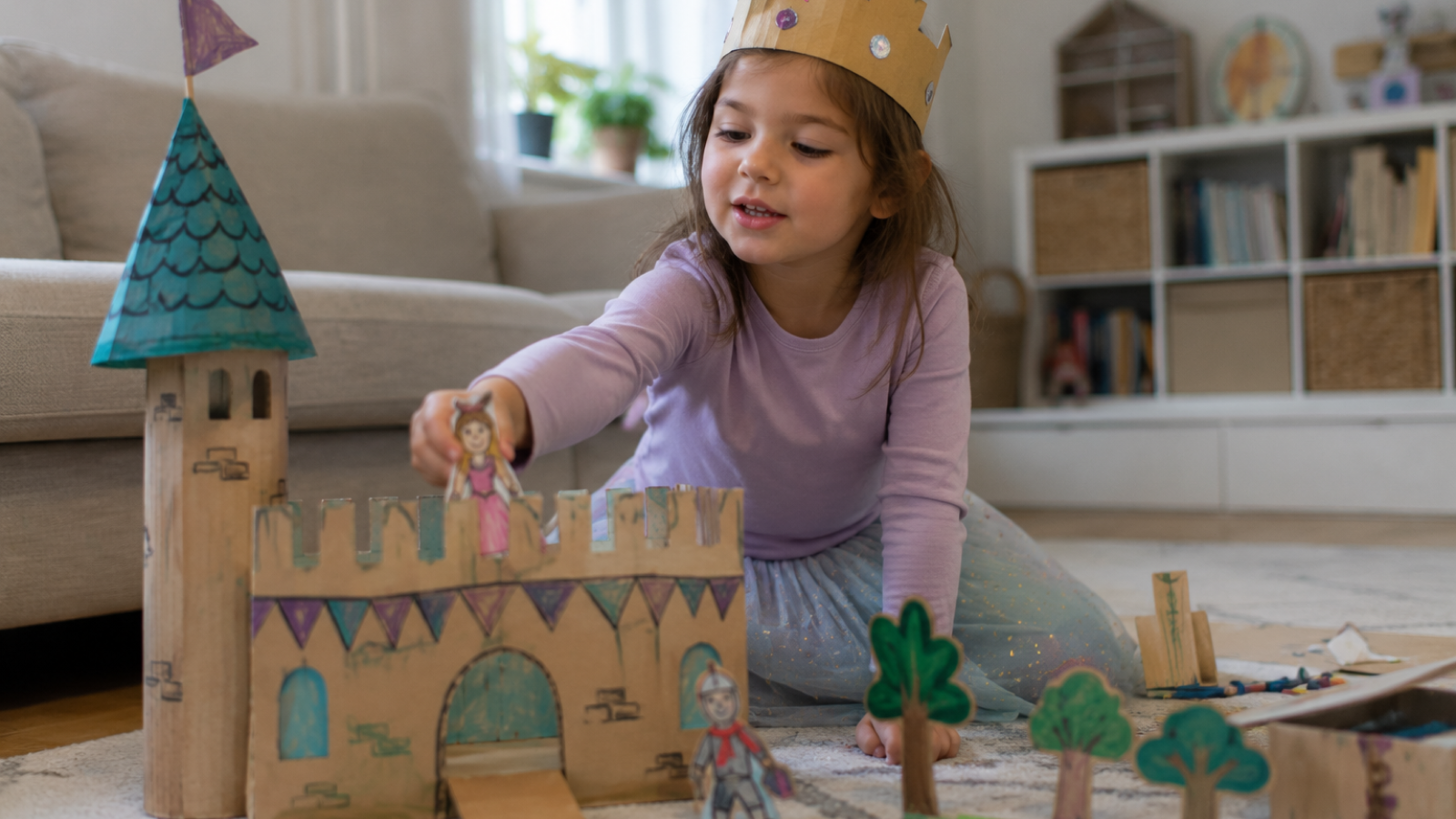
- transform everyday objects into fantasy items,
- develop their own game rules,
- invent entire adventures,
- switch between different roles.
In doing so, they simultaneously train language, creativity, problem-solving, and social skills.
Finding Solutions Independently
Thinking also changes.
Many children now consider:
- “How can I achieve this?”
- “What else could I do?”
- “What happens if I try it differently?”
These early problem-solving strategies boost self-confidence and prepare for many future learning processes.
Motor Skills Support Creativity
Physically, your child is becoming more skillful.
Many children can now:
- run, jump, and balance confidently,
- skillfully overcome obstacles,
- craft and paint with more precision,
- plan and build structures,
- use scissors, glue, or pencils purposefully.
Motor skills and imagination often complement each other.
How You Can Support Your Child
Your child benefits greatly from having space for their own ideas.
Helpful activities include:
- plenty of time for free play,
- inventing stories together,
- asking questions instead of providing solutions,
- participating in role-playing games,
- offering creative materials like building blocks, boxes, or costumes,
- appreciating ideas, even if they seem unusual,
- reading books and then discussing the story together.
It's not about achieving perfect results. What's more important is that your child can try things out, experiment, and find their own way.
What You Should Know
Around the age of four, your child develops more creativity, language confidence, and the ability to find their own solutions. Imagination is much more than play—it supports thinking, language, problem-solving, and social development. The more space your child has for free play, storytelling, and experimenting, the better they can develop these skills.
Milestones
Between 45 and 48 months, many children can:
- create their own imaginative stories and play worlds (44–52 months)
- form longer sentences with "because," "but," or "if" (45–54 months)
- increasingly distinguish between reality and fantasy (45–54 months)
- find creative solutions to small everyday problems (44–50 months)
- engage in imaginative movement and role-playing games (44–52 months)