Many parents ask themselves at some point: “Is my child already talking enough?” While some children say their first words at one year old, others speak clearly much later. Comparisons with other children quickly happen — and with them, uncertainty.
The most important guidance first: Children learn language at their own pace. What matters is not whether your child says a certain number of words at a specific time. Much more important is that their communication develops step by step — in understanding, pointing, listening, and later also in speaking.
How language develops in toddlers
The following age ranges are guidelines. Every child develops individually, and small differences in timing are completely normal.
Around 12 months
Many children:
- say first words like “mummy” or “daddy” on purpose
- respond to their name
- understand simple requests
- point to things that interest them
- use gestures like waving or clapping
Around 18 months
In this phase, language often develops especially quickly.
Many children:
- already say several understandable words
- regularly learn new words
- understand simple questions and short instructions
- show more and more clearly what they want
Around 2 years
Now language often starts to express whole thoughts.
Many children:
- put two words together
- make their first short sentences
- express wishes and needs in words
- understand much more than they can say themselves
Between 3 and 4 years
Language usually becomes more and more fluent now.
Many children:
- speak in longer sentences
- tell small experiences
- ask lots of questions
- have simple conversations
- communicate more and more with other children
Not every developmental step happens exactly on a birthday. Differences of a few months are common.
Understanding is just as important as speaking
Many parents mainly pay attention to how many words their child can already say. But for development, it is at least as important how well they understand language.
A child who doesn’t talk much yet, but:
- responds to their name,
- seeks eye contact,
- points to what they want,
- understands simple requests,
- and uses gestures to communicate,
often develops very differently from a child who also has difficulties with understanding language.
That’s why paediatricians always look at the whole communication — not just vocabulary.
Growing up multilingual is not a disadvantage
Many families speak more than one language at home and wonder whether that confuses their child.
Based on what we know today, this is not the case. Children can learn several languages at the same time. It can happen that they mix words from different languages or that some developmental steps happen a little differently.
What matters most is that each language is spoken regularly and naturally in everyday life.
How you can support language development
Children don’t learn language through practice programs, but through everyday life together.
This is especially helpful:
- talk a lot with each other
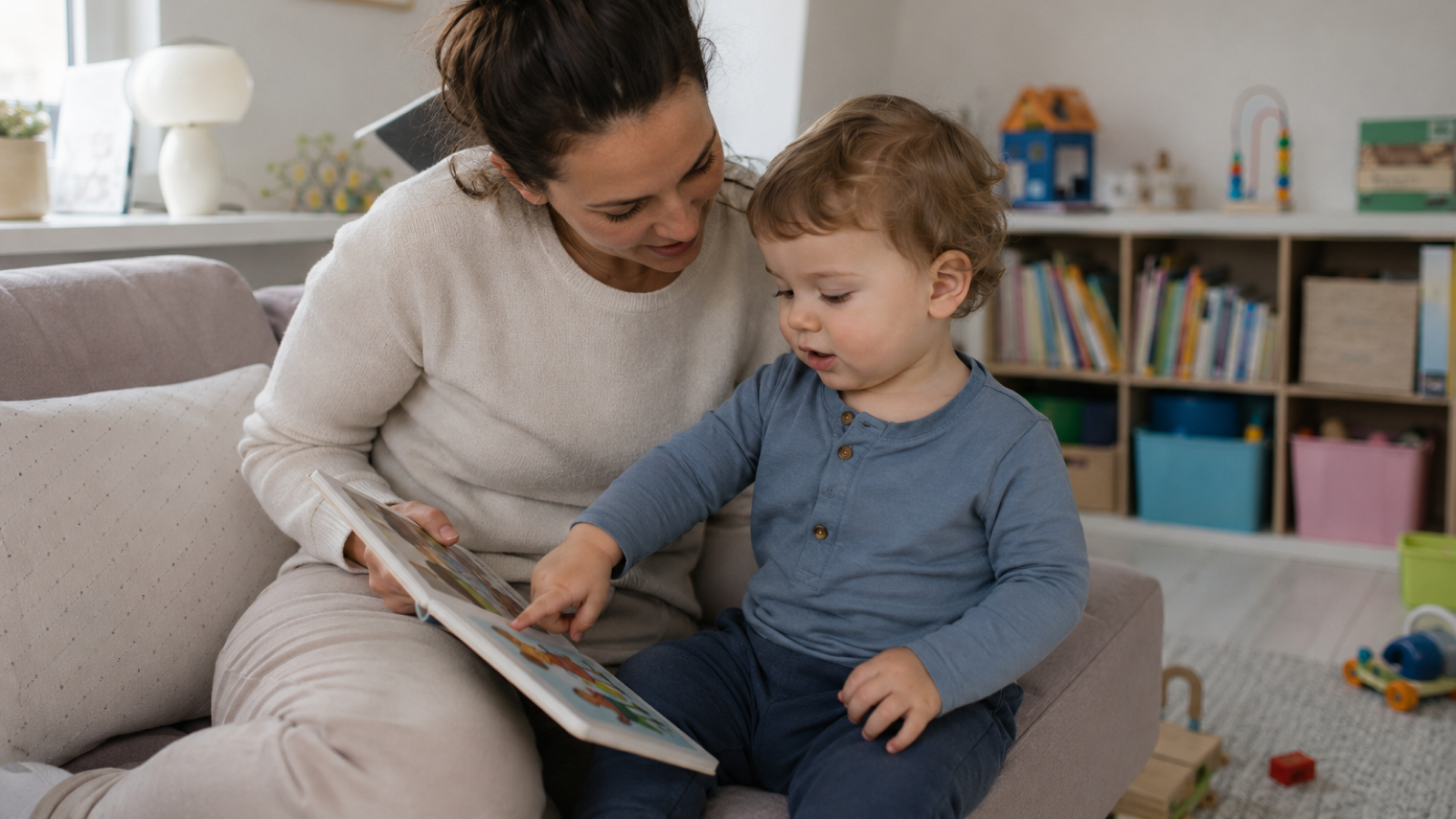
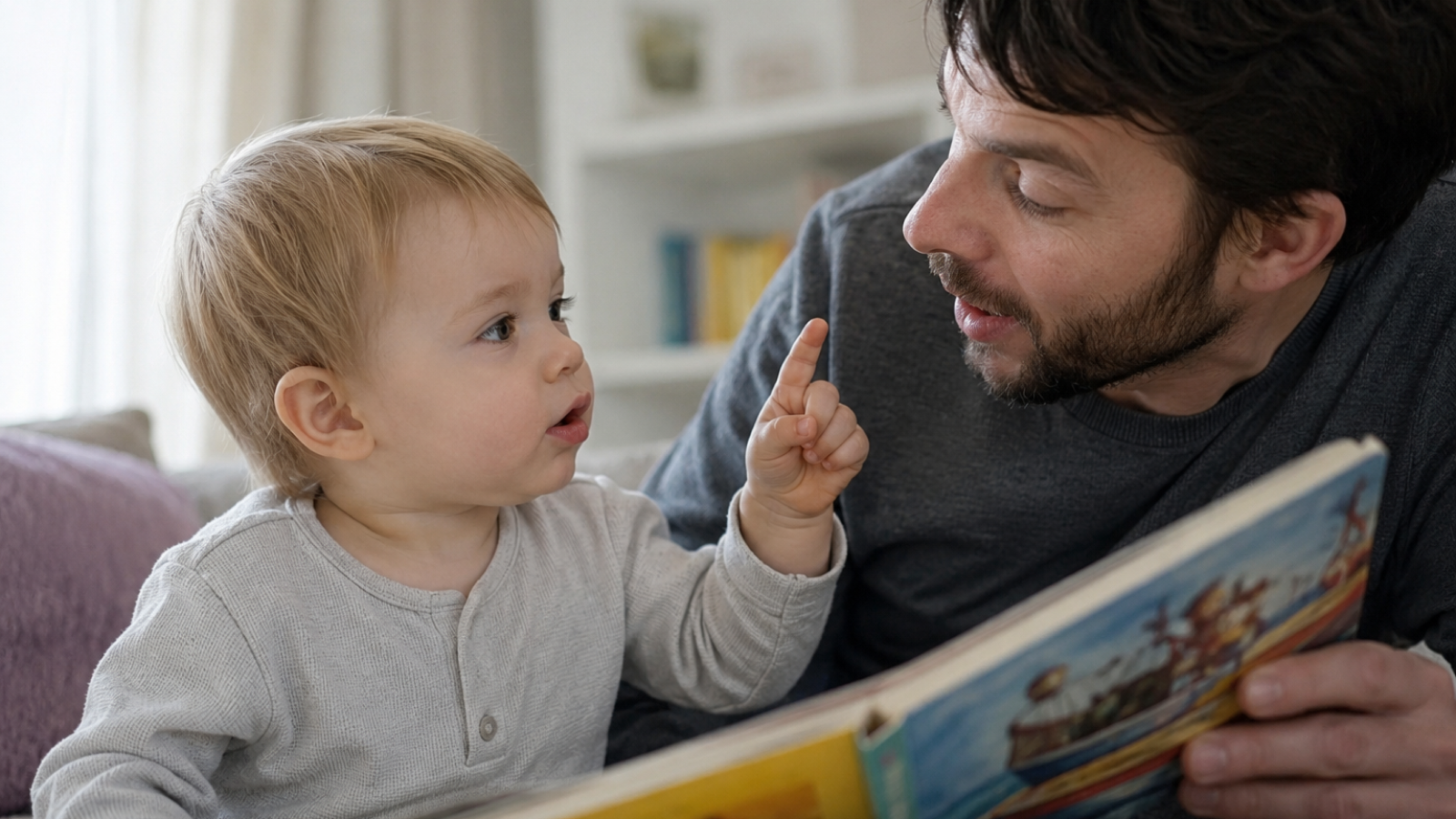
- look at picture books together
- name things you are experiencing right now
- ask questions and give your child time to answer
- sing together, say rhymes, and tell stories
- listen carefully and show genuine interest
It is less helpful to correct your child all the time or to make them repeat words. Language mainly develops through shared experiences and conversations.
When you should take a closer look
Not every child who starts talking later needs treatment. But there are situations that should be checked by a pediatrician.
Talk to your pediatrician’s practice if your child:
- is not using any understandable words by around 18 months,
- is not combining words by about 2 years,
- loses words they had already learned,
- hardly reacts to language or does not understand simple requests,
- rarely seeks eye contact or uses gestures,
- or if overall you feel that their communication is hardly developing further.
The earlier possible concerns are noticed, the better children can be supported.
What could be behind delayed language development
Not every child speaks later because there is a developmental disorder.
Possible causes can include, for example:
- individual development
- frequent middle ear infections or reduced hearing
- premature birth
- neurological or developmental differences
That’s why a hearing test is often part of a pediatric check-up.
In short
Language development is different for every child. Some speak early, others watch more at first and only start with their first words later. What matters is not comparing with other children, but that communication continues to develop overall. Shared conversations, reading aloud, and a language-rich everyday life are the best support for language development.
Support your child’s language development
With the tio App, you get age-appropriate guidance on important developmental steps and can easily record new words, milestones, and changes. This helps you track your child’s development over time and have important observations right at hand for the U-examinations.