Child Development in Months 28–31
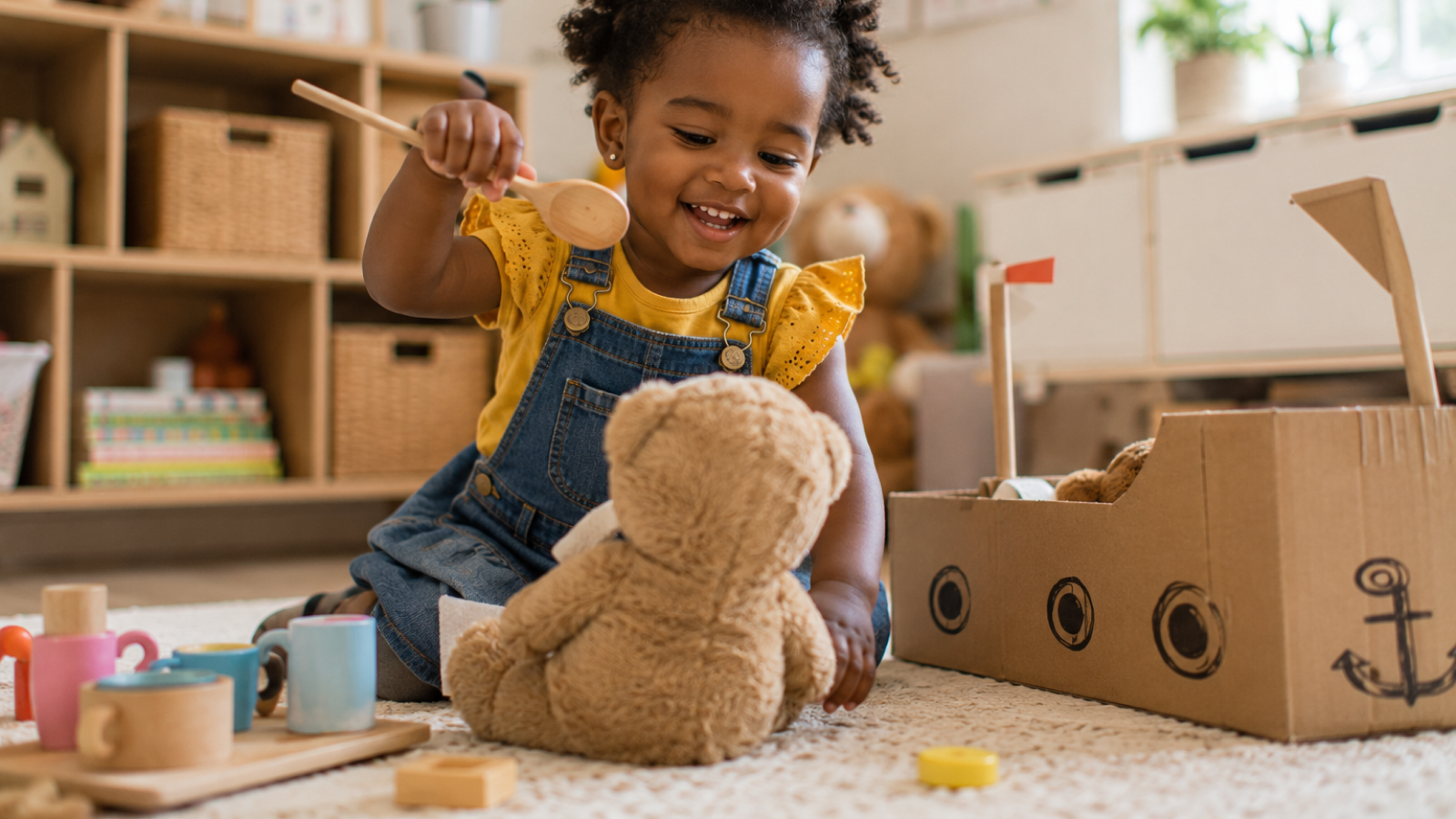
Between 28 and 31 months, your child's imagination develops rapidly. A wooden block becomes a car, a cooking spoon turns into a microphone, and a cardboard box transforms into a pirate ship. Your child starts to create their own stories and uses their imagination to better understand the world.
Language also makes significant progress during this time. Many children now speak in longer sentences, ask countless questions, and share their first little experiences. Interaction with other children also changes: from playing side by side to gradually playing together.
What’s Developing Now
In this phase, your child increasingly connects language, imagination, and social skills.
You might notice that your child:
- plays more imaginatively,
- forms longer sentences,
- asks many "Why?" and "How come?" questions,
- tells small stories,
- understands rules and routines better,
- shows more interest in other children,
- wants to make decisions more often.
Each child develops at their own pace. Some may already be telling full stories, while others still express themselves mainly with short sentences.
What You Can Observe Now
Many children show typical changes in their daily life.
Your child:
- turns everyday objects into toys,
- plays doctor, firefighter, or family,
- makes stuffed animals talk to each other,
- tells little fantasy stories,
- increasingly wants to play with other children,
- often insists on doing things themselves,
- begins to understand simple rules in games.
Even if playing together often ends in arguments, your child learns important social skills through these interactions.
Language Continues to Develop
Between the second and third birthdays, many children's vocabulary grows almost daily.
Many children:
- speak in three- to four-word sentences,
- ask many questions,
- share small experiences,
- understand increasingly longer explanations,
- increasingly name their own feelings and wishes.
Everyday conversations remain the most important driver for language development.
Imagination is Key to Development
Your child's play might sometimes seem strange or completely unrealistic.
But this is a sign of their thinking developing further.
Many children:
- feed their dolls,
- have long conversations with stuffed animals,
- build fantasy worlds,
- reenact everyday situations,
- invent their own stories.
Such role-playing not only fosters creativity but also language, problem-solving, and social skills.
Social Skills are Growing
Living with others is also changing.
Many children are now beginning to:
- Sharing toys,
- responding to other children,
- comforting,
- accepting simple rules,
- playing together for short periods.
Conflicts are still part of the process. Sharing, waiting, and being considerate need to be learned gradually.
Motor Skills Are Becoming More Confident
Physically, your child is becoming more independent.
Many children can now:
- walk and run confidently,
- make small jumps with both feet,
- climb,
- throw balls,
- try out first tricycles or balance bikes,
- twist lids on and off,
- draw and craft with more precision.
As movements become more confident, the desire to try things independently often grows.
How You Can Support Your Child
Your child learns a lot now through playing together and conversations.
Helpful activities include:
- participating in role-playing games,
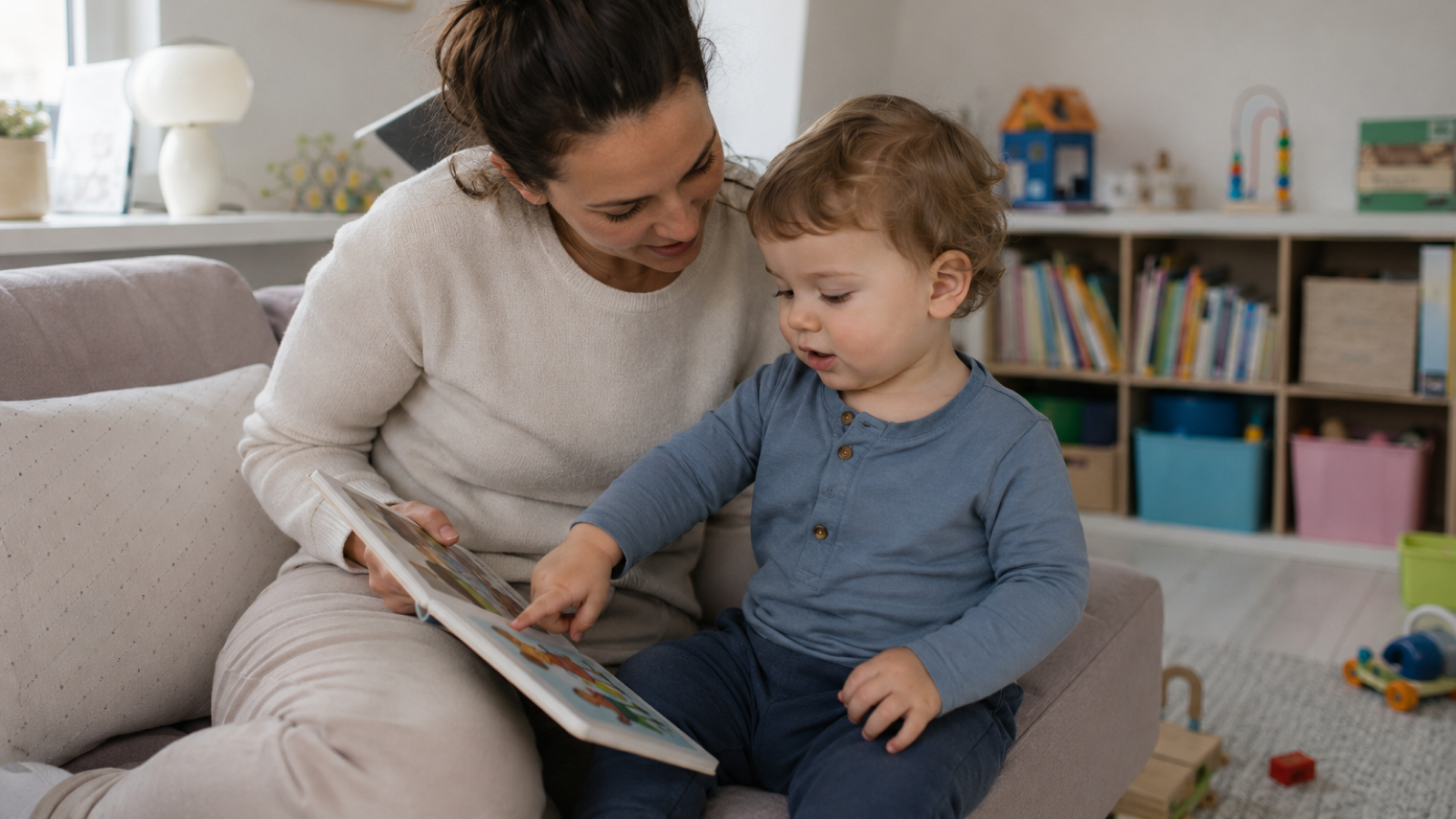
- looking at picture books together,
- asking open-ended questions,
- telling and inventing stories,
- planning plenty of time for free play,
- letting them take on small tasks in daily life,
- naming feelings together.
You don't need to direct the play. Often, it's enough to join in with interest and build on your child's ideas.
What You Should Know
At nearly three years old, language, imagination, and social learning are increasingly interconnected. Your child uses stories, role-playing, and conversations to better understand their environment and process experiences. At the same time, the desire for independence grows. Patience, playing together, and many conversations often support this development better than targeted promotion.
Milestones
Between 28 and 31 months, many children can:
- develop small imaginative stories in play (28–36 months),
- ask many "why" or "how come" questions (30–38 months),
- climb confidently and make first jumps with both feet (28–34 months),
- use objects imaginatively in role play (27–33 months),
- clearly express their desire for independence (27–36 months).