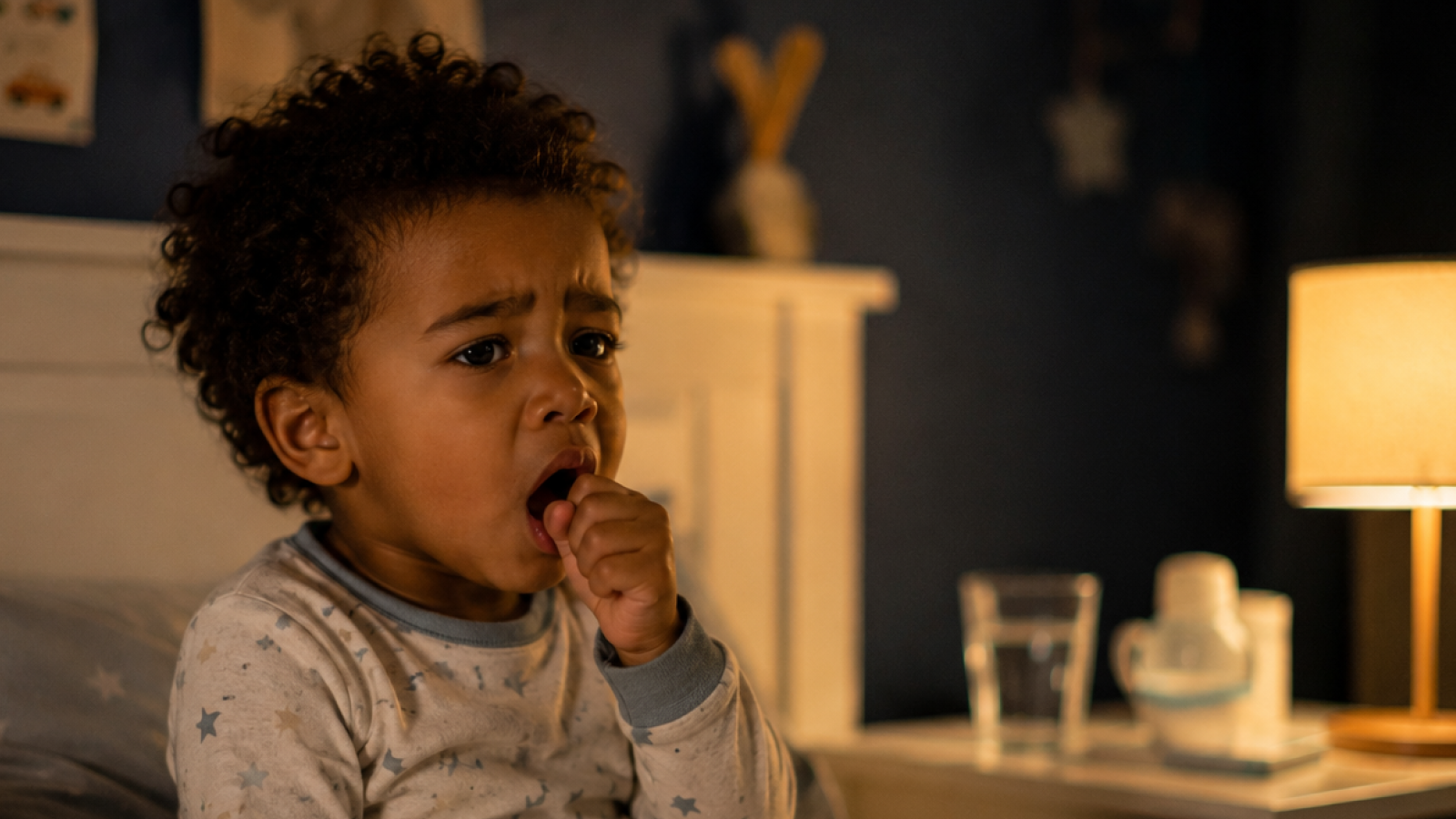
Has your child had a runny nose for weeks, the cough just won’t go away, and it feels like they’re constantly catching a cold? Many parents then wonder: Is this still normal – or could there be something more behind it?
First, the reassuring news: Especially in toddlers, coughs and colds can last much longer than many parents expect. Children who go to daycare often catch several infections one after another. This can easily make it seem like they never really get well again.
How long do coughs and runny noses usually last?
A typical common cold usually lasts 7 to 10 days. However, some symptoms can last longer.
Typical patterns are:
- A runny nose usually improves within one to two weeks.
- After a viral infection, a cough can last two to four weeks.
- The cough is often more noticeable for longer at night or during physical activity than during the day.
Especially in young children, a longer-lasting cough is therefore often still part of normal recovery.
Why does my child seem sick all the time?
Especially after starting daycare, the immune system is constantly dealing with new germs.
Many children have:
- 8 to 12 respiratory infections per year
- often only a few symptom-free days between infections
- coughs and runny noses that sometimes drag on for several weeks
Often, this is not one single long infection, but several infections one right after another.
When are ongoing symptoms often still normal?
Even if it’s exhausting: Usually there is no reason to worry if your child:
- plays again and seems well between infections
- drinks and eats normally
- gains enough weight
- does not have persistently high fever
- the cough slowly improves overall
A slow course is not uncommon with respiratory infections in childhood.
When should you have the symptoms checked by a doctor?
A pediatric check-up is a good idea if:
- the cough lasts longer than four weeks and does not improve
- your child keeps getting high fever
- shortness of breath or wheezing sounds occur
- the cough is persistently very severe, especially at night
- your child is not gaining weight well or is losing weight
- they seem unusually tired or weak
- the cough is associated with blood
- chest pain or ear pain is added
- the runny nose stays pus-like for weeks or there is severe facial pain
Even if you feel worried about the overall course, you should contact your pediatric practice.
What causes can be behind a long-lasting cough?
A viral infection is not always the only explanation.
Depending on how things develop, possible causes include, for example:
several colds in a row
a sinus infection
a swallowed object
asthma or sensitive airways
allergies
whooping cough
rarely, other chronic conditions
That’s why your pediatric practice always looks at the overall picture, not just how long the cough has lasted.
What can help your child at home?
If your child seems well overall, simple measures often help.
These include:
- drinking enough fluids
- fresh air and age-appropriate activity
- enough sleep and rest
- a smoke-free environment
Cough medicines are usually not recommended for young children. If needed, talk to your pediatric practice about it.
These observations help with assessment
If symptoms last longer, it’s worth paying attention to how they develop over time.
Helpful questions include:
- How long has your child been coughing?
- Is the cough getting better overall or worse?
- Is the cough dry or phlegmy?
- Does it happen mainly at night, during the day, or with exercise?
- Does your child have phases in between without fever and with fewer symptoms?
- Are there breathing sounds or shortness of breath?
- How is the runny nose developing?
- Does your child go to daycare, or have they had lots of infections recently?
This information helps to assess what’s going on and what may happen next.
Patience is often part of getting better
Especially in the first daycare years, recurring respiratory infections are unfortunately part of everyday life for many families. Even if a cough and runny nose sometimes drag on for weeks, it often isn’t anything serious.
What matters less is how long individual symptoms last, and more how your child is doing overall: If your child gets back to normal between infections, drinks and plays as usual, and symptoms slowly improve, this usually points to a normal course. If there are warning signs or ongoing worsening, your child should be examined by a pediatrician.
Keep an eye on the course
With the tio App, you can easily document cough, runny nose, fever, and other accompanying symptoms. This makes it easier to see whether symptoms are slowly improving or changing again—and if you have an appointment at the pediatric practice, you’ll have a clear overview of the course at hand.