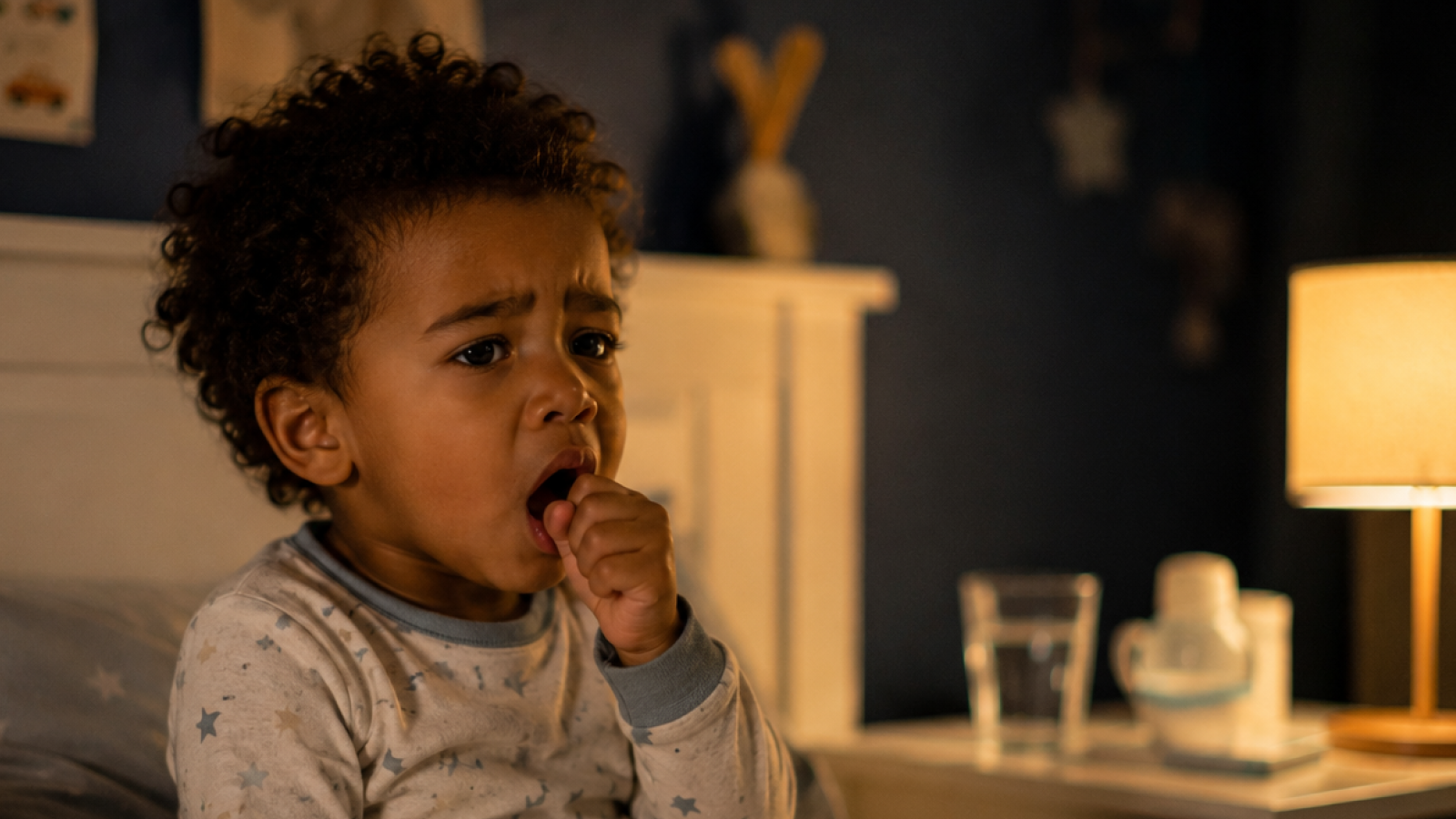
Is your baby sniffling, breathing loudly, or waking up at night because of a stuffy nose? Many parents find that even a "small" stuffy nose can really disrupt daily life, especially during those first colds.
This is because babies primarily breathe through their noses in the first months of life. When their nose is blocked, not only does sleeping become difficult, but drinking or breastfeeding can also become more challenging. The good news: In most cases, a harmless cold is the cause, and symptoms improve within a few days.
Why is a stuffy nose so troublesome for babies?
Babies have very narrow nasal passages. Even slight swelling of the mucous membranes or some nasal mucus can significantly hinder breathing.
This can cause your baby to:
- pause more often while drinking,
- sleep more restlessly,
- snore or breathe loudly,
- cry or fuss more quickly,
- need more closeness overall.
At night, symptoms often seem worse because more mucus collects when lying down.
What helps with a stuffy nose?
In most cases, simple measures are sufficient.
Helpful remedies often include:
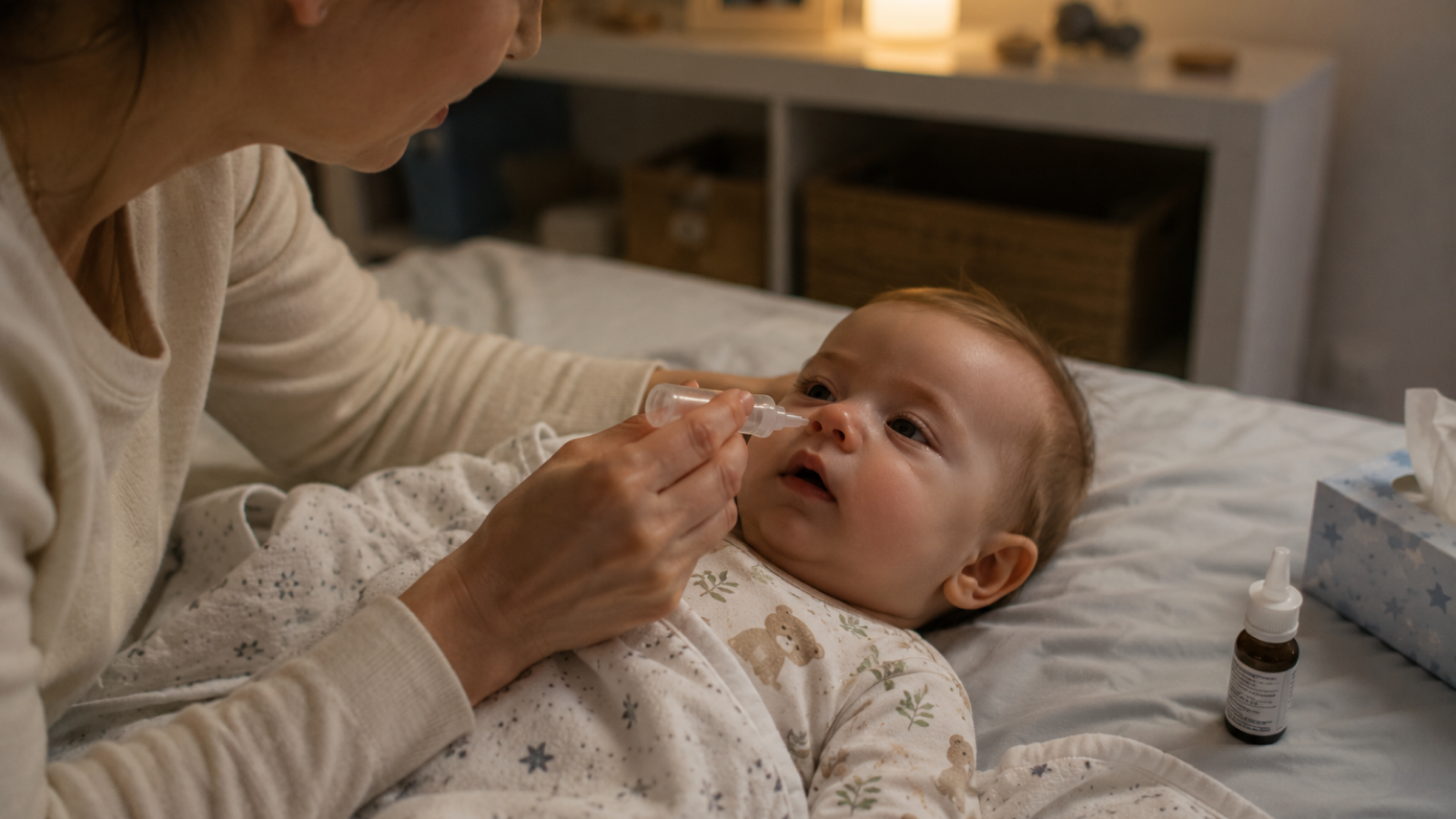
- Saline solution or isotonic nasal drops to loosen thick mucus
- Moistening the nose before drinking or sleeping
- Regularly offering small amounts to drink or breastfeed
- Maintaining a comfortable room temperature and ensuring plenty of fresh air
- Providing lots of rest and physical contact
Many babies drink better if their nose is moistened with saline solution shortly beforehand.
Can I use a nasal aspirator?
Yes. A nasal aspirator can help gently remove loosened mucus, especially before breastfeeding or sleeping.
However, it's important to:
- only use it when necessary,
- avoid unnecessarily irritating the mucous membrane,
- use saline solution beforehand if possible.
Too frequent use can further irritate the sensitive nasal mucosa.
What helps at night?
Many parents especially wish for calmer nights.
The following measures can be helpful:
- Moistening the nose with saline solution before bedtime
- Gently removing mucus before the last meal
- Letting your baby drink enough
- Regularly airing out the bedroom
Avoid using scented oils, menthol, or essential oils with babies. They can further irritate the airways.
What is less helpful?
For a simple cold, home remedies are often recommended, but their benefits are not clearly proven.
These include, for example:
- Onion sachets by the bed,
- Strongly scented rubs,
- Essential oils,
- Decongestant nasal sprays without pediatric recommendation.
Especially for small babies, medications should only be used after consulting with the pediatrician's office.
When should you take your baby to the doctor?
A pediatric examination is advisable if:
- your baby is younger than 3 months and has a fever over 38.0 °C,
- they are drinking significantly less,
- their breathing appears visibly strained,
- their nostrils are flaring noticeably,
- there are retractions between the ribs or at the neck,
- your baby seems unusually lethargic,
- the cold lasts longer than about ten days or worsens significantly,
- ear pain or high fever develops.
It's not just the stuffy nose that matters, but how well your baby can breathe and drink overall.
Does my baby need to sleep better at night?
Not necessarily. During a cold, many babies sleep more restlessly and wake up more often.
As long as your baby:
- drinks enough,
- can settle back to sleep between waking periods,
- breathes normally,
- and is developing well overall,
temporary restless sleep is usually not a cause for concern.
Remember this
A stuffy nose is one of the most common complaints in the first year of life. At night, it can make sleeping and drinking difficult because babies mostly breathe through their noses. With saline solution, plenty of fluids, and a little patience, symptoms usually improve within a few days. If breathing problems, refusal to drink, or warning signs occur, your baby should be examined by a pediatrician.