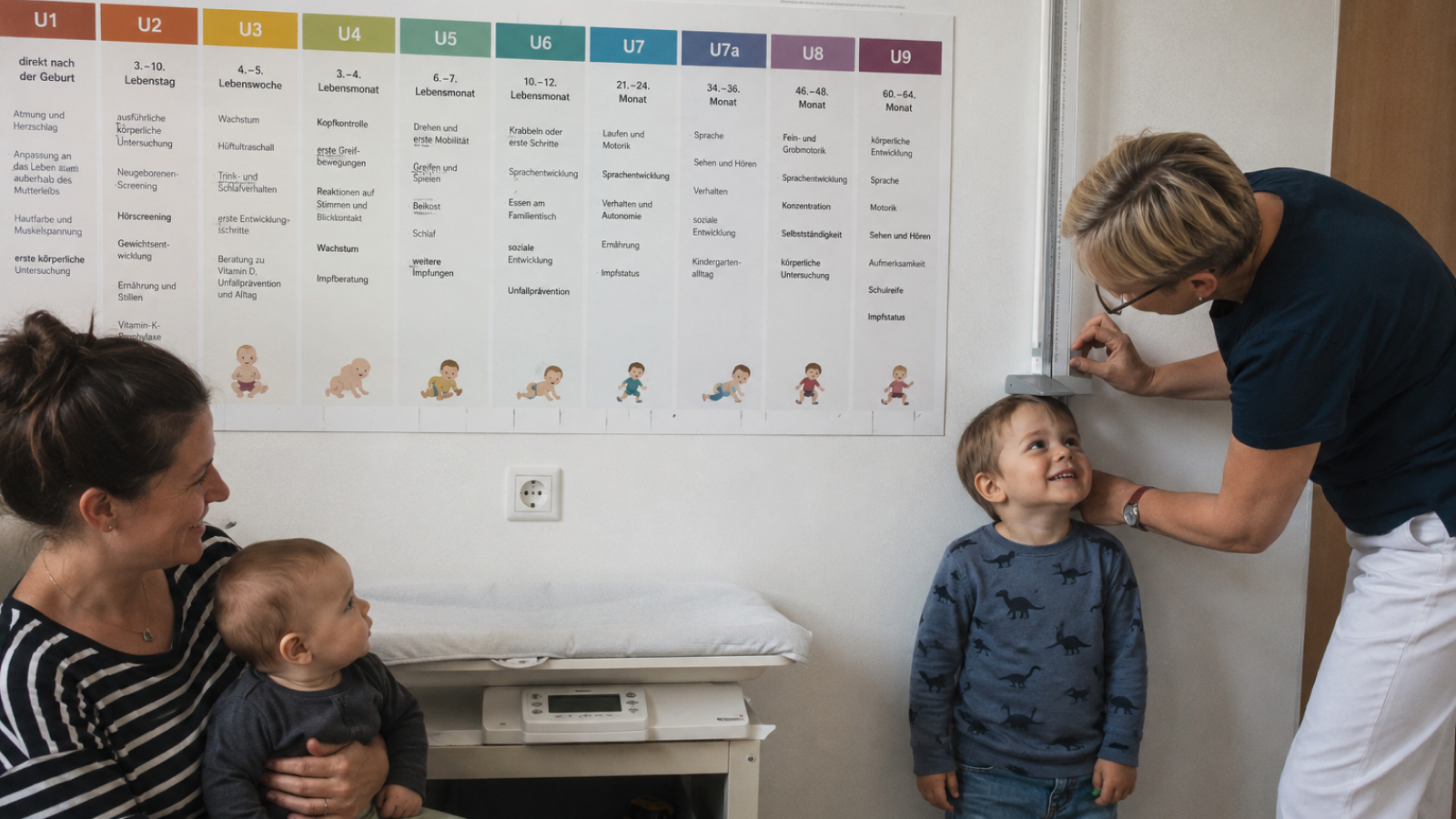
The U-examinations accompany your child from birth to school age. Many parents wonder before each appointment: What is actually being examined? Is my child developing appropriately for their age? And how can I best prepare?
U-examinations are not a test for your child—or for you as a parent. They are designed to regularly monitor your child's development, detect illnesses early, and discuss any questions with the pediatrician.
Why are the U-examinations important?
In the early years, your child develops particularly quickly. These preventive examinations not only check if your child is healthy but also how they are developing.
Depending on the age, the following are checked:
- Growth (height, weight, head circumference)
- Physical development
- Motor skills
- Language
- Vision and hearing
- Social and emotional development
- Nutrition and sleep
- Vaccination status
- Individual questions or concerns of the family
Many abnormalities can be detected early and, if necessary, well managed or treated.
Overview of all U-examinations
U1 – Right after birth
Timing: immediately after birth
The following are checked:
- Breathing and heartbeat
- Adjustment to life outside the womb
- Skin color and muscle tone
- Initial physical examination
U2 – 3rd to 10th day of life
Focus areas:
- Detailed physical examination
- Newborn screening
- Hearing screening
- Weight development
- Nutrition and breastfeeding
- Vitamin K prophylaxis
U3 – 4th to 5th week of life
Often focuses on:
- Growth
- Hip ultrasound
- Drinking and sleeping behavior
- First developmental steps
- Advice on vitamin D, accident prevention, and daily life with the baby
U4 – 3rd to 4th month of life
Checks include:
- Head control
- First grasping movements
- Reactions to voices and eye contact
- Growth
- Vaccination advice
U5 – 6th to 7th month of life
Typical topics:
- Rolling over and first mobility
- Grasping and playing
- Introduction of solid foods
- Sleep
- Further vaccinations
U6 – 10th to 12th month of life
Often focuses on:
- Crawling or first steps
- Language development
- Eating at the family table
- Social development
- Accident prevention
U7 – 21st to 24th month of life
Focus areas:
- Walking and motor skills
- Language development
- Behavior and autonomy
- Nutrition
- Vaccination status
U7a – 34th to 36th month of life
Focuses on:
- Language
- Vision and hearing
- Behavior
- Social development
- Kindergarten routine
U8 – 46th to 48th month of life
Assesses:
- Fine and gross motor skills
- Language development
- Concentration
- Independence
- Physical examination
U9 – 60th to 64th Month
The last check-up before school includes:
- Physical development
- Language
- Motor skills
- Vision and hearing
- Attention
- School readiness
- Vaccination status
How to Prepare for the U-Examination
You don't need to prepare for every question. However, it's helpful to think briefly before the appointment:
- What questions do I currently have?
- What developmental milestones has my child recently achieved?
- Are there any changes in sleep, eating, or behavior?
- Are there any concerns or uncertainties I want to discuss?
- Have I packed the vaccination record and health booklet?
Often, questions come to mind right after the appointment. A quick note in everyday life can be helpful.
What Questions Do Pediatricians Often Ask?
Depending on your child's age, these topics may be discussed:
- How does your child sleep?
- How do they eat and drink?
- What new skills have they acquired?
- How is their language developing?
- How does your child move?
- How do they behave in daily life or at daycare?
- Are there any health concerns or recurring issues?
The more accurately you can describe your child's daily life, the better you can assess their development together.
When Should You Not Wait Until the Next U-Examination?
The check-ups do not replace medical evaluation for acute issues.
Schedule a doctor's visit, regardless of the next U-appointment, if your child, for example:
- Has a high fever or breathing problems
- Eats or drinks poorly over a long period
- Suddenly loses skills they already had
- Has severe pain
- Appears unusually tired
- You have serious concerns about their development
Conclusion
The U-examinations accompany your child's development from birth to school entry. They provide an opportunity to ask questions, assess developmental milestones together, and identify potential issues early. Good preparation helps make the most of the appointment—more important than perfect answers is your perspective on your child's daily life.