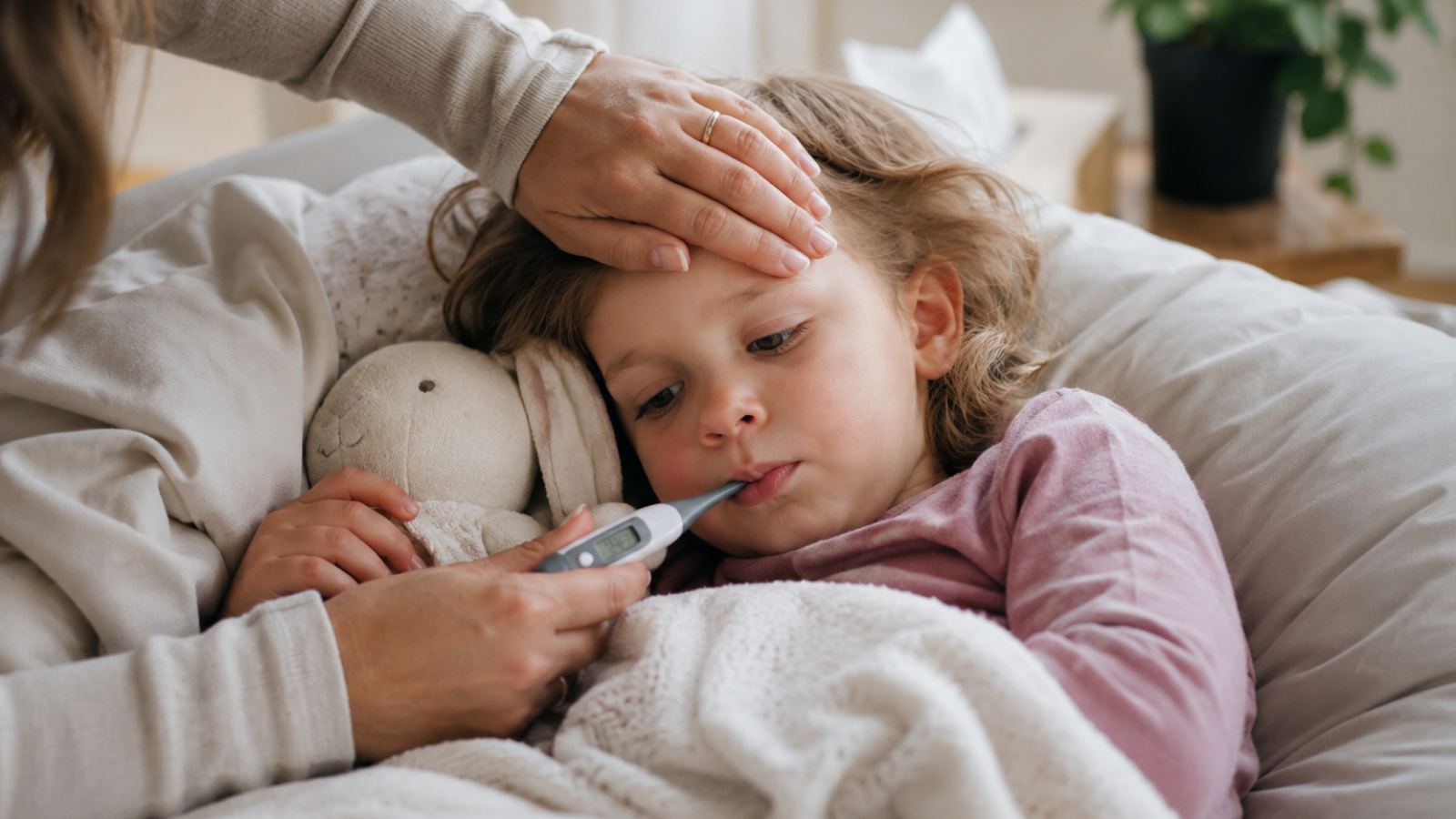
When your baby becomes warm or develops a fever after a vaccination, it can worry many parents. Is this a normal vaccine reaction? Or is there something else going on?
To reassure you: A mild fever after a vaccination is often a sign that the immune system is responding to the vaccine. Not every child gets a fever, and neither fever nor the absence of fever indicates how well the vaccine is working.
When does fever occur after a vaccination?
For most standard vaccinations, fever begins within the first 24 hours and subsides after one to two days.
For some vaccines, such as the measles, mumps, and rubella (MMR) vaccine, fever may occur about a week later. This is also a known and usually harmless vaccine reaction.
If your child develops a fever after a vaccination, it's helpful to consider which vaccine they received and when it was given.
What vaccine reactions are normal?
In addition to mild fever, other symptoms may occur after a vaccination.
These include:
- Slightly elevated temperature or fever
- Fatigue
- Increased need for closeness
- Restlessness or irritability
- Reduced appetite
- Redness, swelling, or tenderness at the injection site
These symptoms usually disappear on their own within a few days.
When might something else be going on?
Not every fever after a vaccination is caused by the vaccine. Young children often get infections—sometimes a cold or a stomach bug starts coincidentally right after the vaccination appointment.
This is more likely if:
- The fever lasts longer than expected,
- Cough, diarrhea, or vomiting occur,
- Your child appears significantly sicker overall,
- Or the timing doesn't match the vaccination received.
When should you contact the pediatrician?
Have your child examined by a doctor if:
- Your baby is younger than 3 months and has a fever of 38.0 °C or higher,
- The fever lasts several days,
- Your child is hardly drinking,
- They appear unusually sleepy, apathetic, or difficult to wake,
- Breathing problems occur,
- The injection site becomes very swollen, very painful, or develops pus,
- Or you feel that your child is significantly worse than expected from a normal vaccine reaction.
It's not just the temperature that matters, but always the overall condition and progression.
What can help your child now?
After a vaccination, most children mainly need rest.
Helpful measures include:
Ensuring they drink enough fluids
Allowing sleep and relaxation
Dressing lightly if they have a fever
Avoiding unnecessary irritation of the injection site
Observe your child instead of constantly taking their temperature
Often, children feel noticeably better after just one or two days.
Observations that help the pediatrician's office
If you need to consult with them, these details are often helpful:
- Which vaccination did your child receive?
- When was the vaccination given?
- When did the fever start?
- What was the approximate temperature and how was it measured?
- Is your child drinking enough fluids?
- How do they seem between fever episodes?
- Are there any other symptoms like cough, rash, or vomiting?
- What does the injection site look like?
The timing, in particular, helps distinguish a normal vaccine reaction from an infection that might be starting at the same time.