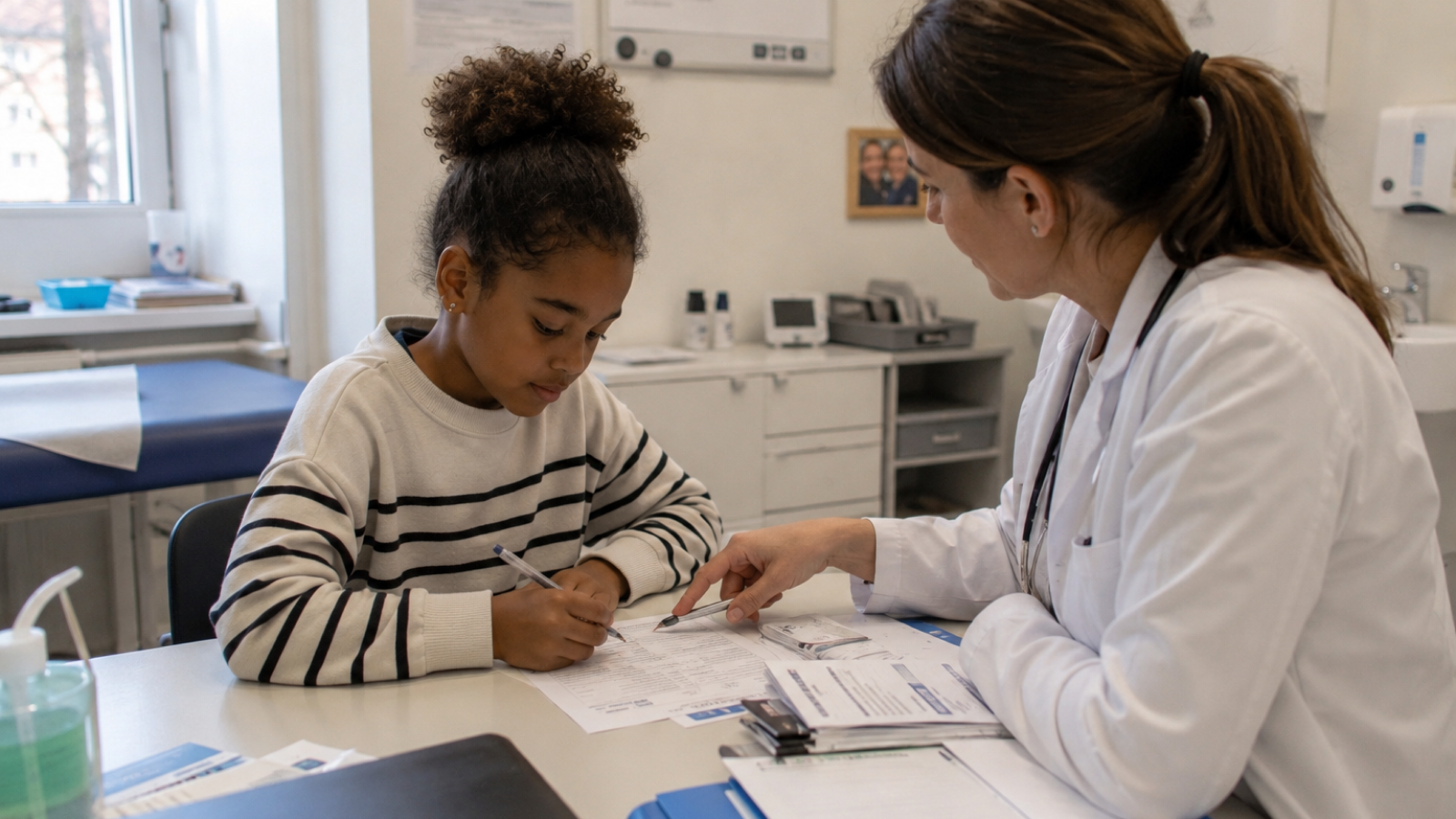
The U10 examination takes place between the 7th and 8th birthday. It is not part of the statutory early detection program but is covered by many health insurance providers. This examination complements the regular U-examinations and focuses on issues that often become apparent during school age.
The main focus is on your child's physical development, learning, concentration, social behavior, and emotional well-being.
U10 at a Glance
Timing: 7 to 8 years old
Location: Your pediatrician's office
Focus Areas: School development, concentration, behavior, growth, and preventive care
You can check in advance with your pediatrician or health insurance provider to see if the U10 is covered.
What is examined during the U10?
The pediatrician assesses:
- Height, weight, and blood pressure
- Posture and musculoskeletal system
- Vision and hearing
- Concentration and attention
- Learning and school development
- Social behavior and emotional development
- Nutrition, physical activity, and media use
- Vaccination status
There is also plenty of room for questions about school life and family life.
How is my child doing at school?
With the start of school, the demands change significantly. The U10 also addresses how your child is experiencing school life.
Topics discussed include:
- Can your child concentrate appropriately for their age?
- Are they keeping up with learning?
- Do they enjoy school?
- Do they feel comfortable in the classroom community?
- Are there any conflicts or stresses?
Not every child learns at the same pace. What matters is whether your child is developing well overall and finding their own path.
Concentration and Behavior
Many parents wonder if restlessness, daydreaming, or learning difficulties are still normal.
The U10 provides an opportunity to openly discuss topics like:
- Attention,
- Impulsivity,
- Frustration,
- Anxiety,
- Self-esteem, or
- Emotional stress
If necessary, further examinations or support options can be recommended.
Physical Activity and Health
Even in elementary school, physical development remains an important part of preventive care.
This includes:
- Posture and spine,
- Flexibility,
- Healthy growth,
- Sufficient physical activity,
- Balanced nutrition.
Vaccinations
During the U10, the vaccination record is checked.
If vaccinations are missing or boosters are needed, the practice will inform you about the current recommendations.
What should you bring to the U10?
Helpful items include:
Your child's health insurance card
Vaccination record
The Yellow Examination Booklet, if applicable
Glasses or hearing aids, if available
a list of questions or observations
information from school if needed
Typical Questions for the U10
You might want to discuss:
- Is my child developing appropriately for their age in school?
- Are concentration and attention levels normal?
- How do I handle learning frustration or school stress?
- Is my child developing emotionally well?
- Are posture and growth normal?
- Are all vaccinations up to date?
The U10 Supports the Start of School Age
The U10 not only checks physical health but also helps identify potential challenges in learning, social behavior, or emotional well-being early on, providing timely support for families.