The **U7a examination** takes place between the **34th and 36th month** of life. Your child is now becoming more confident in language, playing more imaginatively, and wants to take on many tasks independently in daily life.
The U7a fills the gap between the U7 and U8 examinations. It focuses on language, behavior, motor skills, as well as hearing and vision. The goal is to support your child's development holistically and to identify any potential issues early on.
## U7a at a Glance
**Timing:** 34th to 36th month of life**Location:** Your pediatrician's office**Focus Areas:** Language, behavior, motor skills, hearing, vision, and independence
You can find the exact examination window in the Yellow Examination Booklet.
## What is Examined in the U7a?
The pediatrician assesses, among other things:
- Height, weight, and general health
- Hearing and vision
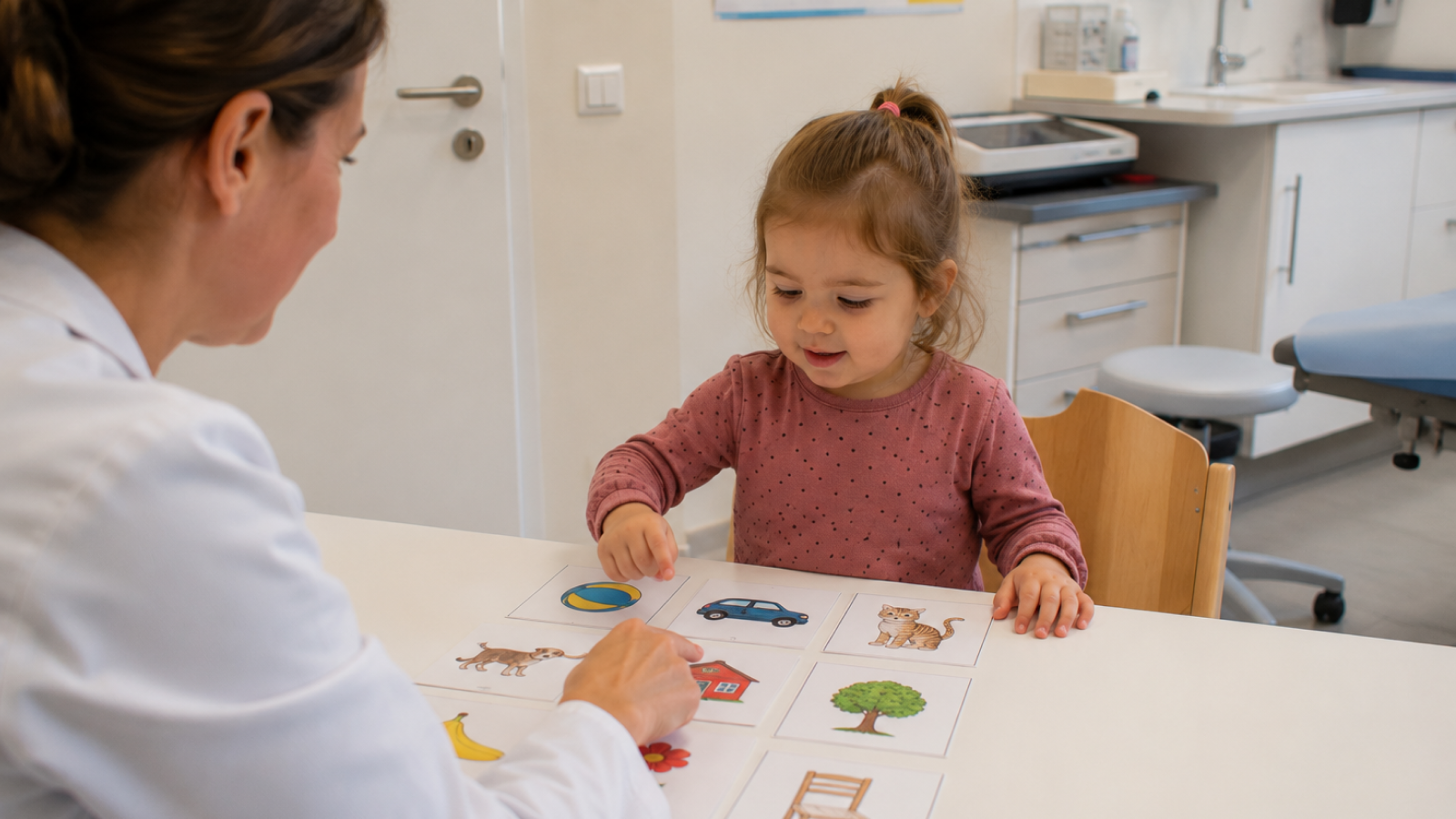
- Language comprehension and sentence formation
- Movement development and coordination
- Fine motor skills in drawing and playing
- Social behavior and interaction with others
- Independence in daily life
- Dental status and oral health
- Vaccination status
Your child's development is always considered as a whole.
## Is My Child Speaking Age-Appropriately?
Many three-year-olds now speak in short sentences, ask questions, and share simple experiences.
More important than perfect pronunciation is whether your child can:
- Form simple sentences,
- Understand questions,
- Express wishes and needs,
- Seek conversations,
- Be mostly understood by others.
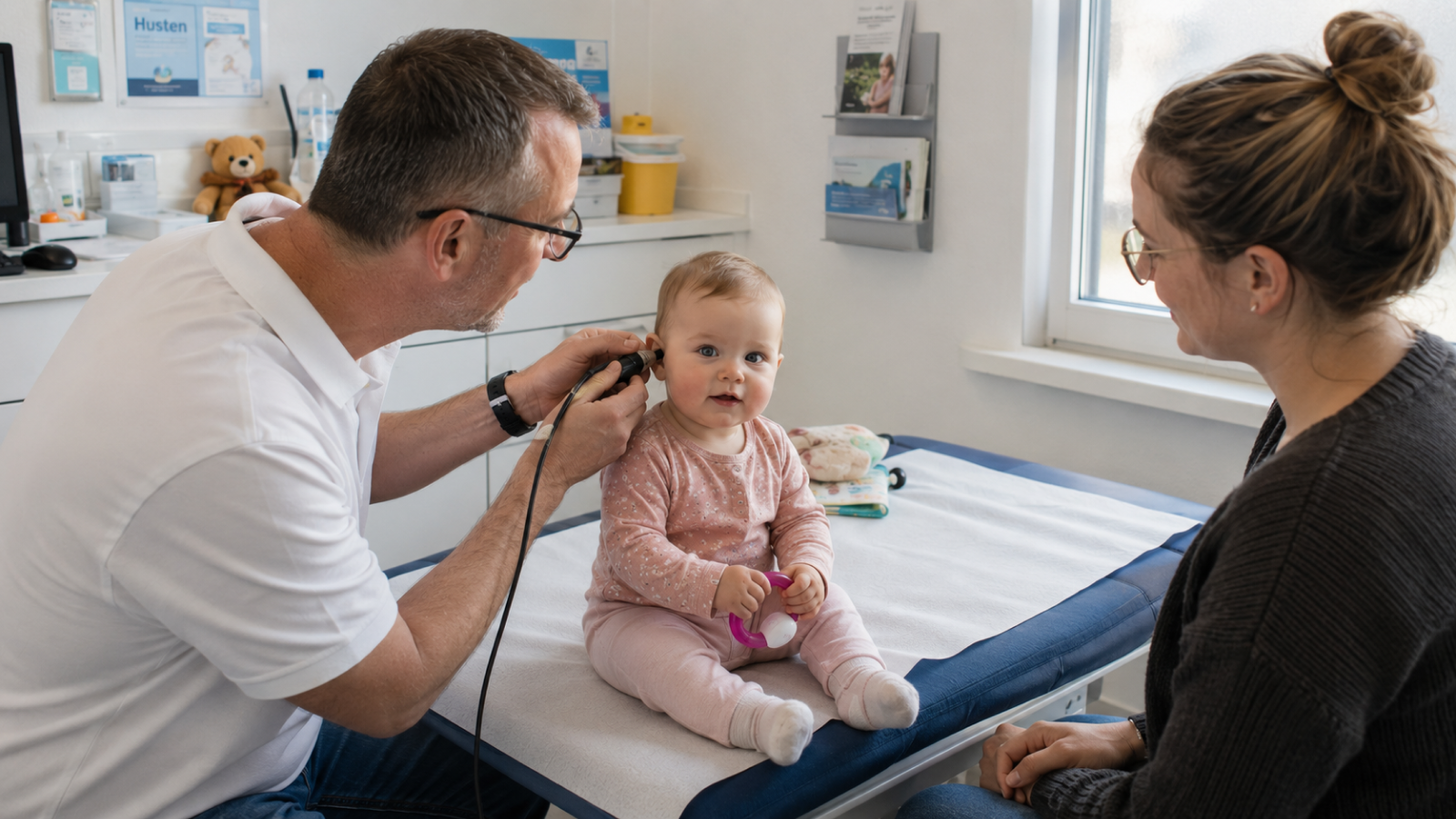
Sounds like **sh**, **s**, or **r** do not need to be pronounced perfectly at this age. If you are concerned about language development, the U7a can include a hearing test, and further support can be discussed if needed.
## How is Movement and Independence Developing?
Many children can now:
- Walk and run confidently,
- Hop and balance briefly,
- Climb stairs with alternating feet,
- Draw simple shapes,
- Dress themselves partially,
- Eat with a spoon and fork.
Not every child masters all skills at the same time. What matters is that they become increasingly independent in daily life and continuously expand their abilities.
## Behavior and Emotions
At three years old, children are learning to express their emotions better. At the same time, anger, insecurity, or shyness are still part of normal development.
The U7a provides an opportunity to discuss questions, such as about:
- Temper tantrums,
- Fears,
- Sleep,
- Daycare routine,
- Concentration,
- Social behavior,
- Toilet training.
The goal is not to fixate on any one aspect, but to support your child's overall development.
## Which vaccinations are checked?
During the U7a examination, the vaccination record is reviewed.
If recommended vaccinations have been delayed or are missing, they can often be caught up. The practice will inform you about the currently recommended vaccinations.
## What should you bring to the U7a?
It's helpful to bring:
- Yellow examination booklet
- Vaccination record
- Your child's health insurance card
- Relevant medical findings or doctor's letters
- Information from the daycare, if applicable
- A list of questions and observations
## Typical questions for the U7a
You might want to discuss:
- Is my child's speech age-appropriate?
- Does my child hear and see well?
- Is my child's motor development on track?
- Is the behavior age-appropriate?
- Does my child need to be potty trained already?
- Are all vaccinations up to date?