If your child suddenly has painful blisters in their mouth, hardly wants to eat, and shortly afterwards a rash appears on their hands or feet, many parents think of hand, foot and mouth disease. Especially after a note from daycare, the questions come up quickly: How contagious is it? Does my child need to stay at home? And when can they go back to daycare?
The good news: Hand, foot and mouth disease is very contagious, but in most children it is uncomplicated and goes away on its own within a few days.
What is hand, foot and mouth disease?
Hand, foot and mouth disease is a viral infection that mainly affects children under five. It is usually caused by Coxsackie viruses or other enteroviruses.
Cases are especially common in summer and autumn. Because the viruses spread easily, small outbreaks happen regularly in daycare centers and kindergartens.
What symptoms are typical?
Symptoms often start in a non-specific way and develop over a few days.
Typical symptoms include:
- mild to moderate fever
- sore throat or pain when swallowing
- painful blisters or small sores in the mouth
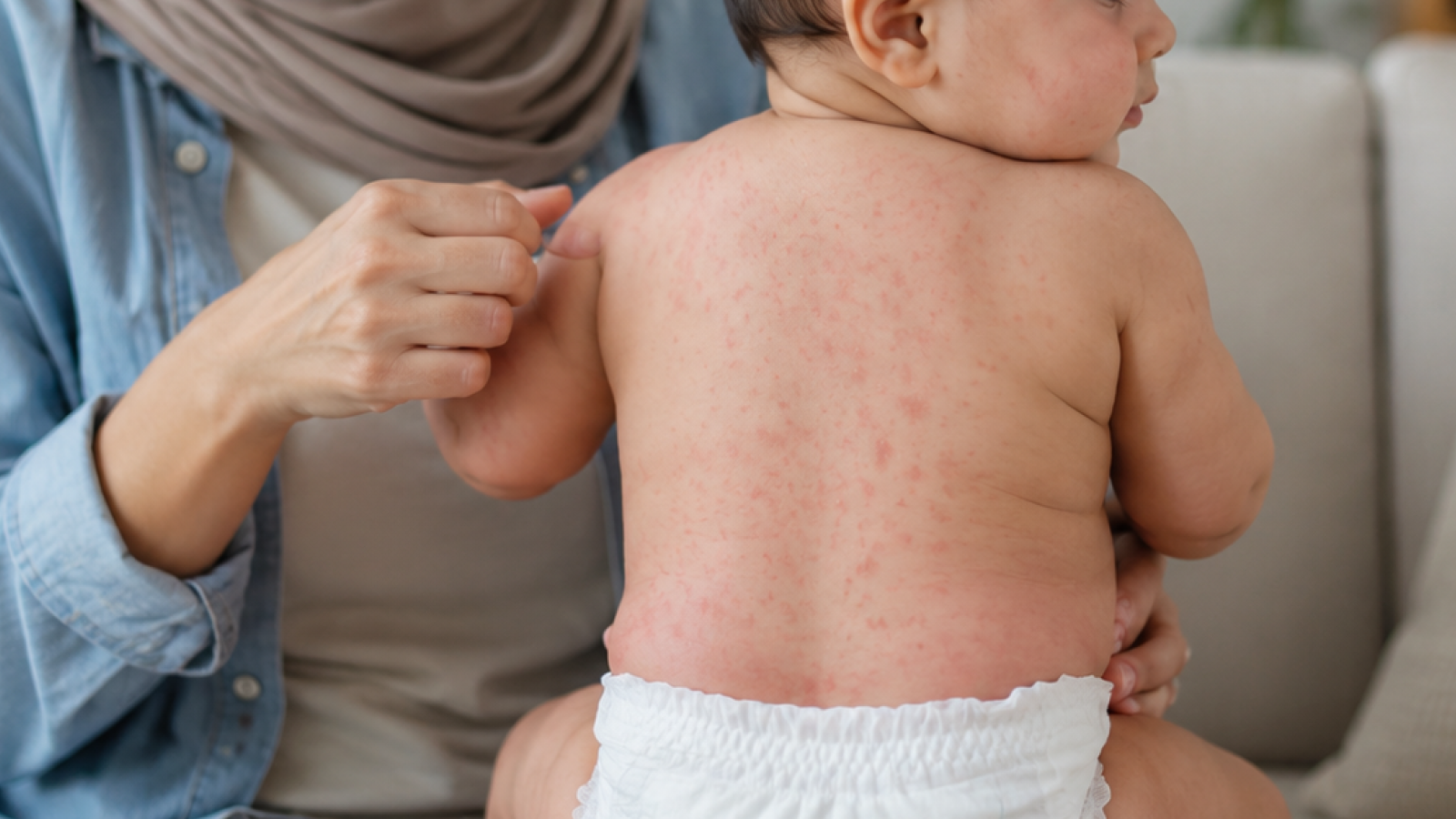
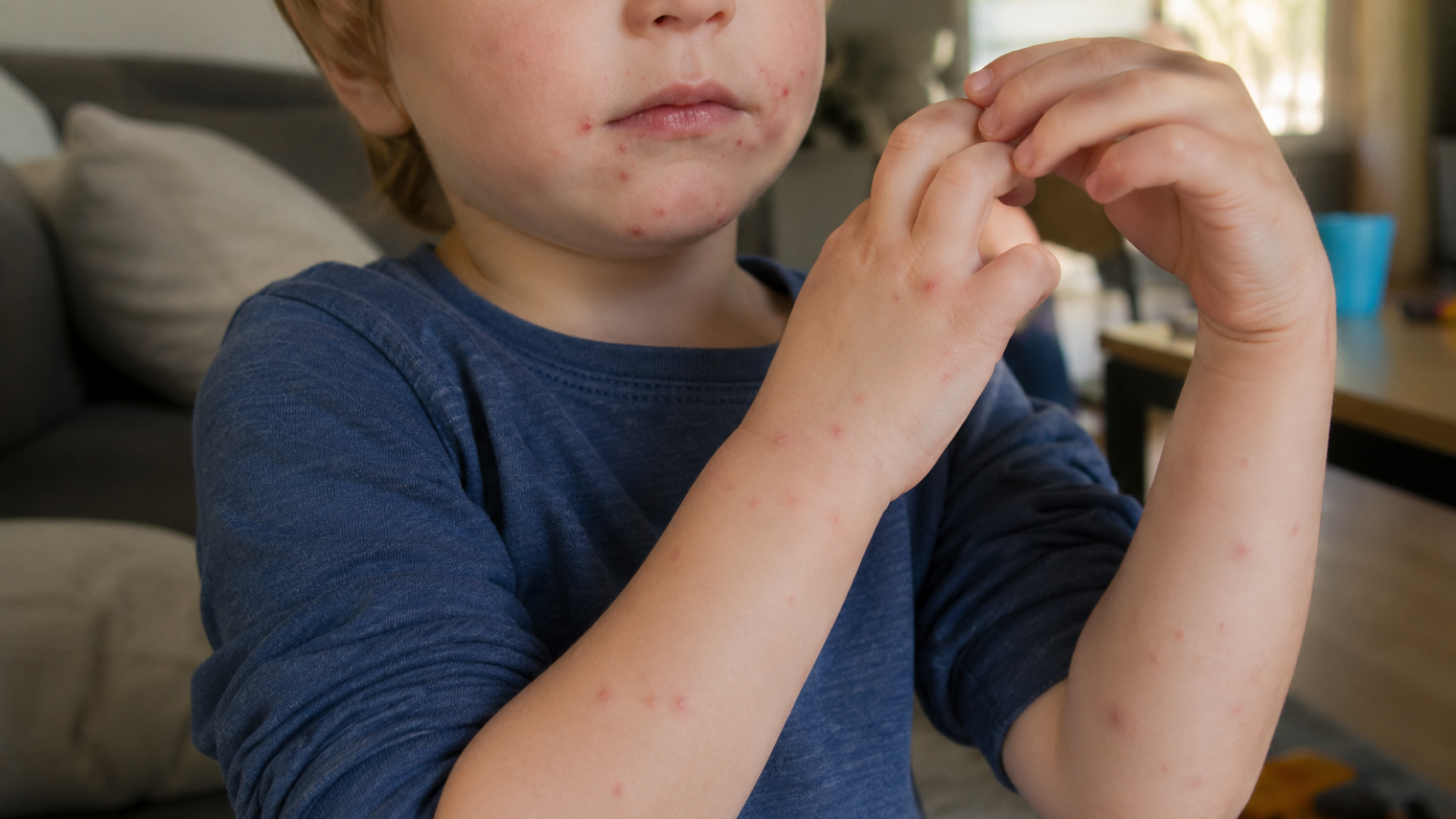
- rash or blisters on the hands and soles of the feet
- sometimes blisters on the buttocks, legs, or in the diaper area
- less appetite and increased drooling
- tiredness or being more clingy than usual
Not every child develops all symptoms. Some mainly have mouth symptoms, while others mostly have the typical skin rash.
Why do many children hardly eat?
For many children, the biggest problem is not the blisters on the hands or feet, but the painful changes in the mouth.
This can mean:
- eating hurts,
- drinking feels uncomfortable,
- more drooling,
- children refuse meals.
That’s why it’s especially important to make sure your child drinks enough fluids.
How long does the illness last?
In most cases:
- the fever goes away after one to two days,
- the mouth blisters heal within a week,
- the skin rash disappears after around seven to ten days.
Sometimes, a few weeks later, fingernails or toenails partially come off. This can happen after hand, foot and mouth disease and usually grows back completely.
What can help your child at home?
Because the illness is caused by viruses, there is no treatment that targets the cause.
These measures are often helpful:
- offer small amounts to drink regularly
- cool drinks or foods, if they feel good
- soft foods such as yogurt, porridge, or mashed potatoes
- rest and enough sleep
- age-appropriate pain or fever medicine, as recommended by your pediatrician
Spicy, acidic, or very hot foods can make mouth pain worse and are often not well tolerated.
When should you take your child to see a doctor?
A pediatric check-up is a good idea if:
- your child drinks very little or not at all,
- there are clearly fewer wet diapers,
- a high fever lasts for several days,
- your child seems unusually tired or is hard to wake,
- there is severe pain,
- the skin changes look unusual or become infected,
- you are unsure whether it really is hand, foot and mouth disease.
Especially in young children, fluid intake is more important than the number of blisters.
When can my child go back to daycare?
This question is especially important for many families.
In general:
A child can usually go back to daycare when:
- they no longer have a fever,
- they feel well again overall,
- they are drinking enough and can take part in everyday activities.
The blisters do not have to be completely gone, but they should be dried out.
Important to know: The virus can still be shed in the stool for several weeks. This means it is hardly possible to completely prevent further infections. Good hand hygiene is still helpful.
Some daycares have their own rules. If in doubt, it’s worth asking briefly.
How contagious is hand, foot and mouth disease?
The illness is especially contagious in the first few days.
It is mainly spread through:
- saliva,
- nasal secretions,
- the fluid from the blisters,
- and stool.
Washing hands regularly—especially after changing diapers or using the toilet—helps reduce the risk of infection.
Key points to remember
Hand, foot and mouth disease is usually harmless, even though the painful blisters in the mouth can be very distressing for children. What matters most is not so much the rash, but whether your child is drinking enough and is doing well overall. Once they no longer have a fever and feel fit again, returning to daycare is often possible.
Keep an eye on symptoms and how things are going
With the tio App, you can easily record fever, rash, mouth symptoms, drinking behavior, and changes over time. This helps you see how the illness is developing and ensures you have all the key information to hand if you have questions for your pediatrician’s office.