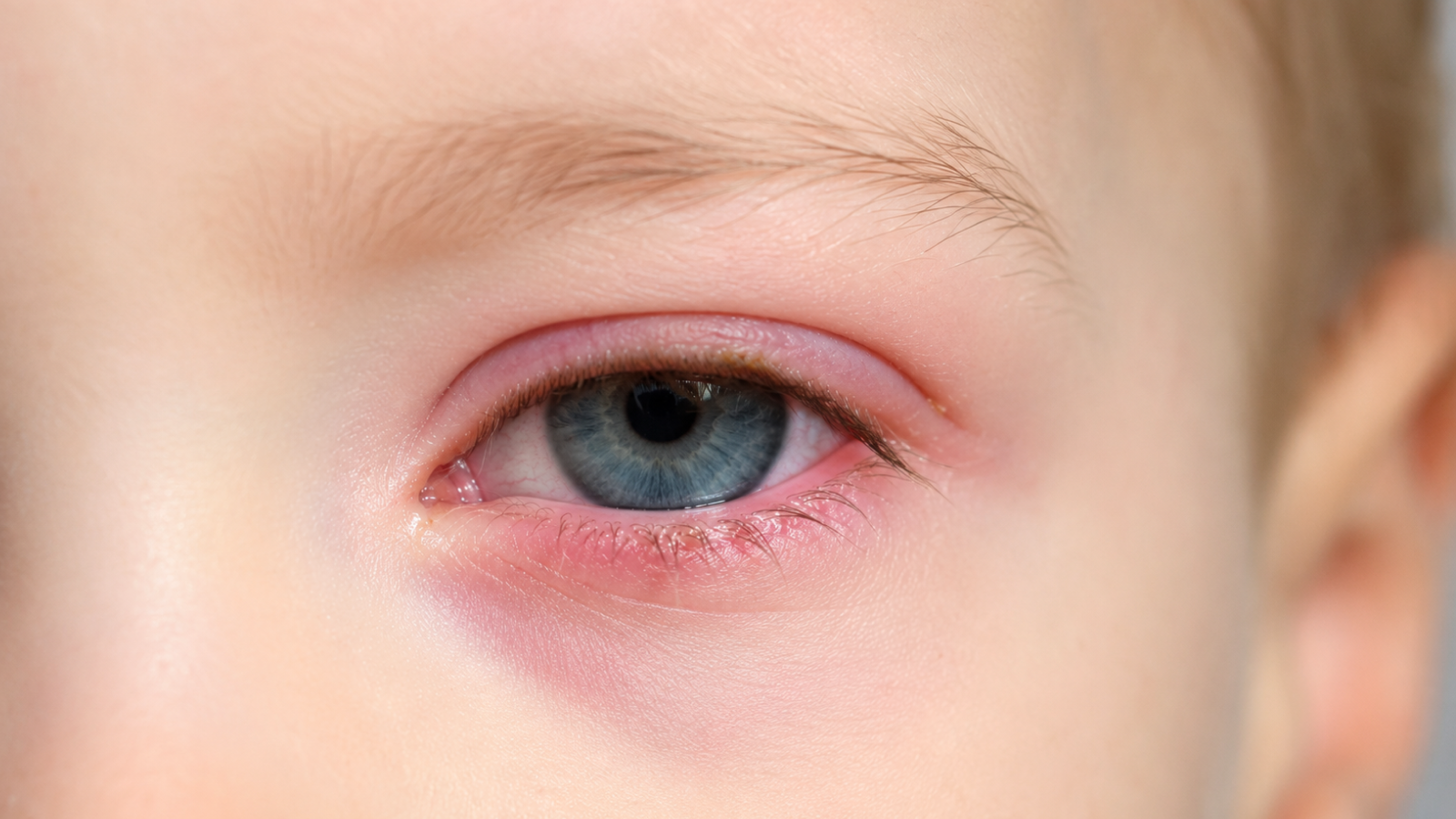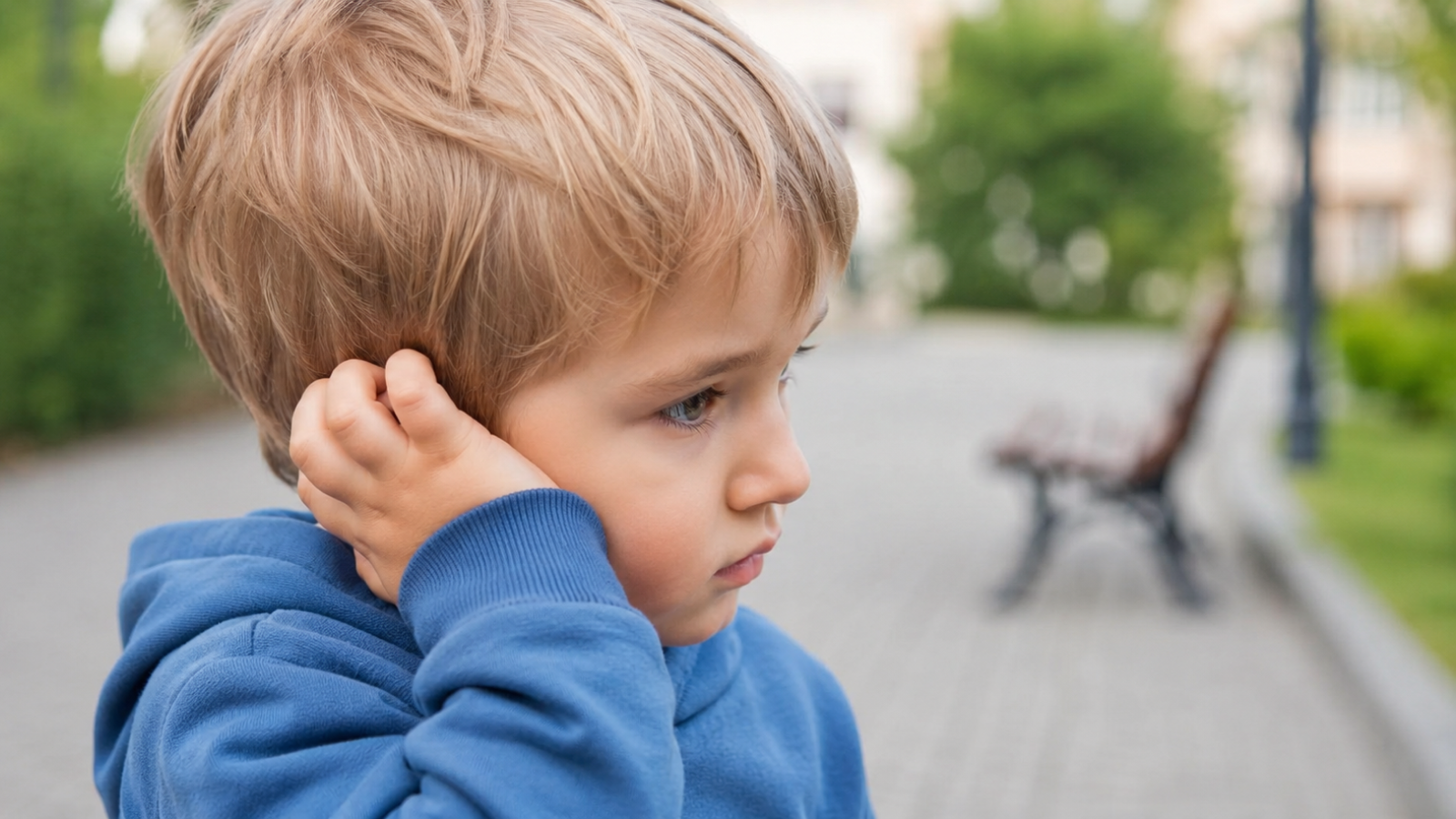
Ear pain in children often starts suddenly, usually in the evening or at night. Your child may cry, touch their ear, have trouble sleeping, or seem unusually irritable. Especially in young children, it’s not always immediately clear if the ear is the problem or if an infection, teething, or a sore throat is the cause.
Ear pain often occurs during a cold. In young children, fluid can build up behind the eardrum and cause pressure. An acute middle ear infection is possible, but it can only be reliably diagnosed through an ear examination. Many uncomplicated ear infections improve on their own within a few days.
How to Recognize Ear Pain in Young Children
Older children can usually show or tell you where it hurts. In younger children, the signs are often less clear.
Possible indicators include:
- Sudden crying or significant restlessness
- Frequent waking at night
- Rubbing, pulling, or holding the ear
- Fever
- Poor hearing or delayed response to sounds
- Reduced appetite
- Feeling of pressure or a "blocked" ear
- Fluid, pus, or blood coming from the ear
Touching the ear alone does not prove a middle ear infection. Some children touch their ears when teething, tired, or simply out of habit.
Common Causes of Ear Pain
In children, ear pain often arises during or after a respiratory infection. When the connection between the nose, throat, and middle ear swells, fluid cannot drain properly. The resulting pressure behind the eardrum can be painful and temporarily affect hearing.
Other possible causes include:
- An inflammation of the ear canal
- Water or irritation after swimming
- A foreign object in the ear
- An injury from cotton swabs or other objects
- Referred pain from the throat, teeth, or jaw
Determining the exact cause often requires examining the ear canal and eardrum.
What You Can Do Initially
If your child is otherwise responsive, drinking enough fluids, and showing no warning signs, you can help them manage the pain initially.
Take Pain Seriously
Ear pain can be very intense. Age-appropriate pain relief like paracetamol or ibuprofen can be helpful. Use them according to age and weight and follow the recommended dosage. If unsure, consult your pediatrician or pharmacist.
Provide Comfort and Rest
Many children with ear pain are particularly clingy and have trouble sleeping. Offering comfort, physical contact, and a comfortable sleeping position can help.
Encourage Regular Drinking
When your child has a fever or an infection, it's important to ensure they drink enough fluids. Small amounts at regular intervals are often better tolerated.
Don't Put Anything in the Ear
Avoid using cotton swabs and do not put ear drops, oils, or home remedies in the ear without professional advice. If the eardrum is damaged, inappropriate treatments can be problematic.
Does an Ear Infection Always Need Antibiotics?
No. Many acute ear infections improve within two to three days without antibiotics. Initially, it's important to manage the pain effectively. Whether antibiotics are needed depends on factors like the child's age, the severity of symptoms, the ear examination findings, and the course of the illness.
This decision should be made by your pediatrician after an examination. Do not use antibiotics on your own or leftover medications.
Temporary Hearing Loss
After an infection, fluid may remain behind the eardrum for some time. This might cause your child to hear less clearly, even if the pain has subsided.
Discuss this with your pediatrician if you notice over several weeks that your child:
- frequently asks for repetition,
- turns up the TV volume,
- responds poorly to quiet speech,
- speaks less clearly or shows less progress in language development.
Persistent fluid in the middle ear can affect hearing and should be monitored.
When Should My Child See a Pediatrician?
Schedule an appointment as soon as possible if:
- the ear pain is severe or persists despite pain relief,
- fever develops and your child appears very unwell,
- symptoms do not improve after two to three days,
- your child has difficulty hearing,
- fluid, pus, or blood is coming from the ear,
- ear pain recurs frequently,
- your child is very young and you suspect an ear infection,
- there is a possibility of injury or a foreign object in the ear.
When Should I Seek Immediate Medical Help?
Seek immediate medical help if your child:
- is unusually sleepy, apathetic, or difficult to wake,
- develops severe pain or swelling behind the ear,
- has an ear that sticks out noticeably,
- experiences a stiff neck, severe headaches, or repeated vomiting,
- deteriorates significantly in a short period.