Your child had a high fever for several days and suddenly seems much better. But now, pink spots appear on their stomach or back. Many parents are alarmed at this moment and wonder: Is the rash from the fever? Is it contagious? Or is something else going on?
This pattern is typical for Roseola (Exanthema subitum). It is one of the most common viral infections in early childhood and is usually uncomplicated.
What is Roseola?
Roseola is caused by herpes viruses (usually HHV-6, less commonly HHV-7) and primarily affects children between 6 months and 3 years.
Most children experience the infection once and are then immune for life.
What are the typical symptoms?
The course often follows a characteristic pattern:
- sudden high fever, often between 39 and 40 °C (102.2 and 104 °F)
- fever lasts about three to five days
- often only mild cold symptoms or no other symptoms
- the fever usually disappears abruptly
- a fine rash appears afterward
Many children seem much more lively just when the rash becomes visible.
Why does the rash appear after the fever?
This is one of the typical features of Roseola.
During the fever phase, the immune system is fighting the virus. Only when the fever subsides does the skin react with a fine rash.
Therefore, the rash usually does not mean the illness is worsening – often, it indicates the opposite: the infection is already subsiding.
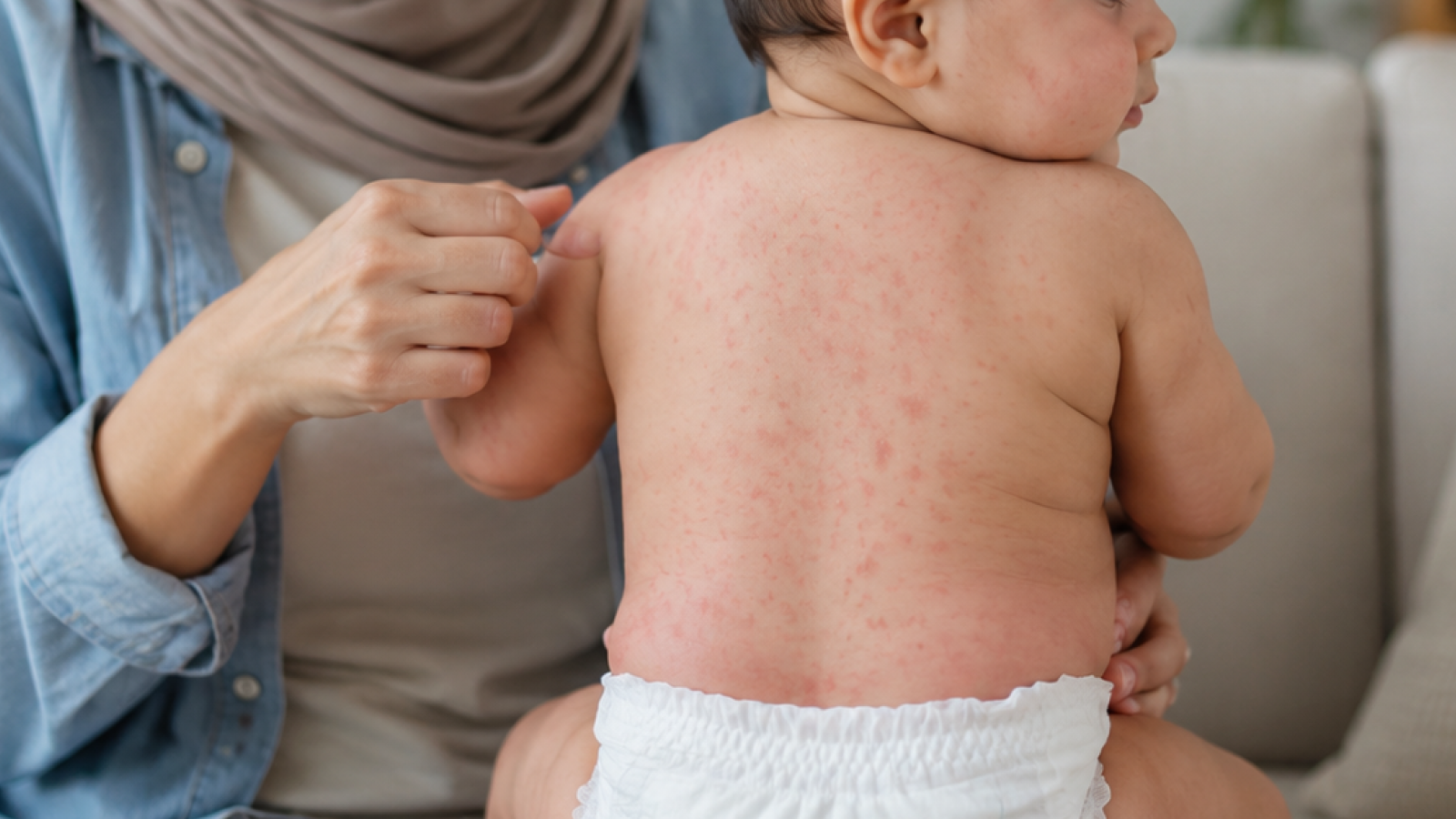
What does the rash look like?
Typically, the rash is:
- small, pink spots
- usually starts on the stomach or back
- can spread to the neck, arms, or legs
- does not itch or only itches slightly
- disappears after one to two days
Many children hardly notice the rash.
Is Roseola contagious?
Yes. The virus is spread through saliva and is contagious before the fever appears.
When the rash becomes visible, the risk of contagion is usually much lower.
When should you see a doctor?
Even though Roseola is usually harmless, your child should see a pediatrician if:
- your baby is younger than 3 months and has a fever over 38.0 °C (100.4 °F)
- the fever lasts longer than five days
- your child is hardly drinking
- they seem unusually sleepy or difficult to wake
- breathing problems occur
- the rash starts during the fever or looks unusual
- your child appears significantly sicker than you would expect with a viral infection
High fever should always be assessed in relation to the overall condition.
Febrile Seizure with Roseola
Due to the rapid rise in temperature, some children may develop a febrile seizure.
This does not automatically mean the illness is particularly severe. However, a febrile seizure should always be checked by a doctor.
What can help your child at home?
Your child usually needs rest and time above all.
Helpful measures include:
- offering drinks regularly
- allowing rest and sleep
- light clothing during fever
- age-appropriate fever-reducing medication if needed, as recommended by a pediatrician
- observing your child – their overall condition is more important than frequent temperature checks
Antibiotics do not help with roseola, as the illness is caused by viruses.
Can my child return to daycare?
Once your child is fever-free and feels well again, returning is usually possible.
The rash alone is generally not a reason to stay home. The key is that your child is fit enough for daily activities.
Typical Course – Stay Attentive
Roseola often progresses differently than many parents expect: several days of high fever first, then the rash. This sequence often helps in identifying the illness. However, the most important factor is always how your child appears overall. If they are drinking enough, becoming more active, and symptoms are improving, it often indicates an uncomplicated course. If there are warning signs or uncertainty, your child should be examined by a pediatrician.