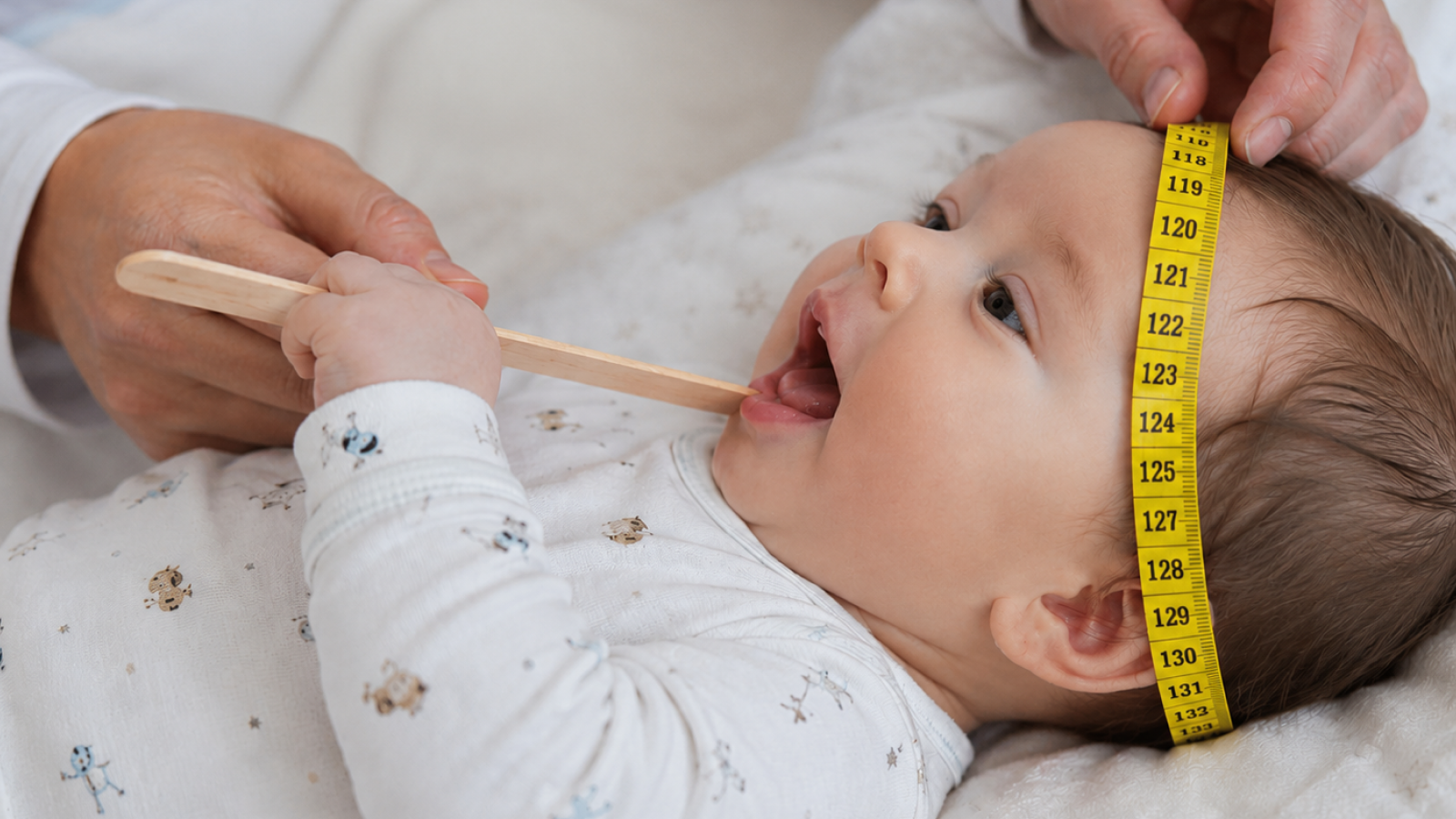
The U8 examination takes place between the 46th and 48th month of life—around your child's fourth birthday. By this age, your child can usually express themselves well, move more confidently, and has clearer ideas about what they want.
During the U8, your child's physical, language, motor, and social development is assessed. Vision, hearing, dental health, independence, and daily life in the family and daycare are also important aspects.
The goal is not for your child to perform tasks perfectly. The examination is meant to show where your child is already secure and if they might need support in certain areas.
U8 at a Glance
Timing: 46th to 48th month of life
Location: Your pediatrician's office
Focus Areas: Language, movement, coordination, vision, hearing, behavior, and independence
You can find the exact examination window in the Yellow Examination Booklet and in the tio App.
What is Assessed in the U8?
The pediatrician will conduct a physical examination and observe various developmental areas.
These include:
- Height and weight
- Heart, lungs, and abdomen
- Posture, spine, and joints
- Teeth, mouth, and jaw
- Vision and hearing
- Speech and language comprehension
- Gross and fine motor skills
- Concentration and task understanding
- Play and social behavior
- Independence in daily life
- Vaccination status
The tasks your child is given may vary from practice to practice.
How Advanced Should My Child's Language Be?
Around four years old, many children speak in longer sentences, ask numerous questions, and talk about experiences or imaginary stories.
During the U8, it is observed whether your child can:
- Understand simple and longer questions,
- Tell experiences clearly,
- Express wishes and feelings with words,
- Connect sentences,
- Be understood by less familiar people.
The pronunciation doesn't need to sound fully adult yet. Certain sounds like "sh" or "r" might still be uncertain.
The overall picture is important: Does your child understand language? Do they enjoy communicating? Can they make themselves understood well enough in daily life?
If the language is hard to understand, your child speaks very little, or often doesn't understand instructions, a more detailed examination of hearing and language development might be beneficial.
What is Observed in Motor Skills?
By four years old, many children move quite confidently. They run, climb, jump, and try out new movements.
During the U8, it can be observed whether your child can:
Walk and run confidently,
Jump off both feet,
Stand or hop briefly on one foot,
Balance,
throw or catch a ball,
navigate stairs with increasing confidence.
Not every movement has to be perfect right away. What matters is coordination, enjoyment of movement, and development over time.
Drawing, Cutting, and Fine Motor Skills
Children's hands are becoming more skillful.
Many children can now:
- hold a pencil more precisely,
- draw lines, circles, or simple shapes,
- grasp small objects securely,
- work with building blocks or puzzles,
- make first cuts with child-safe scissors,
- partially dress and undress themselves.
Drawing a specific picture or cutting perfectly is not a test your child must pass. The doctor is more interested in how your child uses their hands and understands tasks.
How Are Vision and Hearing Tested?
Vision and hearing problems can affect language, movement, and behavior. That's why these tests are part of the U8 examination.
The tests check, for example:
- whether both eyes work well together,
- if your child recognizes pictures or symbols,
- if they can hear quieter sounds,
- if they understand speech from different distances.
Signs of potential difficulties include your child frequently getting very close to books or screens, often stumbling, squinting one eye, speaking very loudly, or barely responding to quiet speech.
Is My Child Behaviorally Challenging or Just Temperamental?
At four years old, emotions can still be very intense. Anger, disappointment, shyness, or withdrawal are common at this age.
During the U8, you can discuss:
- frequent or very intense tantrums,
- pronounced fears,
- significant difficulties with changes,
- conflicts in daycare,
- aggressive behavior,
- high restlessness,
- withdrawal or little interaction with other children,
- sleep problems or high stress in family life.
Temperament is not an illness. What matters is how much a behavior affects your child, the family, or daily life.
How Is Play with Other Children Developing?
Many four-year-olds increasingly play together rather than just side by side.
Typical activities include:
- role-playing games
- shared imaginative stories
- first close friendships
- self-invented game rules
- disputes over roles or objects
- attempts to resolve conflicts with words
Your child doesn't have to be particularly sociable. Some children prefer to observe for longer or favor small groups.
What matters is whether they show interest in others and can participate in group play in their own way.
Does My Child Need to Be Potty Trained for the U8?
Many children are dry during the day by age four. Others may take longer or experience temporary setbacks.
Being dry at night is not a requirement for the U8 examination. Nighttime bladder control often develops later than daytime control.
Pressure or shame do not help. Discuss the topic if your child:
- shows no interest in the toilet or potty,
- was previously dry and starts wetting regularly again,
- experiences pain when urinating,
- goes to the toilet very frequently or noticeably infrequently,
- is distressed by the situation.
Which vaccinations are due at the U8?
During the U8, the vaccination record is checked. The focus is usually on identifying and catching up on any missing or delayed vaccinations.
It is checked whether the protection against the following diseases is complete:
- Diphtheria
- Tetanus
- Whooping cough
- Polio
- Measles, mumps, and rubella
- Chickenpox
- Pneumococci
- Meningococci
The regular booster for diphtheria, tetanus, and whooping cough is typically scheduled for ages five to six and is therefore usually planned around the U9 or separately.
What should you bring to the U8?
Helpful items include:
- Yellow examination booklet
- Vaccination record
- Your child's health insurance card
- Glasses or hearing aid, if applicable
- Relevant medical reports or letters
- Information from daycare, if applicable
- Notes on your questions and observations
Reports from daycare are not mandatory but can be helpful if there are specific questions about language, behavior, or development.
Typical questions for the U8
You might discuss:
- Is my child's language development age-appropriate?
- Are pronunciation errors still normal?
- Is motor development on track?
- Does my child see and hear well?
- Are strong tantrums still age-appropriate?
- Does my child need to be fully dry already?
- Are all vaccinations up to date?
- How much help does my child need with dressing or eating?