Nosebleeds often look more dramatic than they actually are. They are common in children between 2 and 6 years old and usually stop on their own after a few minutes.
Still, many parents are initially unsure: Where is the blood coming from? Does my child need to see a doctor immediately? And how can I best stop the bleeding?
Most nosebleeds are harmless and can be easily treated with simple measures.
Why do children get nosebleeds?
In the front part of the nasal septum, many tiny blood vessels run just beneath the mucous membrane. They can be easily injured – for example, by dry air, an infection, or simply nose-picking.
Common causes include:
- dry or irritated nasal mucosa
- colds or runny nose
- frequent nose blowing
- nose-picking
- minor bumps or injuries to the nose
- warm, dry heating air
In most cases, there is no serious illness behind it.
How to stop a nosebleed correctly
Stay as calm as possible – this will help your child too.
Follow these steps:
- Sit your child upright.
- Lean the head slightly forward.
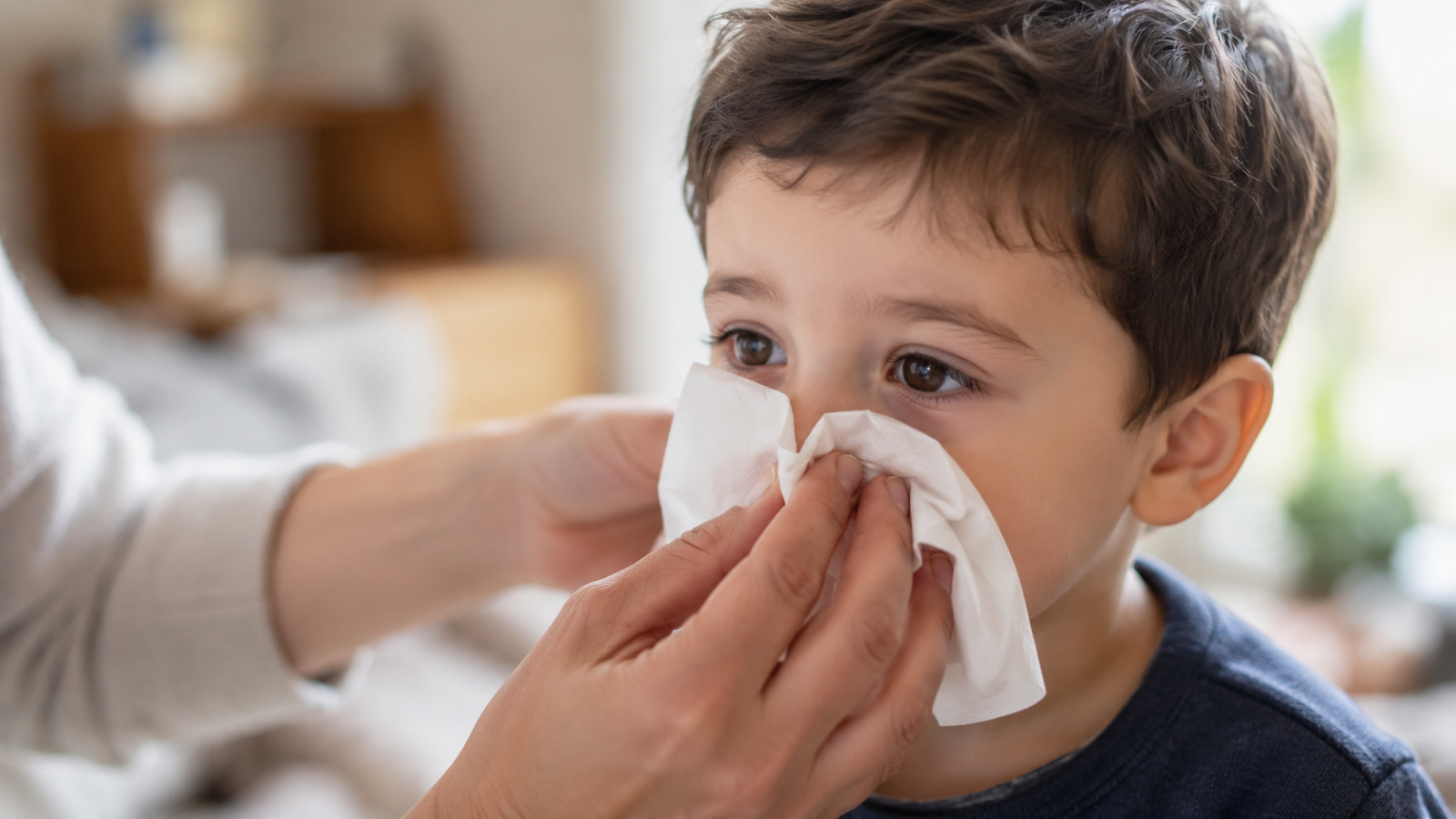
- Pinch the soft part of the nose just below the nasal bone for about 5 to 10 minutes with steady pressure.
- Encourage your child to breathe calmly through the mouth.
- Check after a few minutes to see if the bleeding has stopped.
If the bleeding continues, you can maintain the pressure for another 10 minutes.
What should you avoid?
Some measures are now considered outdated.
Better not to:
- tilt the head back,
- stuff cotton or tissues deep into the nose,
- constantly check if the bleeding has stopped.
If blood runs backward, your child might swallow it, which can sometimes cause nausea or vomiting and makes it harder to assess the amount of bleeding.
Why does nosebleed often occur with colds?
During an infection, the nasal mucosa is more blood-filled and sensitive.
Additionally, frequent:
- blowing of the nose,
- dry air,
- repeated wiping of the nose,
further irritate the mucosa. Even small injuries can then trigger bleeding.
How can you prevent nosebleeds?
If your child frequently has nosebleeds, simple measures often help.
It's helpful to:
- drink plenty of fluids,
- avoid dry heating air,
- ventilate regularly,
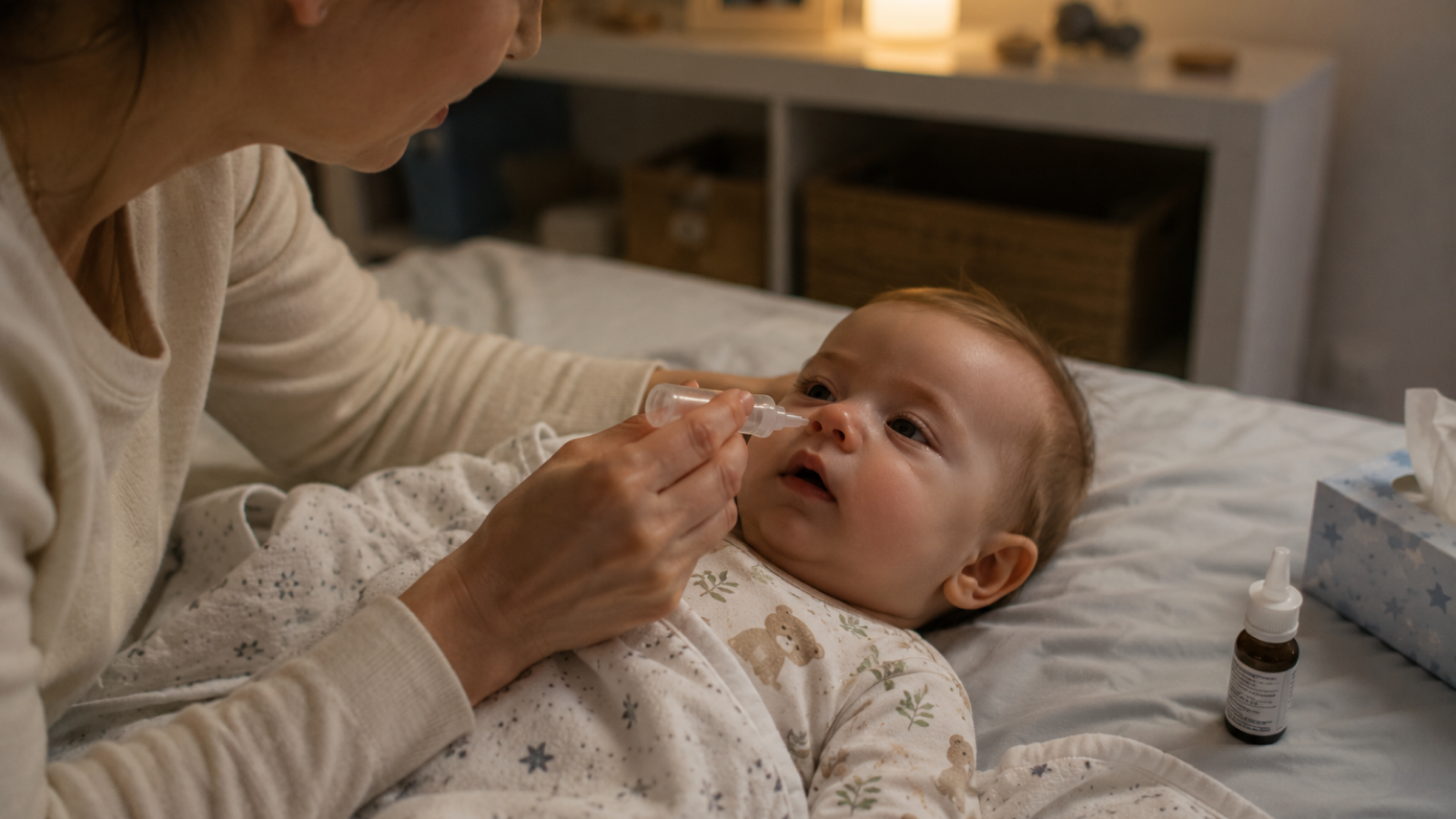
- keep the nasal mucosa moist with saline solution or suitable nasal care if needed,
- keep fingernails short and avoid nose-picking as much as possible.
Especially in winter, recurring nosebleeds often improve when the nasal mucosa is well cared for.
When should you visit the pediatrician?
A pediatric examination is advisable if:
- Nosebleeds occur frequently,
- The bleeding lasts longer than about 20 minutes,
- Your child loses a lot of blood,
- Nosebleeds occur after a significant injury,
- There are also easy bruising or other unusual bleeding,
- Or if you are unsure about the cause.
In these cases, it should be clarified whether there is more behind the symptoms than just an irritated nasal mucosa.
When should you seek immediate medical help?
Call emergency services or seek immediate medical help if:
- The bleeding occurs after a severe facial injury,
- Your child becomes unconscious or is barely responsive,
- Large amounts of blood are lost and the bleeding cannot be stopped despite proper pressure,
- Breathing problems occur.
These situations are rare but should be treated quickly.
Important to remember
Nosebleeds are common and usually harmless in toddlers and preschoolers. In most cases, it is sufficient to have your child sit upright, lean their head slightly forward, and pinch the soft part of the nose for a few minutes. Recurrent or unusually heavy bleeding should be evaluated by a pediatrician.