Other children at daycare are already out of diapers, but your child still shows little interest in the potty? Or they suddenly want to use the toilet themselves, even though you weren’t planning to start potty training yet?
There is no fixed age for becoming dry that fits all children. What matters is less your child’s birthday and more whether they are physically, verbally, and emotionally ready. Many children gradually become dry during the day between the ages of two and four. Occasional accidents are still part of it for a long time.
How to tell that your child might be ready
Becoming dry happens in several developmental steps. First, your child needs to notice that their bladder or bowel is full, understand this feeling in time, and then be able to wait until they get to the toilet. So, besides physical maturity, body awareness, communication, and growing independence also play a role.
Possible signs of readiness are:
- The diaper stays dry for longer periods of time.
- Your child notices that they are peeing or having a bowel movement.
- They tell you beforehand or show it with gestures.
- They withdraw or hide when they need to poop.
- They are interested in the toilet, potty, or underwear.
- They can understand and follow simple requests.
- They can sit down and can at least partly dress and undress themselves.
- They increasingly want to do things on their own.
Not all signs need to be present at the same time. Interest and growing awareness of their own body signals are often a good start.
You can’t force becoming dry
Bladder and bowel control matures step by step and can’t be sped up by frequent reminders or by sitting on the potty for a long time.
Starting toilet training too early or with pressure, on the other hand, can lead to frustration and conflict. If your child shows clear resistance, taking a break is often more helpful than turning every trip to the toilet into an argument.
Becoming dry is not a question of obedience or willpower. Wet underwear doesn’t mean your child wasn’t paying attention or didn’t try hard enough. Control over their own body signals develops gradually over time.
How to start in a relaxed way
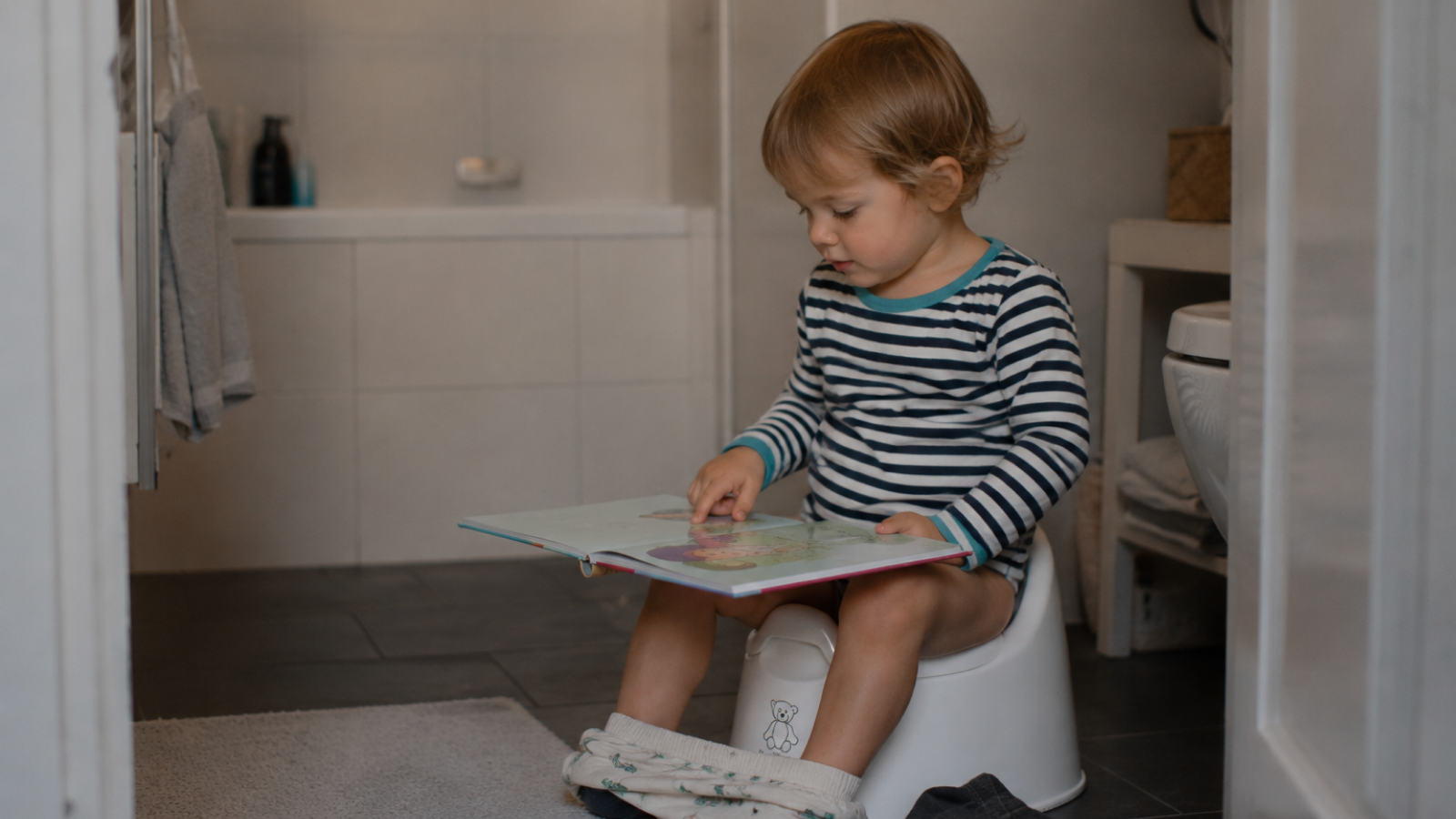
If your child shows interest, you can naturally include the toilet or potty in everyday life. Children learn a lot by watching—also when it comes to becoming dry.
Helpful things include:
letting your child watch you go to the toilet, if they want to
keeping the potty or toilet seat within easy reach
using a stable footstool
choosing clothes that are easy to open
offering the toilet at suitable times, for example after getting up or before going to bed
acknowledging small successes without turning them into expectations for next time
Your child should be allowed to decide for themselves whether and how long they want to sit. A few relaxed minutes are enough.
What helps with small mishaps
Accidents are part of the learning process. Especially when playing, children sometimes notice they need to pee only late, or they don’t want to interrupt what they’re doing.
Try to stay as calm as possible:
- offer a change of clothes
- clean up in a matter-of-fact way
- avoid blame or shaming
- don’t compare your child with others
- offer the toilet again next time
Too much praise can also create pressure. A calm reaction gets across: Your body is learning this right now – and that’s okay.
If your child only goes to the toilet to pee
Some children already use the toilet to pee, but still want to poop in a diaper. This is very common.
This can be due to habit, insecurity, or fear of painful bowel movements. For now, allow your child to keep using a diaper for this. What matters is that they don’t hold back their bowel movements for a long time.
Watch out for possible signs of constipation:
- infrequent or very hard bowel movements
- straining a lot or pain
- deliberately holding back bowel movements
- stomach ache
Painful bowel movements can make becoming dry much harder, because your child links going to the toilet with pain. Ongoing symptoms or pain should therefore be checked early by your pediatrician.
Being dry during the day does not automatically mean being dry at night
Night-time bladder control often develops later than being dry during the day. Maturation processes play an important role here, and they can’t be sped up with training. So a child may reliably go to the toilet during the day and still need a diaper at night for quite some time.
This is not a setback. If the diaper is regularly wet in the morning, your child can keep wearing it at night.
If your child still regularly wets the bed at age five or older, you can bring this up at your pediatrician’s office. This doesn’t automatically mean something is wrong. But it can be helpful to check whether additional support might help.
Setbacks are often part of it
Even a child who is already dry can temporarily start wetting themselves again. Possible triggers include:
- starting daycare (Kita) or changing groups
- the birth of a sibling
- travel or moving house
- illness
- stress or strong excitement
- intense play
Stay as calm as you can and, if needed, offer more support again for a while. Often the situation settles again once the stress decreases.
If bedwetting starts suddenly, lasts longer, or symptoms such as pain when urinating are added, it should be checked by a pediatrician.
Becoming dry is a shared learning process
Your child is increasingly ready when they notice their body signals, show interest in the toilet or potty, and are willing to try for the first time. Some children take this step early, others need more time.
With patience, an easily accessible toilet, and a relaxed approach to accidents, you create good conditions. It’s not about becoming dry as quickly as possible, but about gradually noticing their own body better and becoming more independent, step by step.
Supporting developmental steps in a relaxed way
With the tio App, you get age-appropriate guidance on development, independence, and typical changes in toddlerhood. This way you can support your child without having to compare every step of progress to fixed age limits.