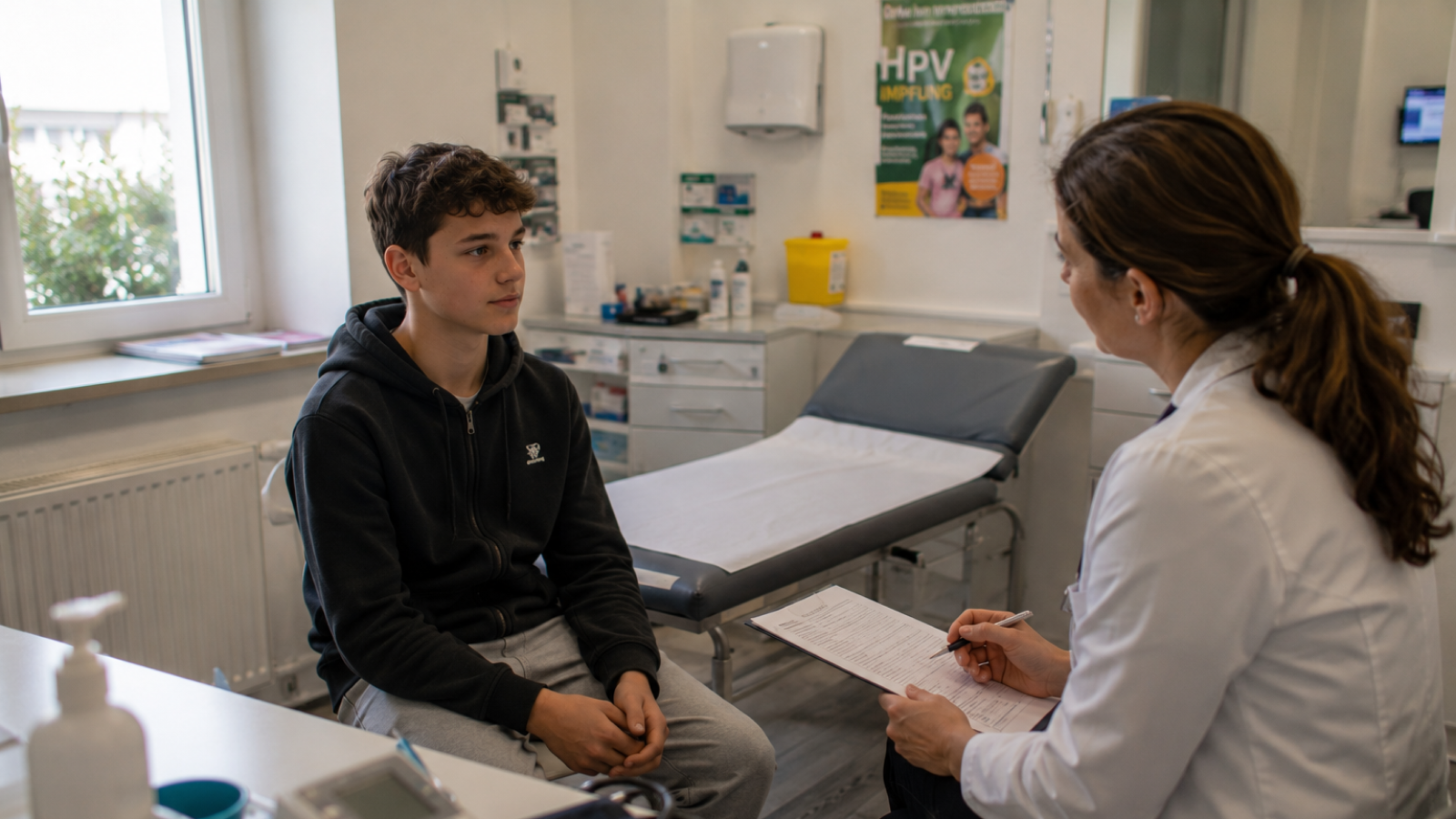
The J1 examination takes place between the ages of 12 and 14 and is the first preventive check-up specifically for adolescents. It focuses on physical development during puberty, mental health, and questions that concern teenagers at this stage of life.
A key difference from the U-examinations: Adolescents can choose to speak alone with the doctor during the J1. This allows space for confidential questions and personal topics.
J1 at a Glance
Timing: Ages 12 to 14
Location: Your pediatric and adolescent doctor's office
Focus Areas: Puberty, physical development, mental health, vaccinations, and preventive health care
The J1 is part of the statutory early detection program and is covered by statutory health insurance.
What is examined during the J1?
The doctor assesses, among other things:
- Height, weight, and blood pressure
- Posture and physical development
- Puberty development
- Skin, vision, and hearing
- Mental well-being
- Exercise, nutrition, and sleep
- Media usage
- Vaccination status
There is also time for personal questions and discussions.
Puberty and Physical Development
Puberty progresses at different rates for each adolescent.
Topics that can be discussed during the J1 include:
- Growth spurts
- Menstruation or voice changes
- Body hair
- Acne
- Body image and self-confidence
Differences in development pace are usually completely normal.
Health, Feelings, and Daily Life
The J1 provides space for topics that teenagers often find difficult to discuss.
These include, for example:
- School stress
- Friendships and relationships
- Bullying
- Anxiety or mood swings
- Sleep
- Media usage
The conversation is conducted respectfully and without judgment.
Sexuality and Contraception
Questions about puberty, sexuality, or contraception are naturally part of the J1 and are answered in an age-appropriate manner.
If desired, adolescents can discuss these topics without their parents with the doctor.
Vaccinations
During the J1, the vaccination record is checked.
Particularly important now are:
- HPV vaccination for girls and boys
- Booster shots for tetanus, diphtheria, whooping cough, and polio
- Any missing catch-up vaccinations
The practice provides information on currently recommended vaccinations.
What should you bring to the J1?
Helpful items include:
- Health insurance card
- Vaccination record
- The Yellow Examination Booklet, if applicable
- Glasses or hearing aids, if available
- Questions or concerns to be addressed
Typical Questions for the J1
During the J1, these questions can be clarified, for example:
- Is puberty developing appropriately for their age?
- Are mood swings still normal?
- How do I handle stress or pressure to perform?
- Which vaccinations are still needed?
- What should I know about sexuality and contraception?
- How much screen time is appropriate?
The J1 supports teenagers on their journey to adulthood
The J1 is more than just a health check. It provides teenagers with the opportunity to discuss questions about puberty, their own health, and personal challenges in a safe environment – empowering them to take responsibility for their health.