The U6 examination takes place between the 10th and 12th month of life. Just before their first birthday, your child becomes increasingly mobile, reaches for objects purposefully, and communicates more consciously through looks, sounds, and gestures.
During the U6, the focus is on how your child is growing and how their movement, perception, communication, and social behavior are developing. Additionally, vaccination status, nutrition, dental care, and important questions around the first birthday are discussed.
U6 at a Glance
Timing: 10th to 12th month of life Location: Your pediatrician's office Focus Areas: Growth, movement, communication, vaccinations, nutrition, and teeth
You can find the exact examination window in the Yellow Examination Booklet and in the tio App.
What is Examined During the U6?
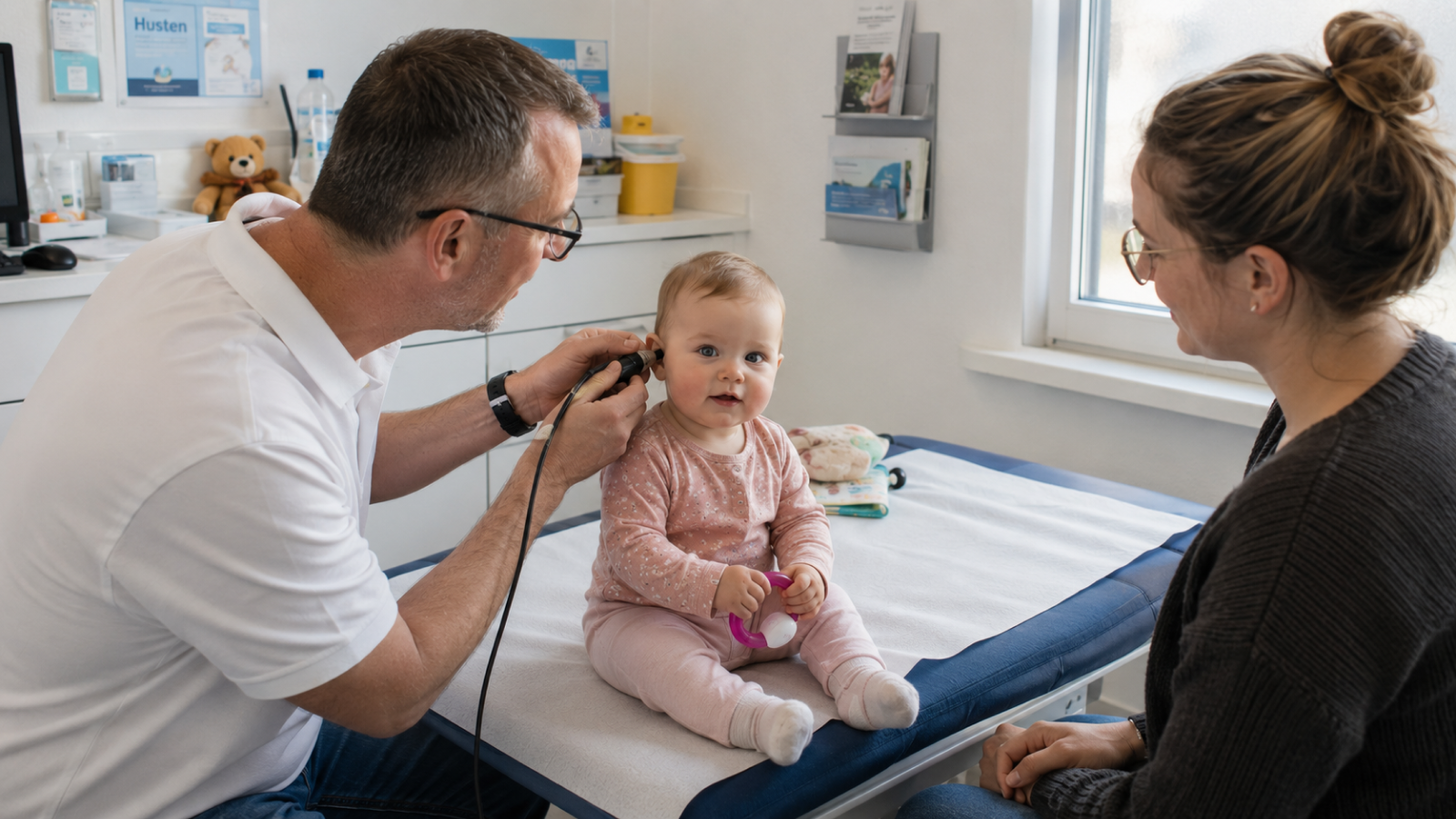
The pediatrician assesses, among other things:
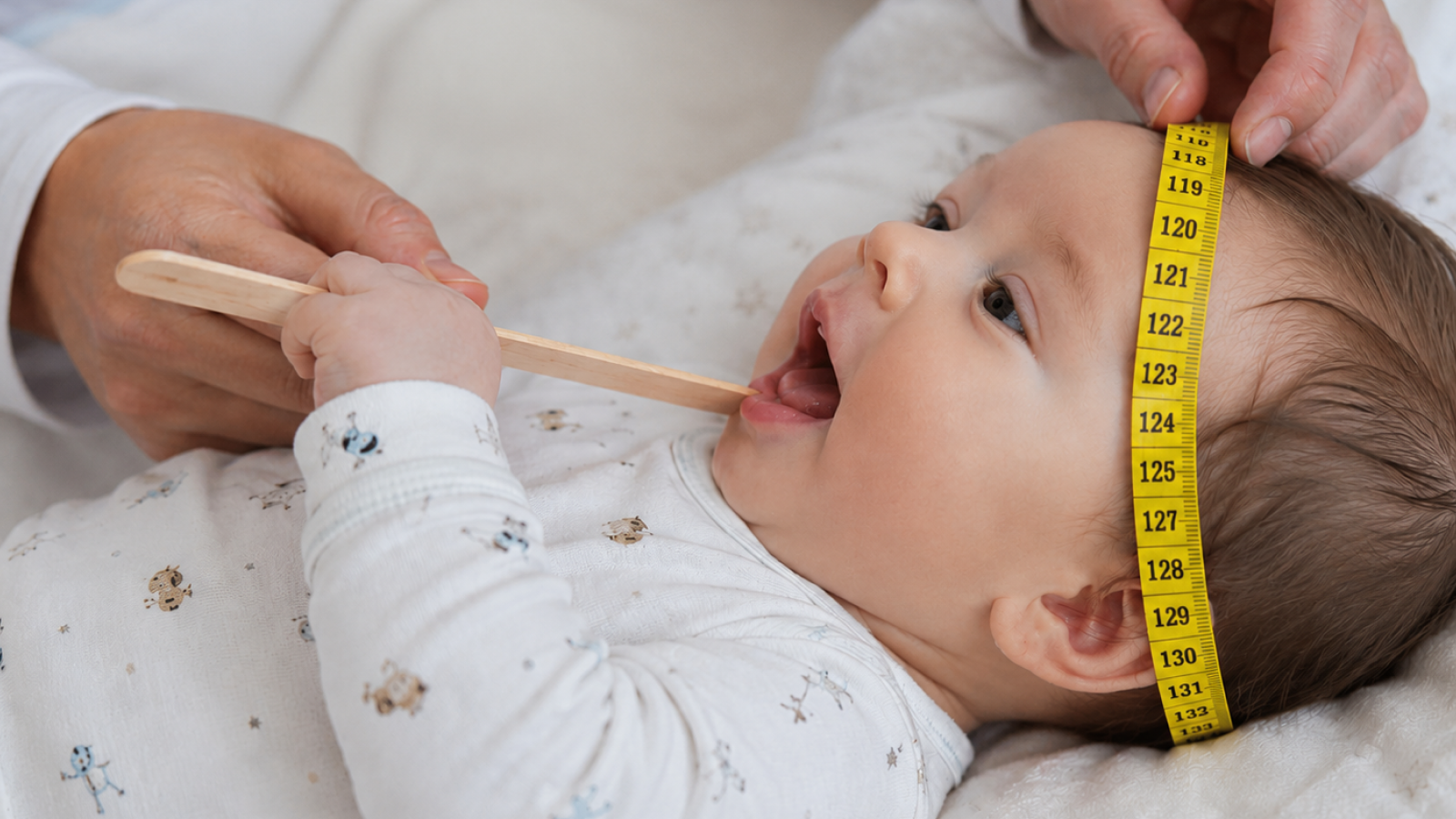
- Weight, height, and head circumference
- Heart, lungs, and abdomen
- Eyes and reactions to sounds
- Mouth, teeth, and jaw
- Muscle tone and movement patterns
- Grasping and fine motor skills
- Language comprehension and sound formation
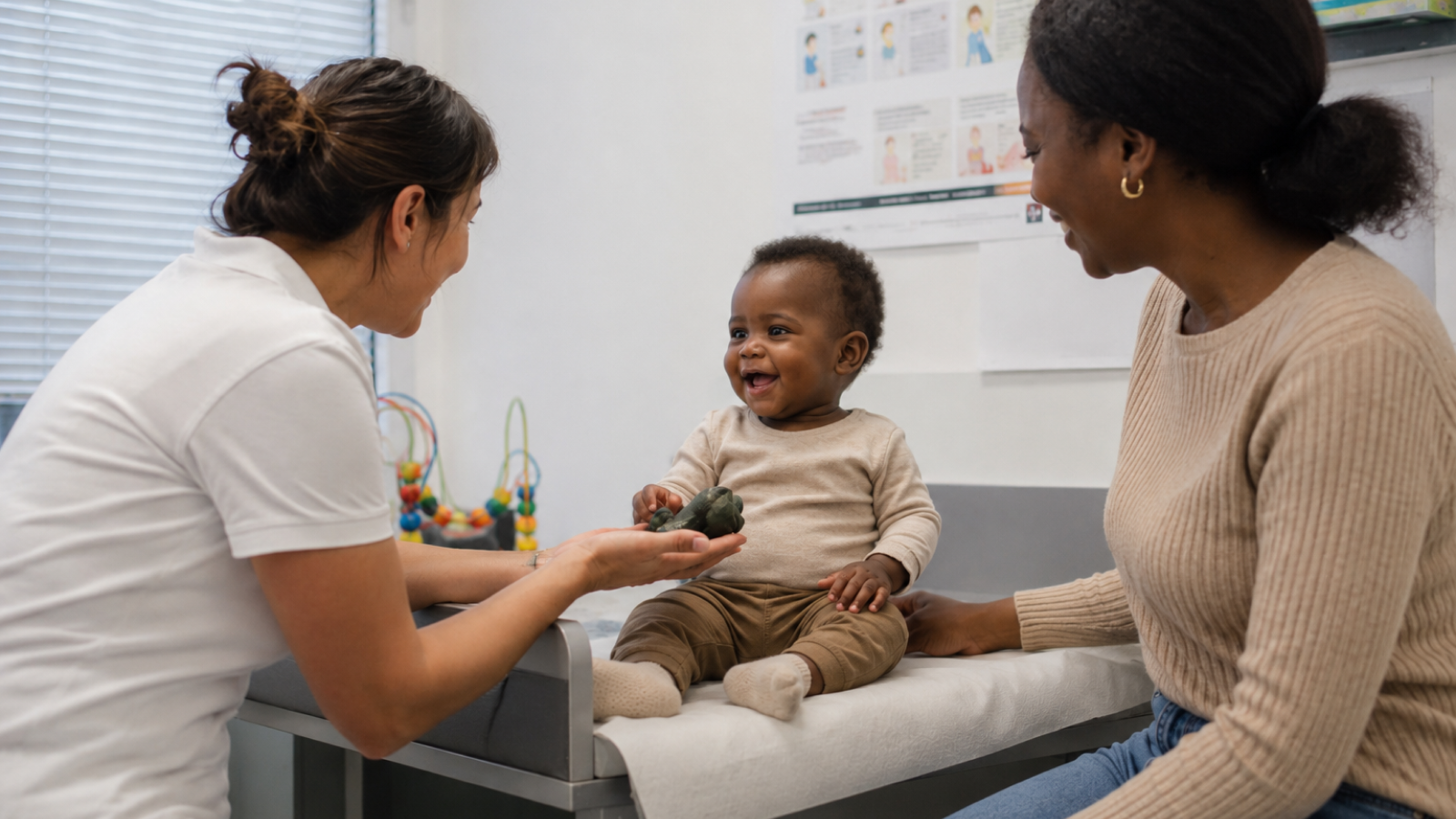
- Social interaction and cooperative play
- Vaccination status
The focus is not on a single ability but on your child's overall development.
Does My Child Need to Crawl or Walk Yet?
No. Some children crawl, others scoot, slide, or roll. Some are already pulling themselves up or walking along furniture. Independent steps are not a requirement at the U6.
What’s more important is whether your child:
- Changes position independently,
- Uses both sides of their body,
- Grasps objects purposefully,
- Actively explores their surroundings,
- Develops new movements over time.
Crawling is not a necessary developmental step. Plenty of free movement on a safe floor surface supports your child better than walkers or targeted training.
Does My Child Need to Speak First Words?
Some children say a few words around their first birthday. Others still primarily communicate through sounds, eye contact, and gestures.
What matters is whether your child:
- Responds to familiar voices,
- Understands frequently used words,
- Pays attention to their name,
- Shows or indicates what they want,
- Imitates sounds and gestures,
- Seeks contact with others.
Waving, pointing, and shaking their head are important forms of early communication. A specific number of spoken words is not required at the U6.
Which Vaccinations Are Due at the U6?
Important vaccinations are due around the eleventh and twelfth month. Which ones are given directly at the U6 depends on the exact age and previous vaccination history.
Commonly relevant are:
The next six-in-one vaccination
The next pneumococcal vaccination
Another meningococcal B vaccination
the first vaccination against measles, mumps, and rubella
the first vaccination against chickenpox
Bring the vaccination record with you. The practice will check which vaccinations are complete and when the next doses are due.
How does nutrition develop around the first birthday?
Many children are now increasingly joining in with family meals. Suitable foods are soft, varied, and low in salt.
Important points:
- Water as the main drink
- Regular, relaxed meals
- Age-appropriate and safe-to-chew foods
- Respect hunger and fullness signals
- Continue to offer breast milk or infant formula as needed
Cow's milk can be part of a meal towards the end of the first year. However, it does not replace breast milk or infant formula as the main drink before the first birthday.
What about the first teeth?
Regular dental care begins with the first tooth. Use a rice-grain-sized amount of fluoride-containing children's toothpaste with 1,000 ppm fluoride, unless fluoride tablets are still being given.
Fluoride tablets and fluoride toothpaste should be coordinated and not used uncoordinatedly.
A first dental visit is advisable from the first tooth or around the first birthday.
What should you bring to the U6 examination?
Helpful items include:
- Yellow examination booklet
- Vaccination record
- Your child's health insurance card
- Relevant medical findings or doctor's letters
- Diapers and a change of clothes
- A list of questions and observations
Typical questions for the U6 examination
You might discuss:
- Is my child's motor development appropriate?
- Is it a concern if they are not crawling or walking yet?
- How is their communication developing?
- Which vaccinations are due now?
- How is the transition to family meals going?
- Which toothpaste should we use?