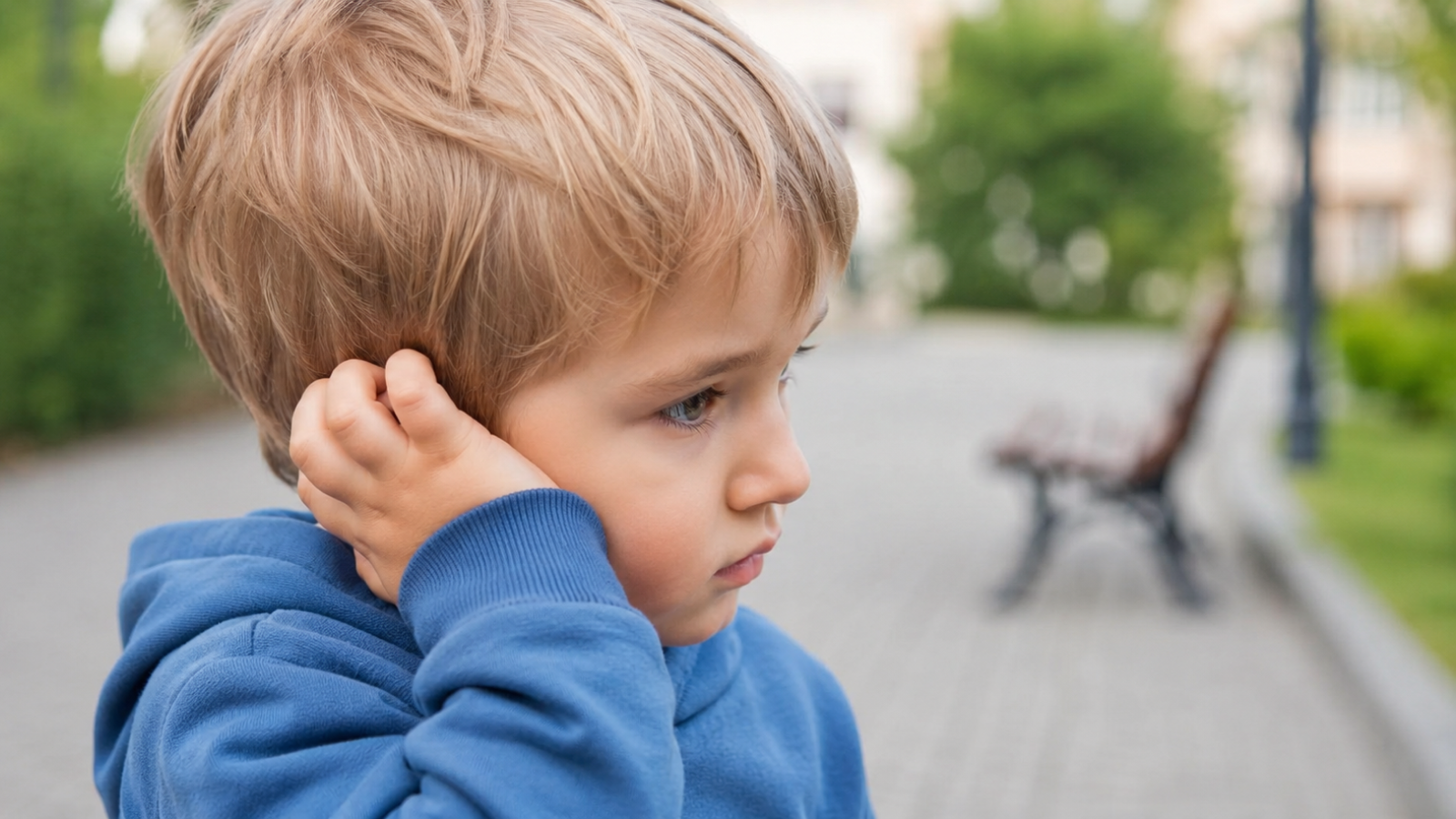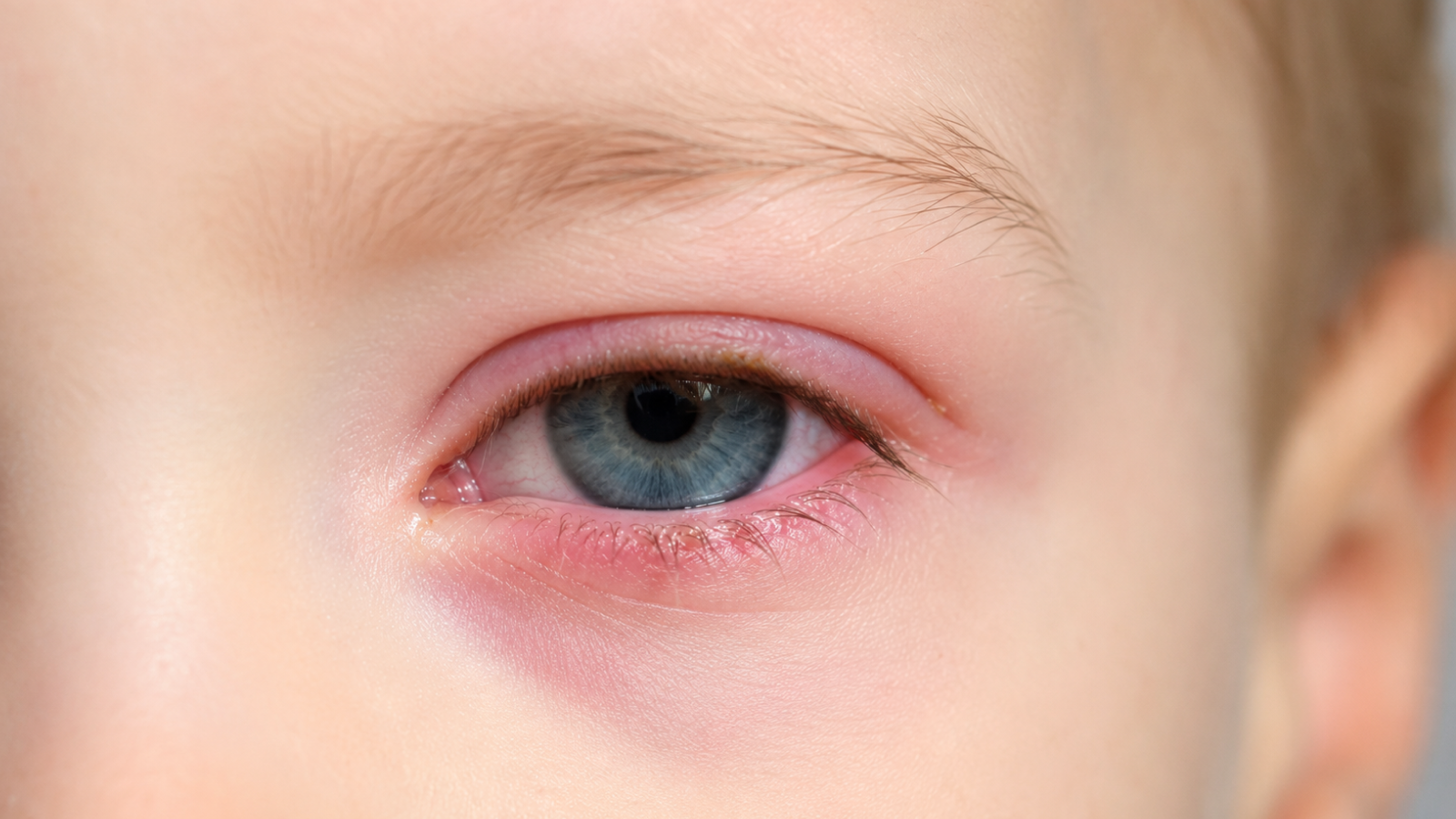
Does your child wake up in the morning and can barely open their eyes because the eyelids are sticky? Or is one eye suddenly red and watering a lot? Many parents then wonder: Is this conjunctivitis? Does my child need to see a pediatrician? And can they still go to daycare?
Red eyes are common in children and don't always mean a bacterial conjunctivitis. Often, viruses, a cold, or irritation are the cause. It's important to look at the overall picture.
How can you recognize conjunctivitis?
The conjunctiva is the thin membrane covering the white of the eye and the inside of the eyelids. When it's inflamed, various symptoms can occur.
Typical signs are:
- red eyes
- watery eyes
- sticky eyelids, especially after sleeping
- yellowish or whitish discharge
- itching, burning, or a foreign body sensation
- sensitivity to light
The inflammation often starts in one eye and soon affects the other.
What are the possible causes?
Conjunctivitis can have different triggers.
Viral Infection
Viruses are a common cause, often as part of a cold.
Typical signs are:
- red, watery eyes
- watery discharge
- runny nose or cough
- often both eyes are affected
Viral conjunctivitis is contagious and usually clears up on its own.
Bacterial Conjunctivitis
With a bacterial cause, there is often a more noticeable purulent discharge.
Possible signs are:
- yellow-green secretion
- heavily sticky eyelids in the morning
- significant redness
- usually starts in one eye
Whether a bacterial treatment is necessary is decided by the pediatrician.
Irritation or Allergy
Pollen, dust, chlorinated water, or other irritants can also cause red eyes.
Signs include:
- intense itching
- clear tearing
- both eyes affected simultaneously
- no cold symptoms
What can you do at home?
If your child seems otherwise well, simple measures often help.
For example:
- gently clean sticky eyelids with lukewarm water
- use a separate clean cloth for each eye
- wash hands frequently
- try to prevent eye rubbing
- do not use eye drops without a doctor's recommendation
Contact lenses are usually not an issue for young children, but older children should not wear them during an infection.
When should you see a doctor?
A pediatric examination is advisable if:
your baby is younger than 3 months,
the eye is very painful,
your child can hardly tolerate light,
vision seems impaired,
the eyelid swells significantly,
If fever or a significantly reduced general condition occurs,
if the symptoms do not improve after two to three days,
or if you are unsure about the cause of the symptoms.
Severe pain or vision problems suggest something more serious than a simple conjunctivitis and should be checked promptly.
Can my child go to daycare with conjunctivitis?
This depends on the cause and the daycare's policies.
Generally:
- With a viral or bacterial conjunctivitis, your child should stay home as long as the eyes are very red or producing a lot of discharge.
- Once the condition has significantly improved and your child can participate in daily activities, returning is often possible.
- Some daycares have their own rules. It's best to check directly with your facility.
Good hand hygiene is important to prevent the spread of germs.
How to prevent infection
Since many conjunctivitis cases are contagious, simple hygiene measures help:
- Wash hands regularly
- Do not share towels and washcloths
- Avoid touching the eyes
- Dispose of tissues after one use
In families, more than one person often gets infected.
Key points to remember
Red and sticky eyes are common in children and are often caused by viruses. Not every conjunctivitis requires antibiotics. What matters is the severity of the symptoms, whether there is pain or vision problems, and how the symptoms develop. If there are warning signs or uncertainty, your child should be examined by a pediatrician.