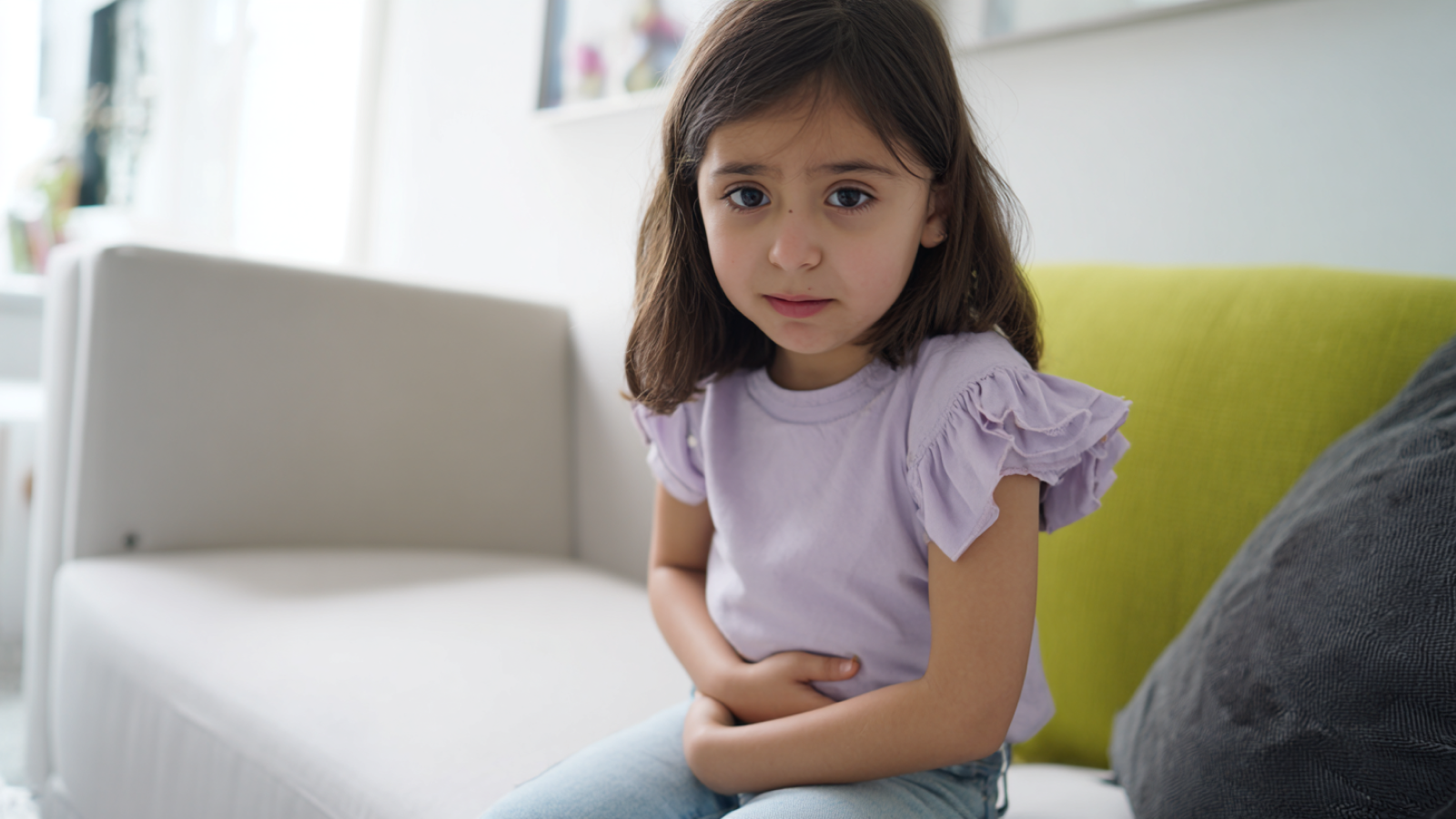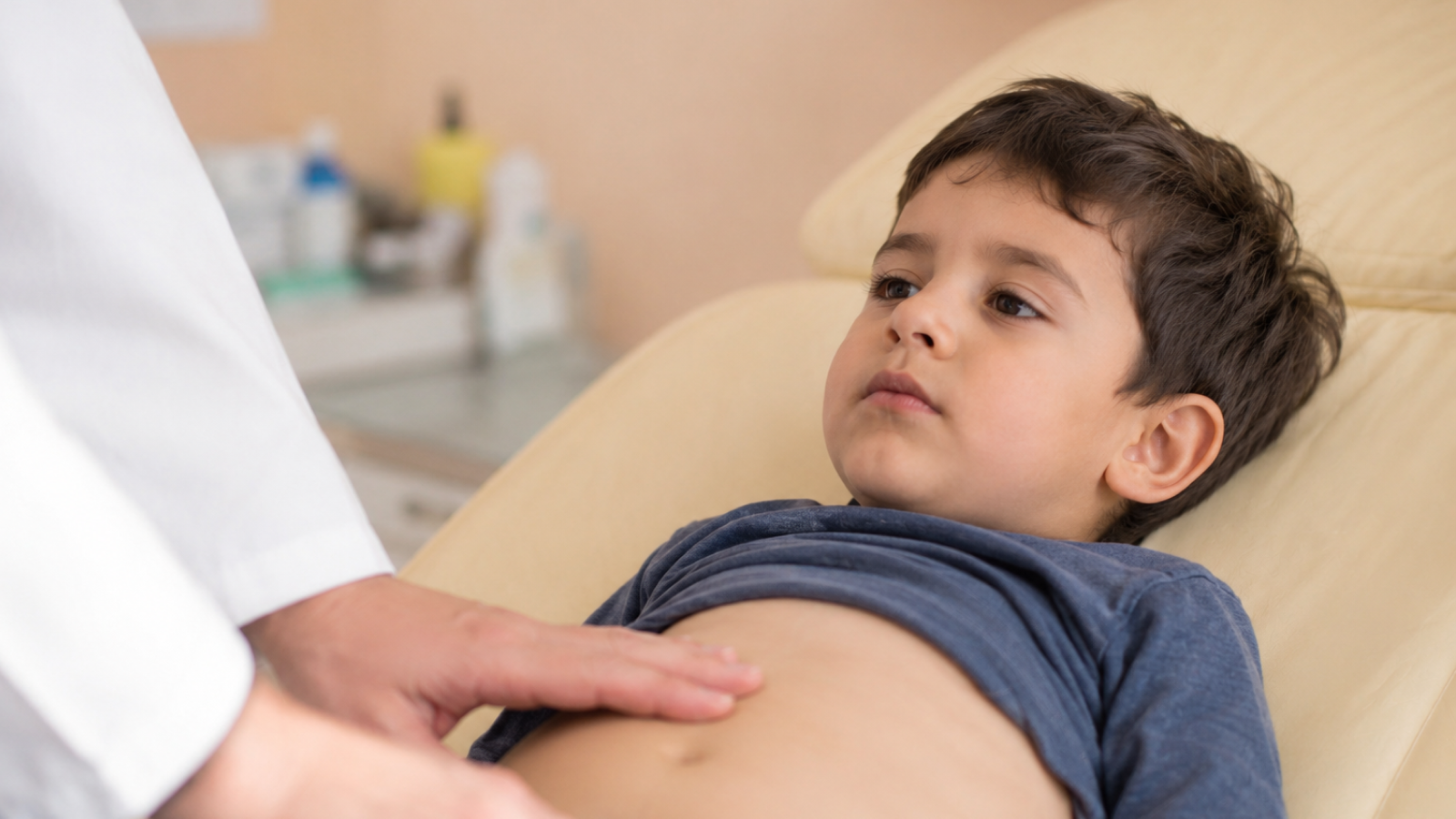
Suddenly your child holds their tummy, doesn’t want to play anymore, or keeps saying: “My tummy hurts.” For parents, it’s often hard to judge whether it’s just a harmless digestive issue or whether the stomach pain should be checked by a doctor.
To reassure you first: Stomach aches are one of the most common complaints in children and are often harmless. At the same time, there are some warning signs where your child should be examined soon.
Where does stomach pain in children come from?
Stomach pain can have many different causes. Often, it’s nothing serious.
Typical triggers are:
- constipation
- stomach bugs (gastrointestinal infections)
- wind (gas)
- unfamiliar or very large meals
- stress or emotional strain
- a virus infection starting
- urinary tract infections
Sometimes stomach pain also happens together with fever, cough, or a sore throat and is part of a general infection.
What is often still normal?
Many children sometimes have stomach pain without being seriously ill.
For example, your child may:
- complain about a vague pressure in the tummy
- feel better again after going to the toilet
- play completely normally in between
- have a slightly reduced appetite for a short time
- get stomach pain when excited or stressed
Especially in kindergarten and preschool age, stomach pain can also be linked to emotional strain.
How can you tell if the stomach pain is more likely harmless?
A straightforward course often suggests it’s uncomplicated, for example if your child:
- plays again between episodes,
- drinks enough,
- doesn’t have severe pain,
- breathes normally,
- and their condition improves within a few hours or days.
What matters most is always the overall picture – not just how strong the pain is in one single moment.
When should you take your child to see a doctor?
A pediatric check-up makes sense if:
- the pain is very severe or started suddenly,
- your child won’t let you touch their tummy,
- the pain keeps getting worse,
- fever appears as well,
- there is repeated vomiting,
- you can see blood in the stool or vomit,
- your child is drinking very little,
- they seem unusually weak or apathetic,
- the stomach pain lasts for several days,
- or your child keeps complaining about stomach pain again and again.
Severe pain in the lower right abdomen in particular should be checked by a doctor soon, as it can be caused by appendicitis, among other things.
When should you get medical help immediately?
Call the emergency number or go to an emergency department right away if your child:
suddenly develops very severe stomach pain,
has a hard, tense abdomen,
looks pale or is barely responsive,
vomits large amounts of blood or passes blood in their stool
has pain in the testicles or groin,
or has severe pain after an accident.
These symptoms should be assessed by a doctor right away.
What can you do at home?
If your child otherwise seems well and shows no warning signs, simple measures often help.
For example:
- offer small amounts to drink regularly
- allow rest
- offer light, easy-to-digest food if your child wants to eat
- watch whether a bowel movement or passing gas brings relief
- keep an eye on how things develop
Abdominal pain caused by constipation
One of the most common causes of recurring abdominal pain in children is constipation.
Signs can include:
- infrequent or hard stools,
- pain when passing stools,
- straining on the toilet,
- or stool marks in the underwear.
If your child is affected more often, it’s worth getting advice from your paediatrician.
Can worries also cause abdominal pain?
Yes. Children often express stress through physical symptoms.
Abdominal pain can happen, for example, in connection with:
- day care or kindergarten,
- changes in the family,
- arguments,
- new situations,
- or excitement.
Even then, the pain is real for your child and should be taken seriously.
What to remember
Most abdominal pain in children is harmless and improves again within a short time. What matters is how severe the symptoms are, whether other symptoms are added, and how your child is doing overall. If they are drinking enough, playing in between, and the pain seems more temporary, a straightforward course is likely. If warning signs occur or symptoms get worse, your child should be examined by a paediatrician.
Keep an eye on symptoms and how they develop
With the tio App, you can easily record abdominal pain, bowel movements, vomiting, fever, and other accompanying symptoms. This helps you spot changes over time more easily, and if you have questions at the paediatrician’s practice, you’ll have all the important information right at hand.