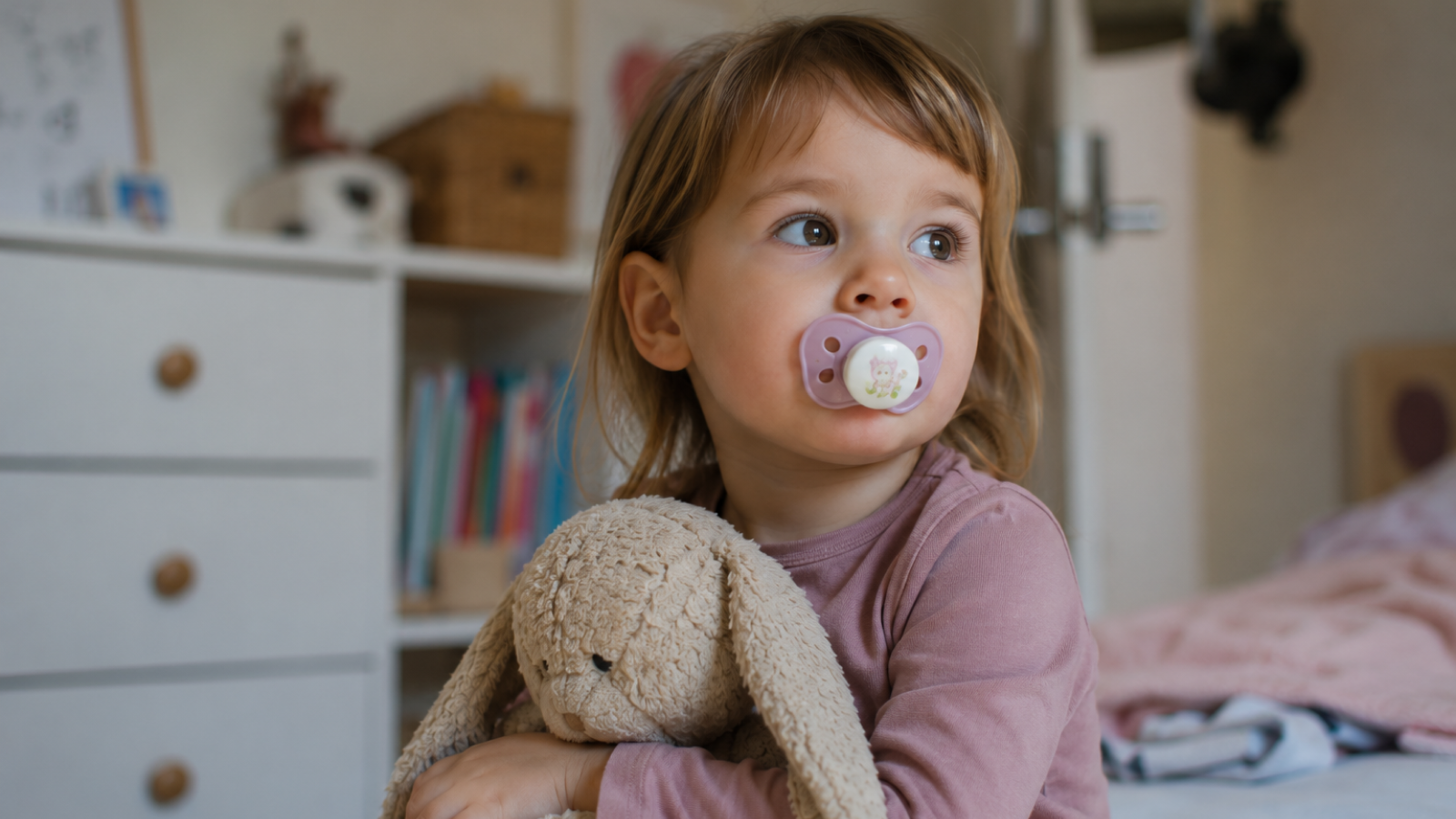
For many children, a pacifier is much more than just a soothing tool. It helps them fall asleep, provides comfort, and offers security in unfamiliar situations. At some point, however, many parents wonder: When should we wean off the pacifier—and how can we do it with as few tears as possible?
The most important message upfront: There is no perfect day to say goodbye to the pacifier. What matters more is that the timing suits your child and your family situation.
When should the pacifier be gone at the latest?
A pacifier can be useful during infancy and support the natural need to suck. However, as children grow older, its importance diminishes.
Pediatricians usually recommend gradually weaning off the pacifier between the second and fourth birthday. By the 4th birthday at the latest, the farewell should be complete to minimize any impact on teeth, jaw, and speech development.
How do you know your child might be ready?
Many children naturally show signs that they need the pacifier less and less.
For example, if your child:
- often goes without the pacifier for longer periods during the day
- can be soothed in other ways
- starts talking about the pacifier or asking questions about it
- shows interest in being "grown-up"
- sometimes puts the pacifier away on their own
These signals can be a good time to take the next step.
Why is saying goodbye difficult for many children?
The pacifier is often closely associated with a sense of security. Especially when tired, uncertain, sick, or facing big changes, many children seek it out more.
Therefore, it's completely normal if your child initially reacts with sadness, anger, or disappointment. This doesn't mean the timing was wrong.
How to make weaning easier
Many families have positive experiences by not saying goodbye to the pacifier suddenly, but rather step by step.
Helpful strategies include:
- offering the pacifier only for sleeping at first
- choosing a specific farewell day together
- explaining the farewell in an age-appropriate way
- strengthening other comforting rituals like a stuffed animal or blanket
- staying consistent once you've made a decision
Children usually benefit from clear rules and calm guidance.
Pacifier fairy or just gone?
Many families use rituals like the pacifier fairy, a pacifier tree, or a small farewell gift. Such ideas can ease the transition and give the farewell a positive meaning.
What's important is not the ritual itself, but that your child can understand the farewell and feels supported.
What is often normal after giving up the pacifier
In the first few days, your child might:
- have trouble falling asleep
- ask for the pacifier more often
- be more clingy
- get frustrated more easily
- sleep more restlessly at night
These reactions are usually temporary and often improve after a few days or weeks.
When should you consider waiting a bit longer?
Sometimes it's worth not giving up the pacifier just yet.
For example, during:
- settling into daycare
- moving house
- the birth of a sibling
- a prolonged illness
- other major changes in family life
During such times, many children need extra reassurance.
Does the pacifier need to go away completely right away?
Not necessarily.
For some children, a clear break works well. Others benefit if the pacifier is initially only allowed for sleeping and then gradually phased out.
Which approach is better depends mainly on your child's temperament.
What helps if your child keeps asking for it?
Stay as calm and understanding as possible.
You might say something like:
"I know you miss your pacifier. This is hard right now. I'm here with you."
Long discussions or changing rules often make saying goodbye harder. Clear, loving consistency gives many children more security.
When should you discuss this with your pediatrician?
Talk to your pediatrician if:
- your child uses the pacifier almost all day long
- noticeable dental or jaw changes are apparent
- your child still regularly needs the pacifier over the age of four
- you are concerned about speech development
- attempts to wean off the pacifier repeatedly fail
Together, you can often find a suitable strategy.
Saying goodbye with patience instead of pressure
The pacifier was an important support for your child for a long time. Accordingly, saying goodbye also takes time. With patience, clear rules, and a lot of understanding, most families manage this developmental step well. The goal is not to say goodbye as quickly as possible, but to ensure a secure transition that your child can handle well.