After a trip to the woods, the park, or through tall grass, you suddenly spot a tick on your child’s skin. Many parents feel alarmed in this moment and wonder: Does the tick need to be removed right away? What if the head gets stuck? And what should I watch for in the next few weeks?
Not every tick carries germs. The most important thing is to remove the tick as early as possible and correctly, and then keep an eye on the bite site.
Why are ticks a problem?
Ticks can transmit different pathogens. In Germany, two illnesses are especially relevant:
- Lyme disease (borreliosis), which occurs nationwide.
- TBE (tick-borne encephalitis), which is mainly transmitted in certain risk areas.
However, most tick bites do not lead to either of these illnesses.
How do you remove a tick correctly?
The sooner the tick is removed, the better.
Here’s what to do:
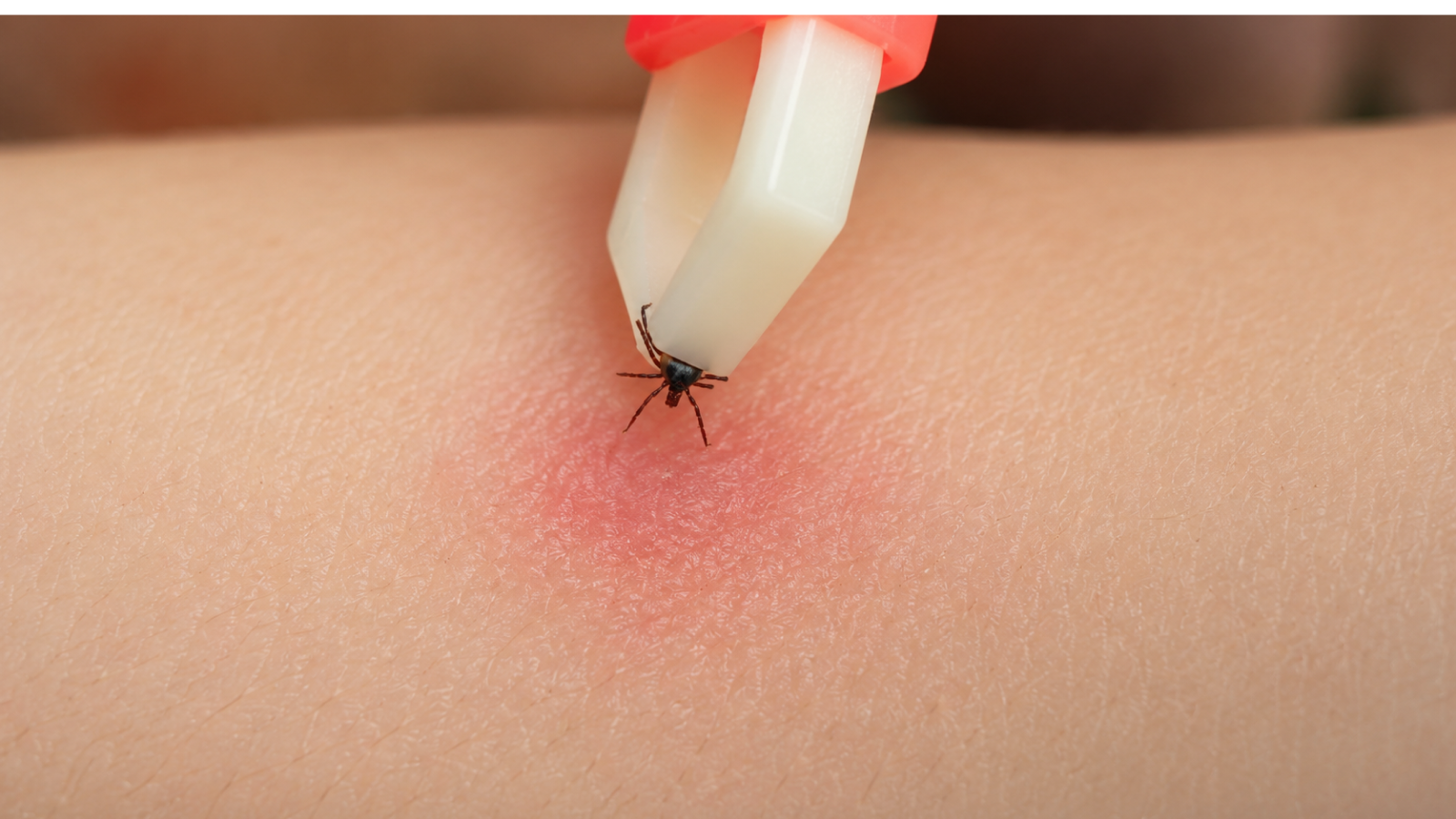
- Use fine tick tweezers, a tick card, or a tick removal tool.
- Grasp the tick as close to the skin as possible, by the head or mouthparts.
- Pull it out slowly and steadily, straight out.
- Then disinfect the bite site.
It does not matter whether you gently twist the tick or pull it straight out. The key thing is not to squeeze it.
What should you avoid?
Home remedies are often recommended, but they do not help.
Do not use:
- oil,
- nail polish,
- glue,
- alcohol before removal,
- or burning the tick off.
These measures can cause the tick to release more saliva or gut contents. This may increase the risk of transmitting pathogens.
What if part of the tick is left in the skin?
This happens occasionally and is not a reason to worry.
Often only a small part of the mouthparts remains in the skin. The body usually pushes these remnants out on its own within a few days.
Watch the skin area. If it becomes inflamed or symptoms get worse, it should be checked by a pediatrician.
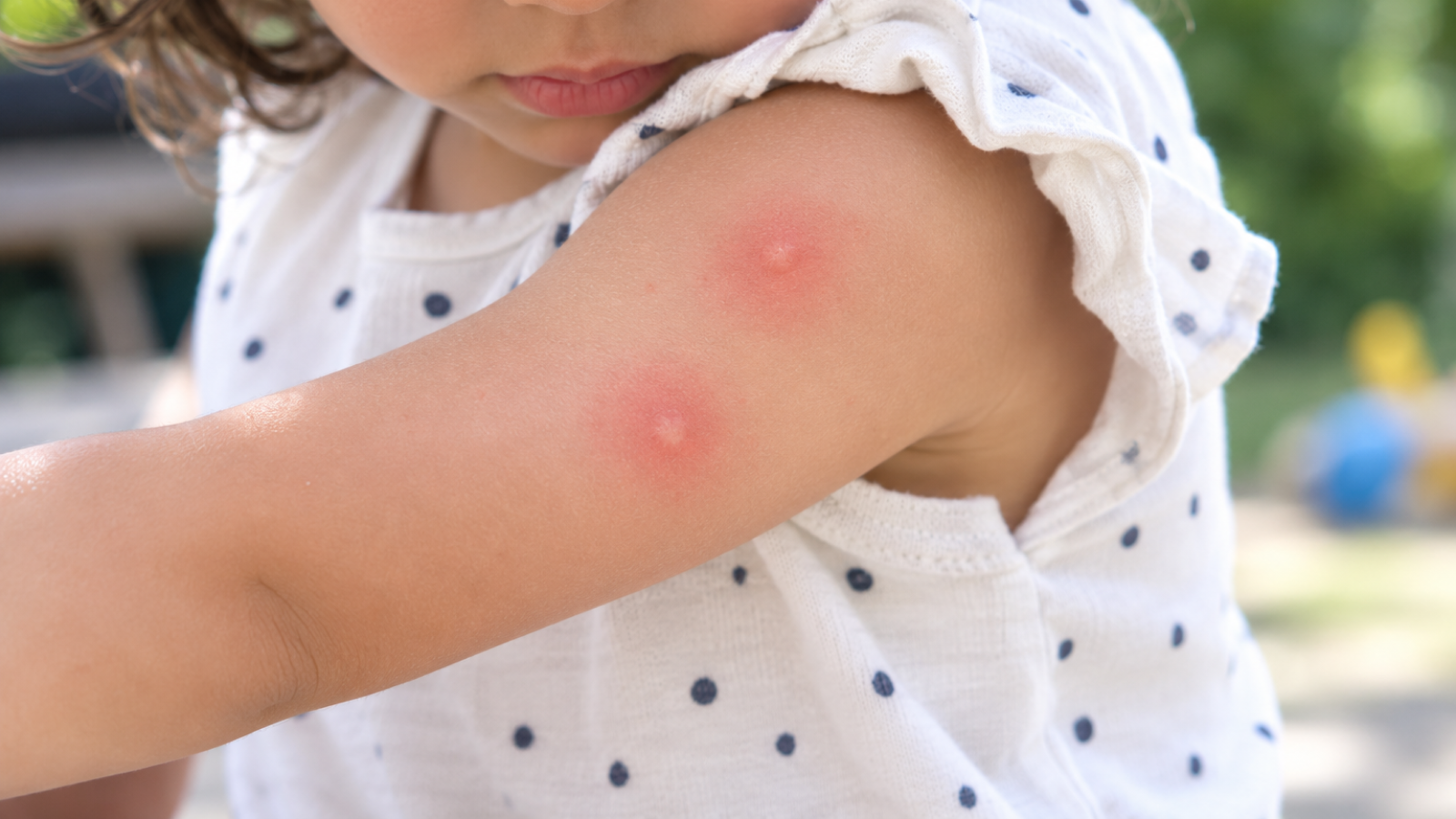
What does a normal reaction look like?
After a tick bite, it is common to have:
- a small red spot,
- slight swelling,
- or some itching.
These changes usually go away within a few days.
What should you watch for in the next few weeks?
What matters is not only the day of the tick bite, but also what happens afterward.
Have your child examined by a doctor if:
- the redness spreads in a ring shape in the days or weeks after the bite,
- the skin area keeps getting larger,
- fever occurs,
- severe headache or body aches develop,
- your child seems unusually tired or unwell,
- joint pain or signs of paralysis occur.
A slowly growing, ring-shaped redness of the skin can be a sign of Lyme disease and should be checked by a doctor soon.
Can I get tested for Lyme disease right away?
No. Blood tests are usually not useful immediately after a tick bite. Your pediatric practice will decide whether further tests are needed based on the symptoms and how things develop.
Preventive antibiotics are also usually not recommended in Germany after a tick bite.
How can you protect your child from ticks?
There is no complete protection.
Helpful measures are:
- long clothing when spending time in tall grass or in the woods,
- closed shoes,
- suitable tick repellents for the child’s age,
- checking the whole body carefully after playing outside,
- especially checking armpits, behind the knees, the groin area, the neck, and behind the ears.
The earlier a tick is found, the easier it is to remove.
What about the TBE vaccine?
For families who live in a TBE risk area or regularly spend time outdoors there, a TBE vaccination may be helpful.
You can discuss with your pediatric practice whether your home area or holiday destination is included.
The vaccine protects only against TBE – not against Lyme disease.
What you should know
Tick bites are common in children and usually do not lead to illness. The key is to remove the tick as early as possible and to watch the bite site over the following weeks. If a growing ring-shaped redness, fever, or other unusual symptoms occur, your child should be examined by a pediatrician.
Keep an eye on tick bites and how they develop
With the tio App, you can easily document tick bites, photos of the skin area, and possible symptoms. This makes it easier to notice changes, and you will have the timeline ready to hand for an appointment at your pediatric practice.