The message from the daycare often comes as a surprise: “Head lice have been detected.” Many parents immediately start to itch and wonder: Does my child have lice too? Does the whole family need treatment? And when can my child return to daycare?
The reassuring news: Head lice are not related to poor hygiene. They are common in daycares and schools and can be effectively managed with the right treatment.
How can you recognize head lice?
Head lice are only a few millimeters long and move quickly. They are often only noticed when children start scratching their heads frequently.
Possible signs include:
- frequent itching of the scalp
- scratching, especially behind the ears or on the neck
- small reddish scratch marks
- lice eggs (nits) firmly attached to the hair
- occasionally visible lice on the scalp
Not every child with lice will immediately experience itching. Therefore, a thorough check is always worthwhile after a lice notification from daycare.
How do you properly check the hair?
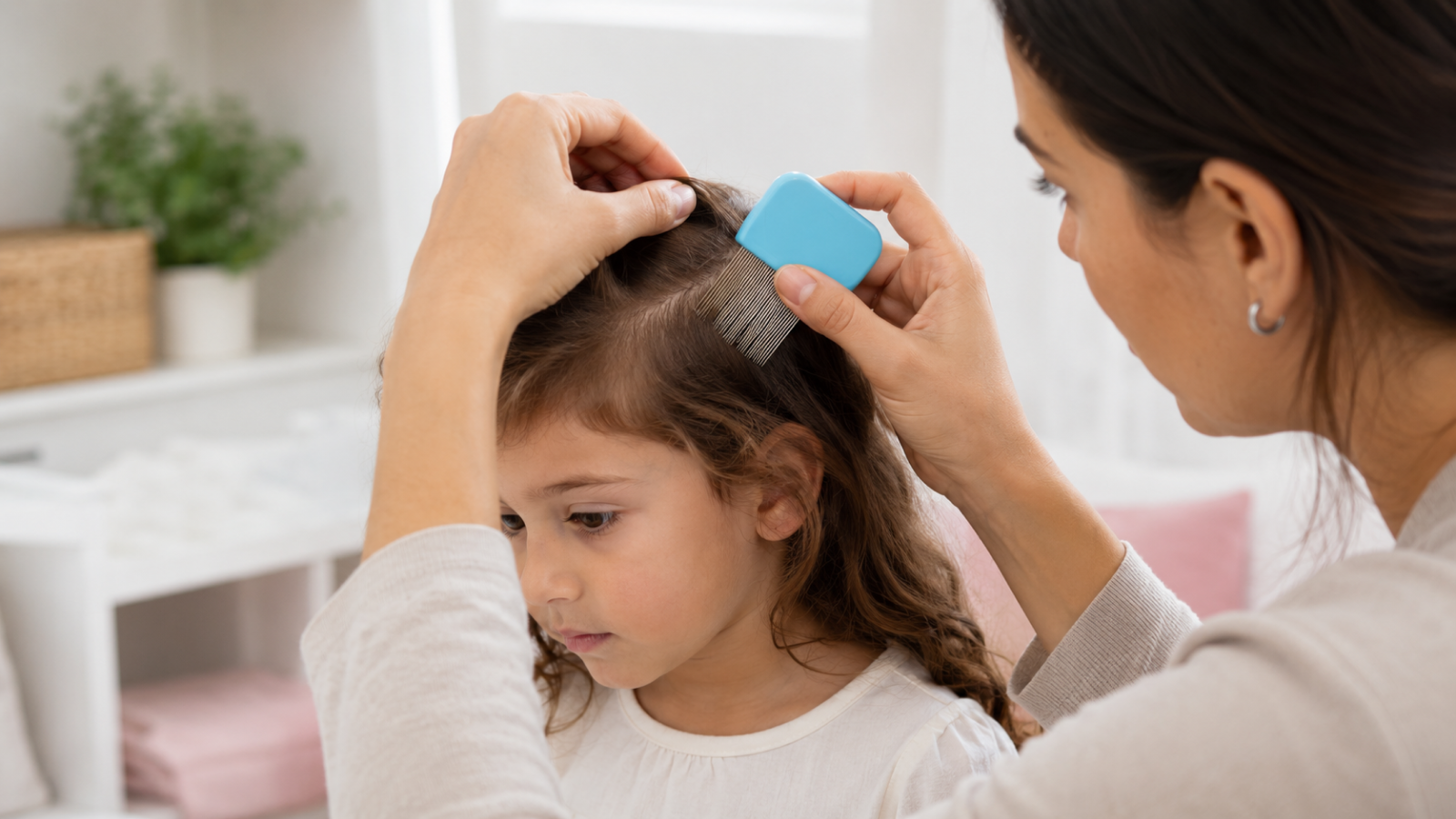
The most reliable way to check is with a lice comb.
Follow these steps:
- Dampen the hair well.
- A conditioner can make combing easier.
- Comb the hair strand by strand from the roots to the tips.
- Wipe the comb on a light-colored cloth or kitchen paper after each stroke.
- Look for lice or moving nymphs.
Pay special attention to the area behind the ears and the neck.
What should you do if you find lice?
Stay as calm as possible. Head lice are unpleasant but generally harmless.
It is recommended to:
- use an appropriate lice treatment according to the package instructions
- carefully comb the hair with a lice comb
- repeat the treatment at the recommended time
- inform the daycare or kindergarten
Treatment is only necessary if live lice are detected.
Do all family members need to be treated?
No. Only individuals who have been found to have lice or live nits should be treated.
However, it is sensible to carefully check all close family members.
Do stuffed animals, bedding, and the whole house need to be cleaned?
There is often uncertainty here.
Head lice survive only a short time away from the scalp. Therefore, an extensive cleaning of the house is not necessary.
It is sensible to:
- change bedding, hats, and scarves
- clean brushes and combs
- set aside stuffed animals that have been in direct contact with the head for two to three days if they cannot be washed
Large-scale cleaning or disinfection measures are not required.
When can my child return to daycare?
The specific guidelines can vary depending on the federal state or the daycare facility.
In general:
After a properly started initial treatment, many children can return to daycare.
Inform the facility about the lice infestation and follow the rules that apply there.
When should you visit the pediatrician?
A pediatric consultation is advisable if:
- you are unsure whether it is actually lice,
- the treatment is not successful despite correct application,
- the scalp is severely inflamed or has pus,
- your child has an allergic reaction to a lice treatment,
- or you have questions about treatment for infants or specific pre-existing conditions.
Can lice be prevented?
Unfortunately, there is no guaranteed protection.
However, it is helpful to:
- regularly check hair after lice notifications,
- avoid sharing hats, brushes, or hairbands,
- inform children about close head-to-head contact – as much as is age-appropriate.
Since lice are mainly spread through direct hair contact, it is not always possible to avoid transmission in daycare settings.
Remember this
Head lice are common in daycare and kindergarten age and are not a sign of poor hygiene. It is crucial to detect the infestation early, treat it consistently, and check close contacts. With the right treatment, most children can soon return to their normal routine.