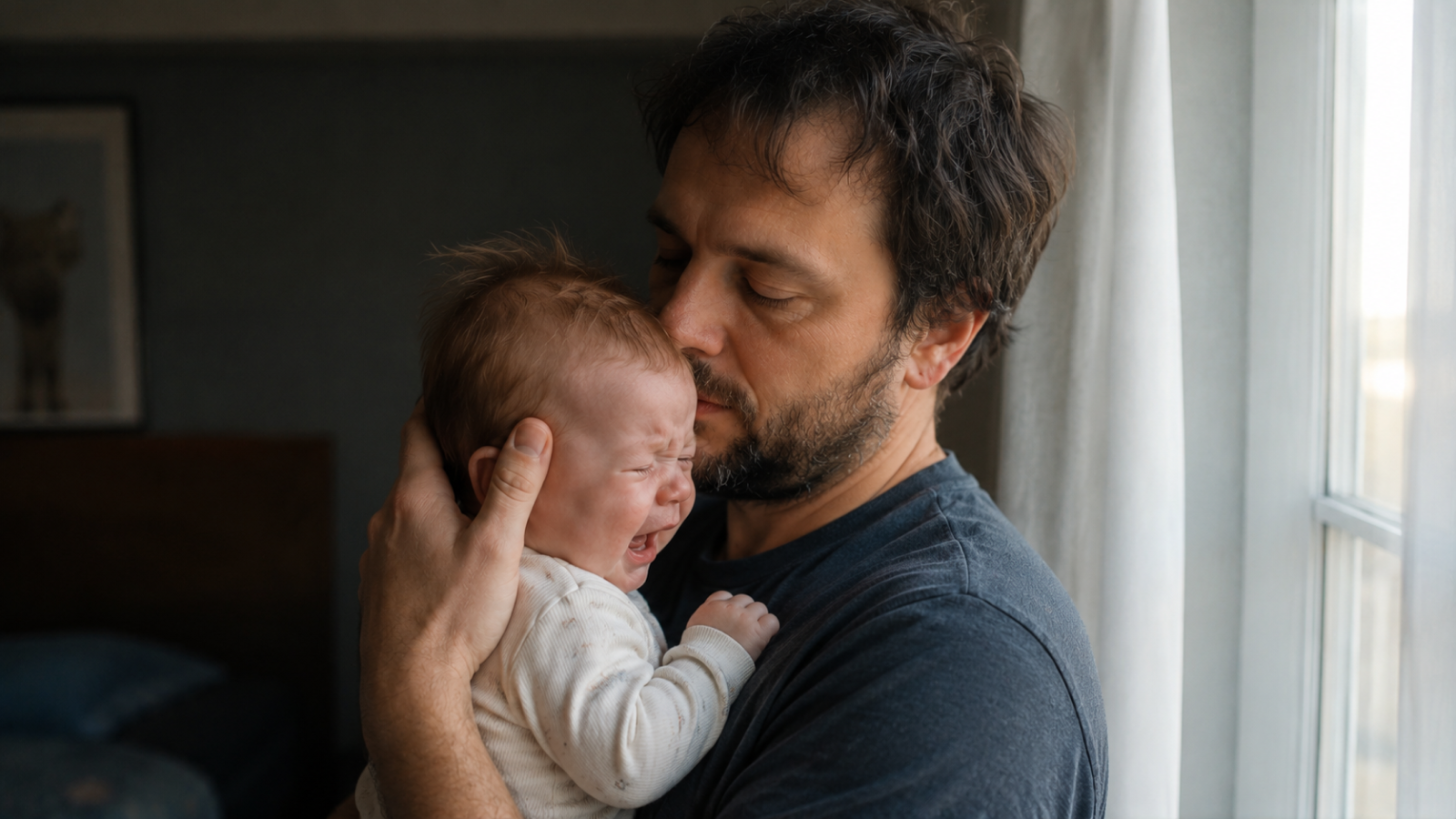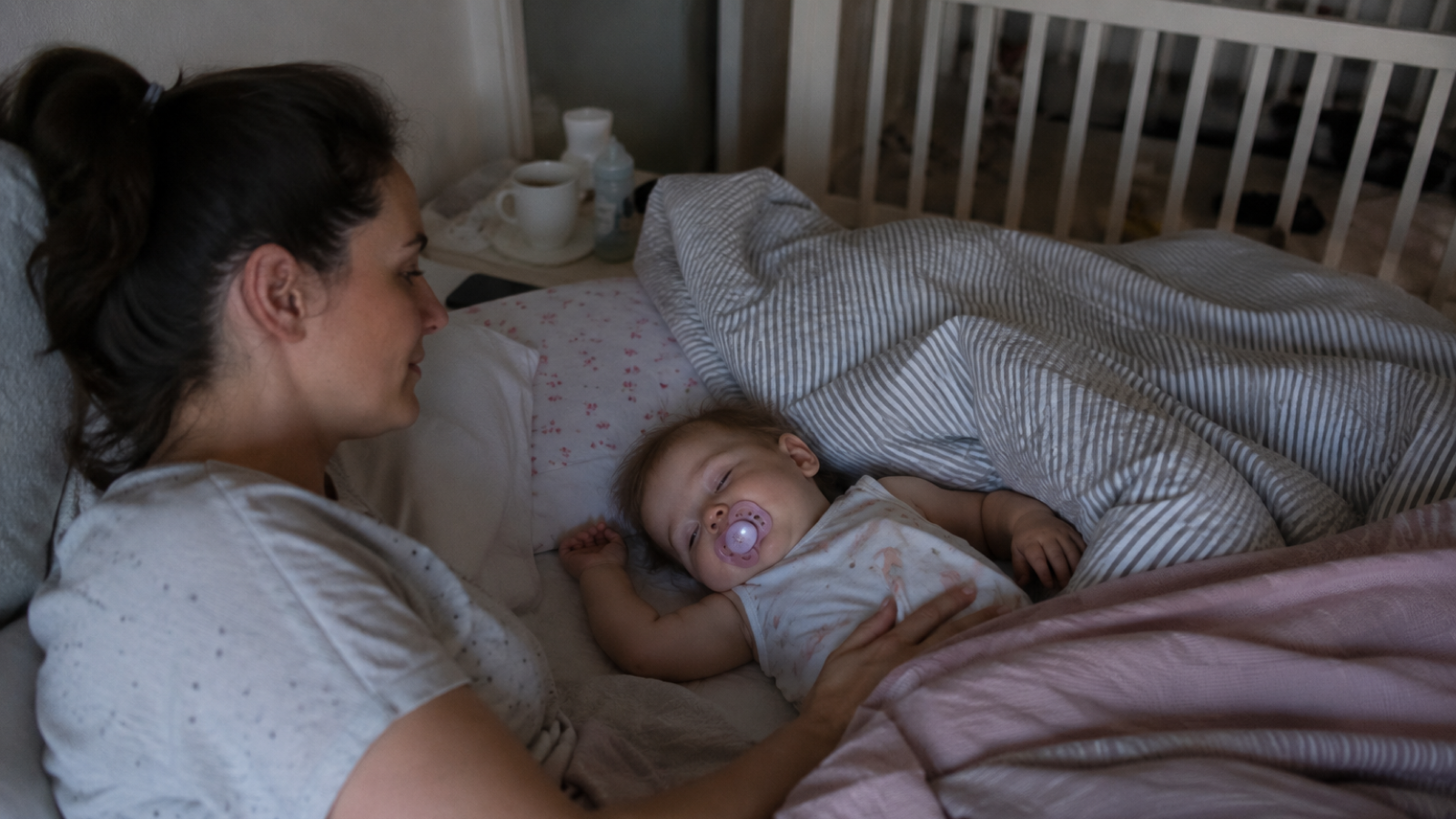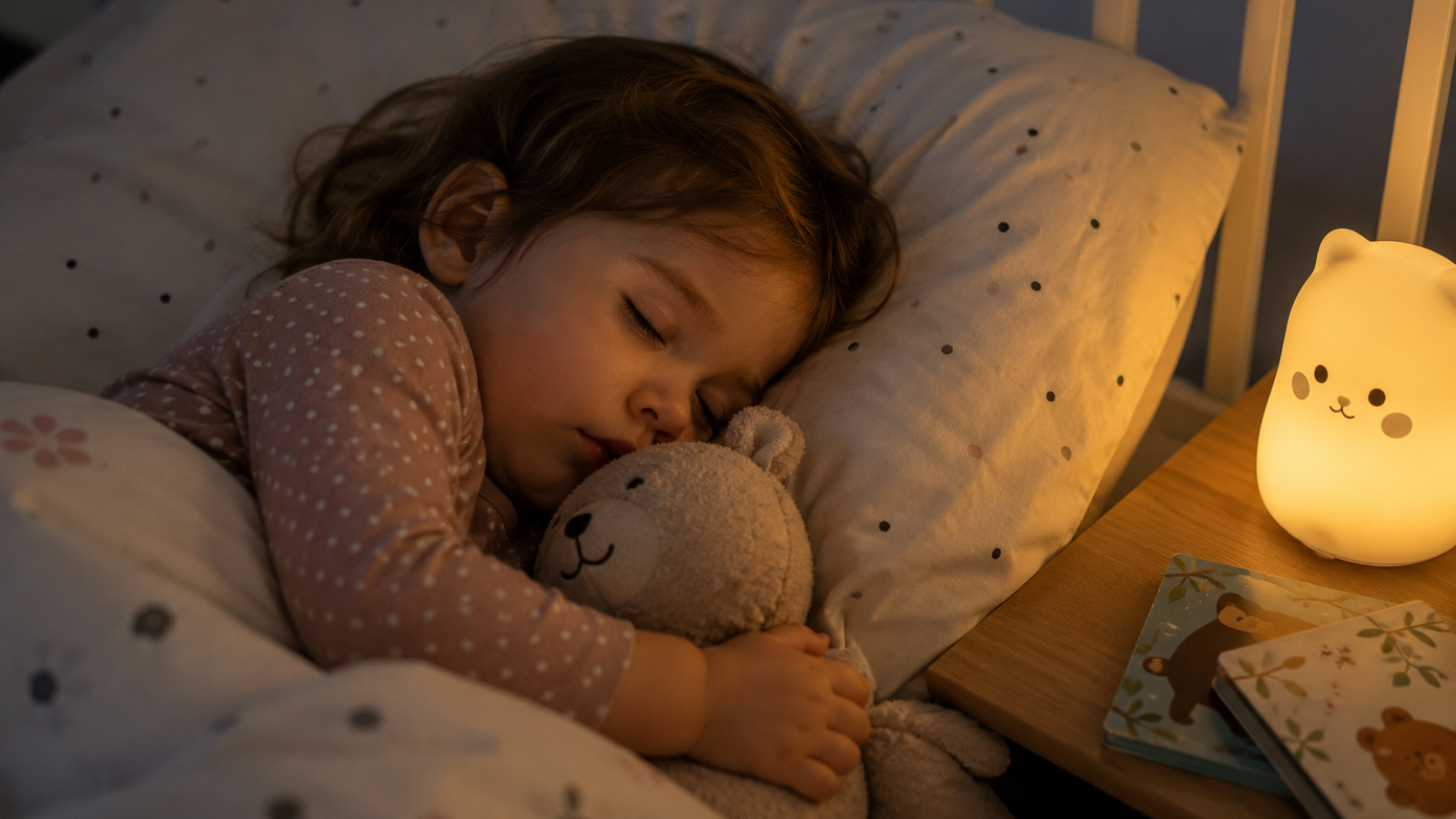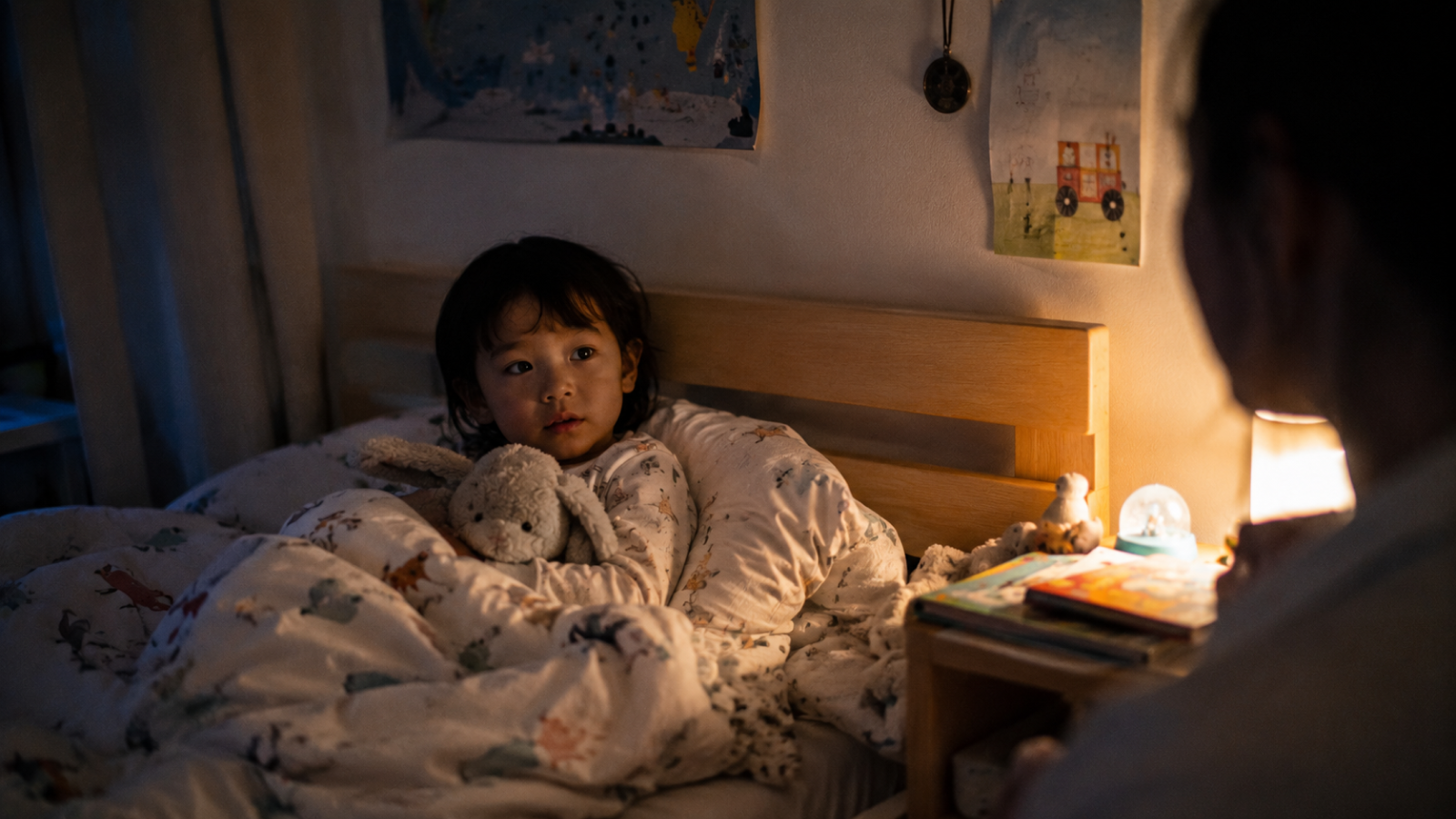
"I'm not tired at all!" – even though your child has been active all day. Instead of going to bed, they suddenly want to play, have a drink, hear one more story, or find new reasons why they can't sleep yet.
Many parents experience this between their child's second and fifth birthdays. The most important thing to know: Sleep difficulties at this age are usually not a sign that something is wrong with your child's sleep. They often relate to your child's development – their growing need for independence, a vivid imagination, or many new experiences from the day.
Why is falling asleep suddenly so difficult?
In toddler and preschool years, sleep changes significantly. Children sleep less overall than babies but experience their days much more intensely. At the same time, they develop their own will, a lively imagination, and the desire to make more decisions themselves.
That's why several factors often come into play when falling asleep:
- your child hasn't calmed down enough yet
- they don't want the day to end
- they are testing boundaries and routines
- they are processing many new impressions
- they temporarily need more closeness or security
So, a lack of tiredness isn't always the reason for taking a long time to fall asleep.
What is still normal at this age
Many behaviors seem challenging in the evening but are part of normal development.
For example, if your child:
- wants to hear another story
- gets up shortly after going to bed
- wants another drink or to use the toilet
- suddenly develops a fear of the dark
- doesn't want to fall asleep without mom or dad
- takes significantly longer to fall asleep on some evenings
Such phases can last a few days or weeks and often disappear on their own.
Why does my child keep getting out of bed?
Many children leave their room several times after going to bed. They might want to tell you something, need a stuffed animal, or simply seek closeness again.
Usually, there's no intention to make bedtime harder. It's often difficult for children at this age to transition from an exciting day to the calm of night. A calm, reliable routine usually helps more than long discussions.
What can make falling asleep even harder
In addition to normal development, various factors can exacerbate sleep difficulties.
For example:
- very exciting days
- irregular bedtimes
- a late or long nap
- screen time right before bed
- changes like starting daycare, moving, or a new family member
- worries or fears
Often, several of these factors come together at once.
What Can Help Your Child Fall Asleep
There's no perfect bedtime routine. Often, simple, consistent routines can help.
For example:
- Going to bed at about the same time every evening
- Winding down quietly in the evening
- Avoiding screen time about an hour before bedtime
- Establishing a bedtime ritual, like brushing teeth, reading a story, and cuddling
- Staying calm and consistent, even if your child tests boundaries
Many children benefit from a similar routine every evening. This provides security and makes the transition to nighttime easier.
Does My Child Have to Fall Asleep Alone?
No. There is no medical reason why every child at this age must fall asleep alone.
Some children fall asleep independently without any issues, while others still need physical contact, a story, or someone to stay with them briefly. The key is that the bedtime situation works well for your family in the long run.
When Should You Take a Closer Look?
Difficulty falling asleep alone is usually not a cause for concern. A pediatric assessment might be helpful if other issues arise as well.
For example, if your child:
- Regularly snores loudly or has breathing pauses
- Frequently wakes up at night due to pain
- Sleeps very little over a long period and seems very tired during the day
- Shows noticeably restless legs or significant restlessness
- Develops significant fears or if sleep is a constant major stress for the whole family
If you feel that there is more to the sleep problems than just a temporary phase, it’s worth discussing with your pediatrician.
In Summary
Between the ages of two and five, sleep and falling asleep often change. More independence, imagination, and many new daily experiences can make it harder for children to settle down in the evening. With patience, reliable routines, and realistic expectations, many of these phases will naturally become easier.