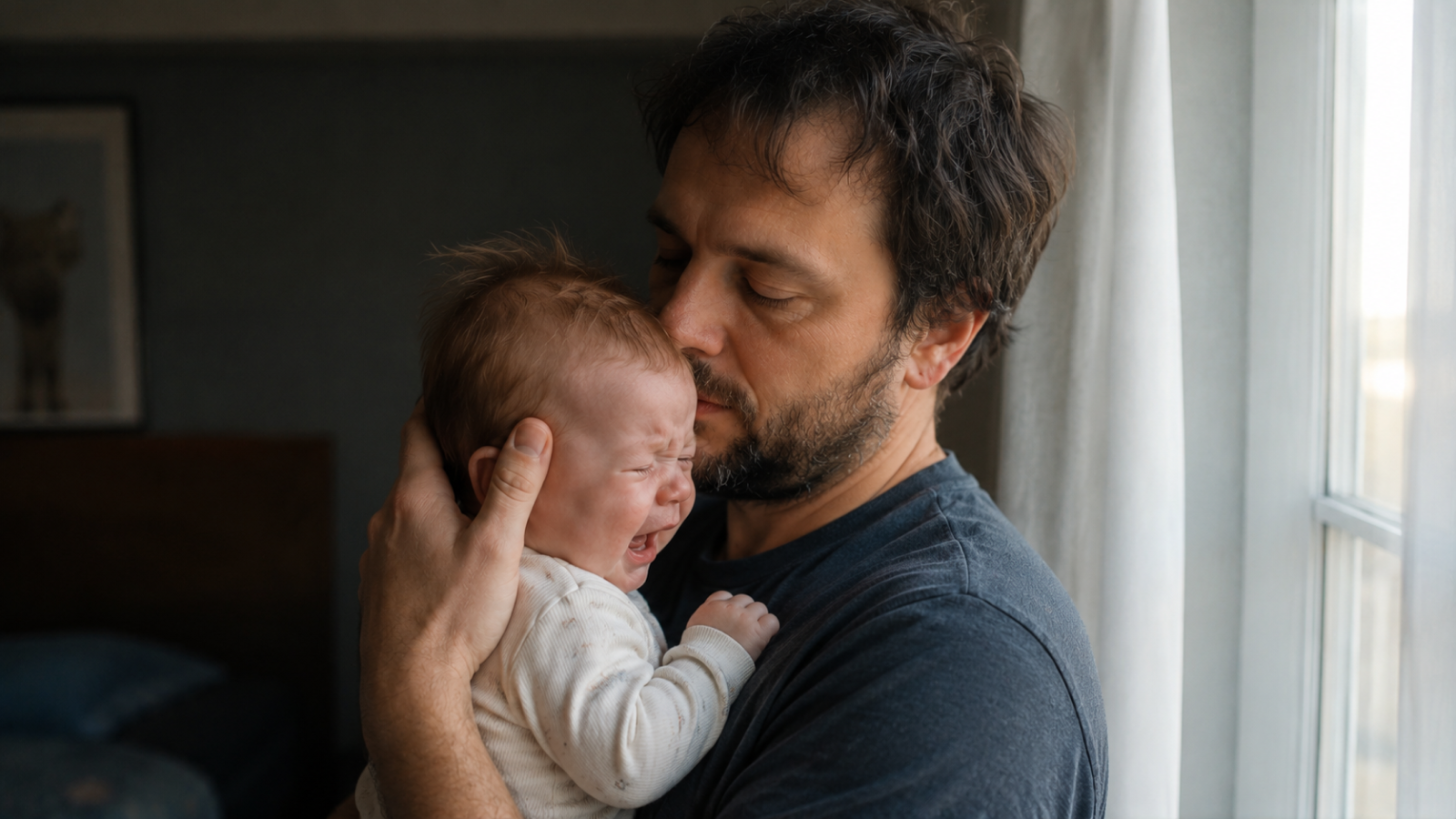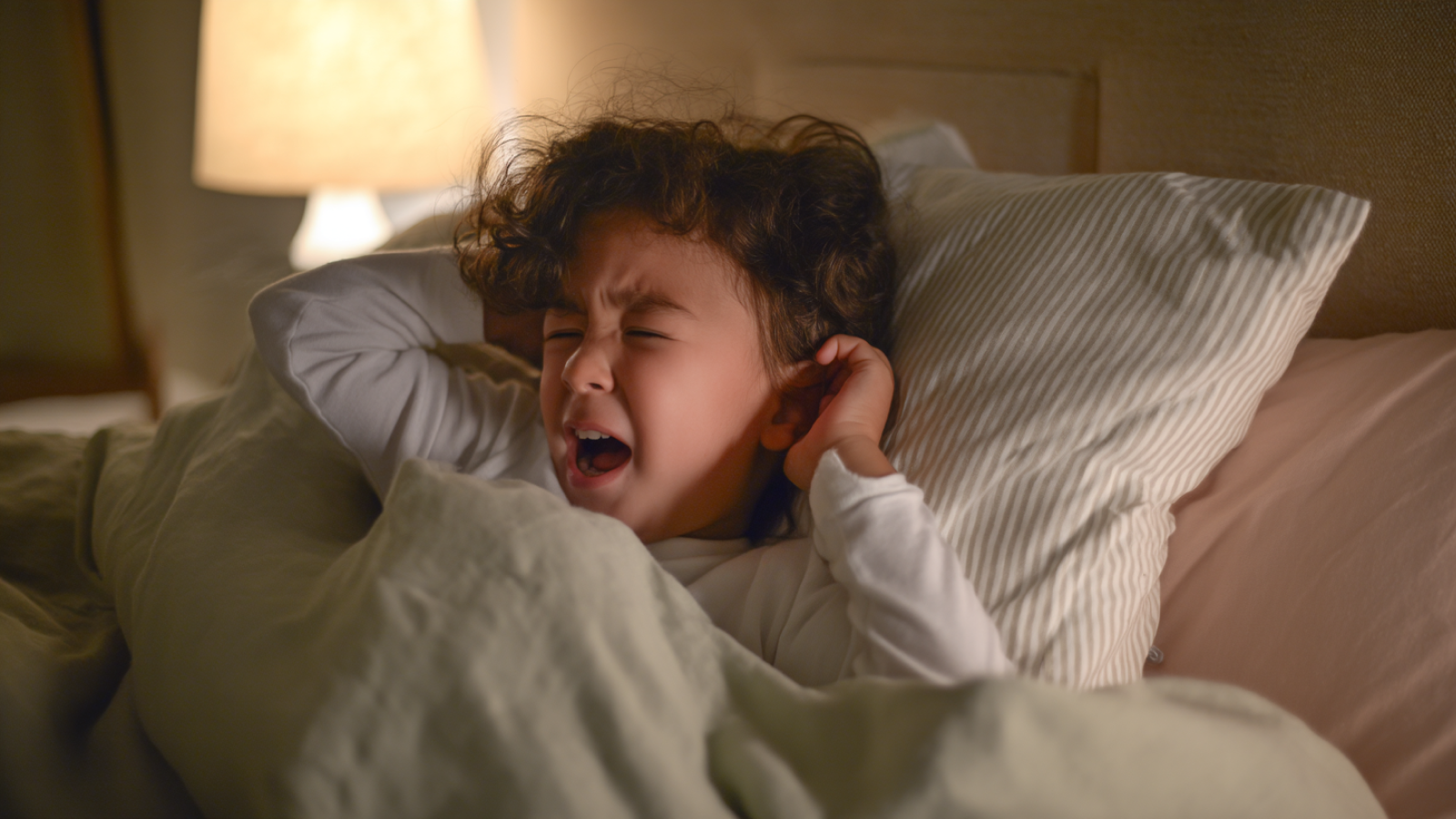
Sudden screaming in the middle of the night is one of those experiences many parents never forget. Your child sits upright in bed, cries, seems panicked, or even pushes you away. Some children are very hard to calm down and seem not to really notice their parents at all.
The most important reassurance first: Nights like this are often caused by either a nightmare or a night terror (pavor nocturnus). Both can feel frightening, but are usually harmless. What matters is being able to tell the two situations apart.
Nightmare or night terror – how can you tell the difference?
Even though both situations can look similar, they are quite different.
A nightmare
Nightmares usually happen in the second half of the night.
Typical signs are:
- your child wakes up fully
- they often remember the dream
- they seek comfort and physical closeness
- they can usually be calmed down
- they may be afraid to fall asleep again
Children sometimes talk about monsters, animals, or other frightening dreams.
A night terror
A night terror usually happens in the first two to three hours after falling asleep.
Typical signs are:
- your child suddenly screams loudly
- they seem panicked or frightened
- their eyes may be open without them seeming truly awake
- they often don’t recognize you
- attempts to comfort them often help very little
- after a few minutes, they fall asleep again
- the next morning, they usually don’t remember anything
For parents, a night terror often feels more dramatic than it is for the child.
Why do night terrors happen?
The exact cause is not fully clear. It is thought that the brain briefly gets “stuck” between deep sleep and being awake.
Night terrors happen especially in preschool and early school age and in most children they go away as they get older.
Things that can make them more likely include:
- lack of sleep
- very exciting days
- fever or infections
- unusual sleep times
- stress or big changes in everyday life
A night terror does not mean your child is mentally distressed or having bad dreams.
What is still often normal at this age?
Both nightmares and occasional night terror episodes are part of normal development for many children.
Even if your child:
- occasionally wakes up screaming,
- seeks closeness after a nightmare,
but seems completely fine during the day, there is usually no reason to worry.
Many children only go through phases like this temporarily.
How can you help your child?
With a nightmare
If your child is fully awake, these usually help:
stay calm and stay with them
comfort them and offer physical closeness
take the dream seriously
work together to keep things safe
only go back to sleep once your child has calmed down
During a night terror
Less is often more here.
What helps:
- stay calm
- don’t try to force your child awake
- make sure they don’t get hurt
- wait until the episode ends on its own
Most night terror episodes last only a few minutes.
When should you contact your pediatrician’s office?
A pediatric check-up is a good idea if:
- the episodes happen very often,
- they last unusually long,
- your child gets hurt during them,
- the events start for the first time outside the typical age range,
- there are clear noticeable changes during the day,
- or you’re unsure whether it’s really a night terror or something else.
Loud snoring, pauses in breathing, or other sleep problems should also be discussed with a doctor, regardless of this.
Track your child’s sleep
With the tio App, you can easily document sleep, night-time changes, and possible triggers. This helps you spot recurring patterns more easily and means you’ll have all the key information ready to hand when you talk to your pediatrician’s office.