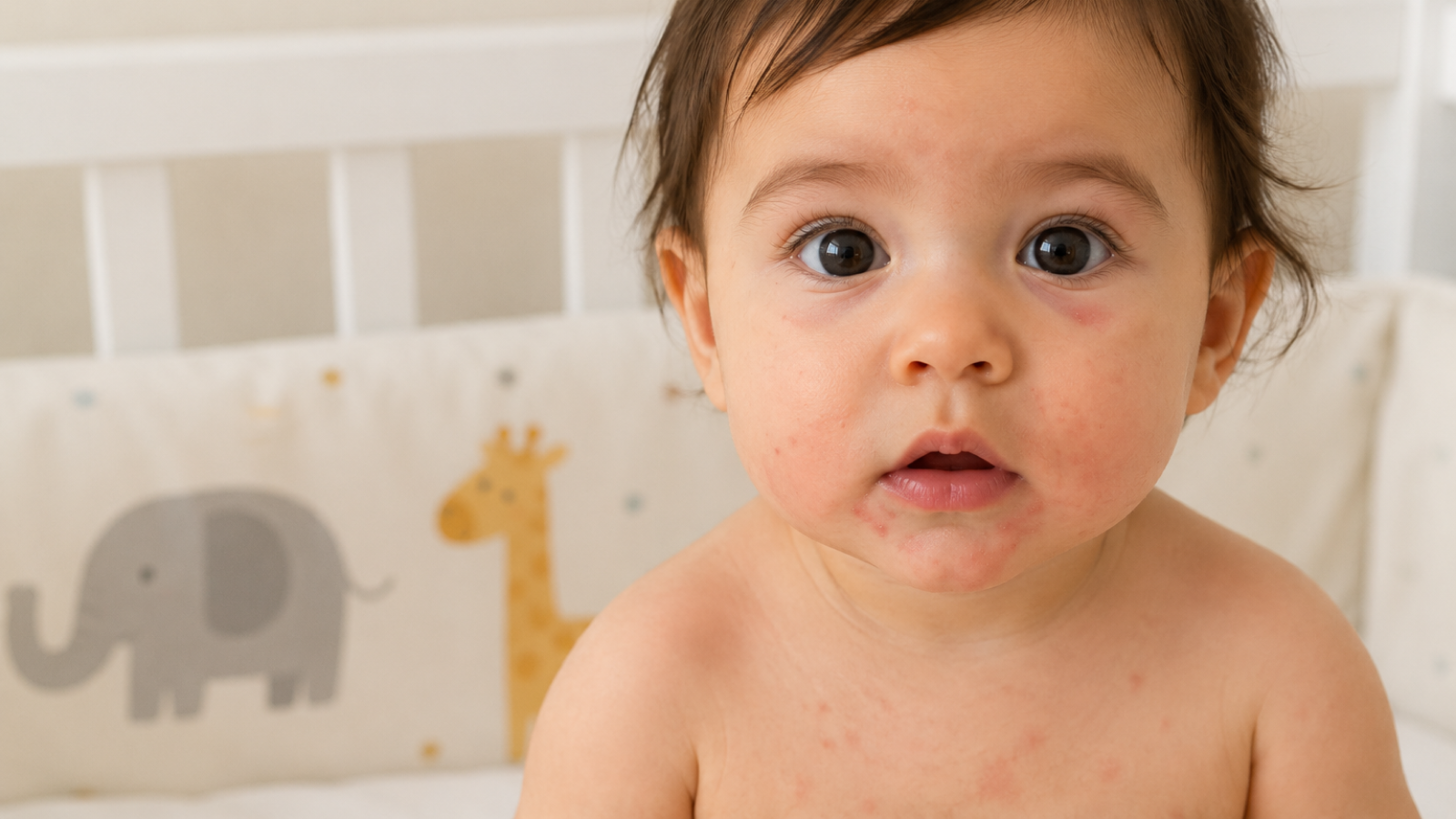
Your child has a fever – and suddenly you notice a rash on their skin. Many parents immediately wonder: Is this harmless, or does my child need to see a doctor right away?
First of all, it's important to know that a rash with a fever is relatively common in children. There can be various causes behind it – from typical viral infections to conditions that should be checked by a doctor soon. Therefore, it's not only important how the rash looks, but especially how your child is doing overall.
Why do fever and rash often occur together?
Many viruses initially cause a fever. The rash appears only after a few days.
Common causes include:
- Roseola (Three-day fever)
- Hand, foot, and mouth disease
- Fifth disease (Erythema infectiosum)
- Scarlet fever
- Other viral infections
A temporary fever with a rash can also occur after certain vaccinations.
However, the cause usually cannot be determined just by looking at the rash.
What should you pay attention to first?
More important than the color or shape of the spots is your child's overall condition.
Ask yourself, for example:
- Is my child drinking enough?
- Are they responding to me as usual?
- Are they breathing normally?
- Are they playing or cuddling in between?
- Do they seem overall stable or noticeably ill?
These observations often help more than a detailed description of individual spots.
What is often still normal with fever and rash
Depending on the infection, the rash can look very different.
Common examples include:
- Small red spots on the body
- Fine or slightly raised rash
- Rash that appears only after a few days of fever
- Skin changes without pain
- Mild itching
Many of these rashes disappear on their own after a few days.
When should you see a doctor?
A medical evaluation is advisable if:
- Your baby is younger than 3 months and has a fever of 38.0 °C or higher
- Your child seems very ill overall
- The rash increases rapidly
- Your child is hardly drinking
- Severe pain occurs
- Blisters, open sores, or significant swelling develop
- The rash persists or worsens significantly
If you are unsure or the course seems unusual, you should seek medical advice.
When is immediate medical help necessary?
Some warning signs require immediate medical assessment.
These include:
- Dark red or purple spots that do not fade when pressed
- Breathing difficulties
- Extreme drowsiness or apathy
- Seizures
- Stiff neck
- Strong refusal to drink
- Pale or bluish skin
If such symptoms occur, you shouldn't wait.
What can you do at home?
If your child seems stable overall and shows no warning signs, simple measures usually help.
These include:
- Offering plenty of fluids
- Allowing rest
- Monitoring fever and general condition
- Avoiding additional irritation to the skin
- Watching for new changes
Try not to focus solely on the rash, but keep an eye on your child as a whole.
Good to know
Many rashes with fever are caused by harmless viral infections and heal without consequences. The key is not to recognize every rash yourself, but to notice warning signs in time. If your child drinks well, responds to you, and seems stable overall, this often indicates an uncomplicated course. If the condition worsens or warning signs appear, your child should be examined by a doctor promptly.