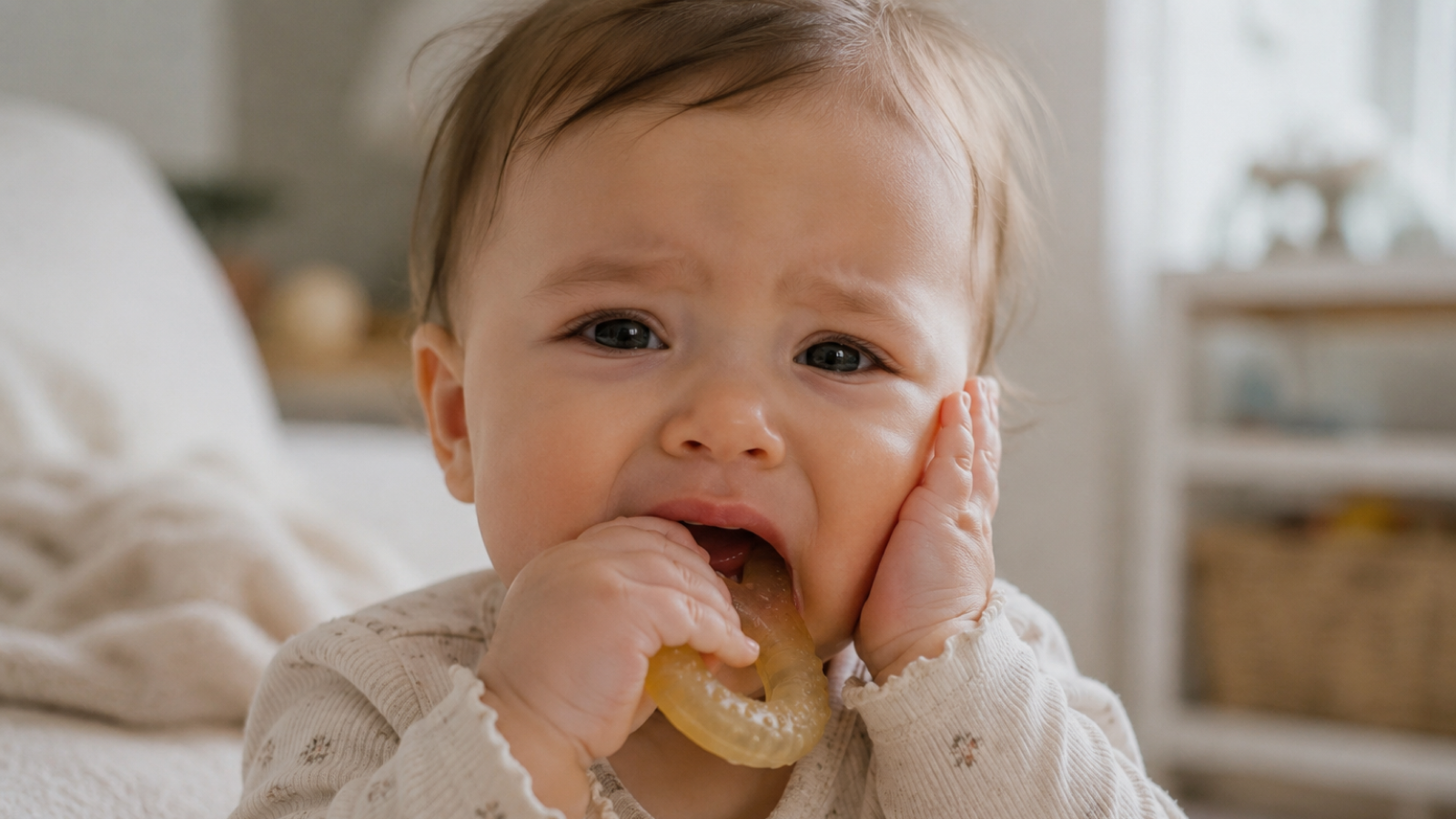
Many parents eagerly await their baby's first tooth – and at the same time, the first restless nights often begin. The baby suddenly drools more, constantly puts their hands in their mouth, sleeps poorly, and seems fussier than usual. The question quickly arises: Is all of this due to teething?
During this phase, many parents also wonder:
- Can teething cause a fever?
- Why is my baby suddenly sleeping worse?
- Is all this drooling normal?
- Or could there be an infection behind it?
Teething can cause some typical discomforts. At the same time, many symptoms are attributed to it that often have other causes. Therefore, it's crucial not only to consider whether a tooth is coming in but also whether the symptoms fit a normal teething phase overall.
How can you tell if your baby is teething?
The first baby teeth usually appear between the 4th and 7th month of life. Some babies get their first tooth a bit earlier, others not until after their first birthday. Both can be normal.
Typical signs include:
- increased drooling
- frequent chewing on fingers or toys
- red or slightly swollen gums
- a stronger urge to bite on things
- more need for closeness and quicker fussiness
- more restless falling asleep or staying asleep
These discomforts often begin a few days before the tooth breaks through and usually subside afterward.
Common teething discomforts
Not every baby reacts the same way. Some hardly notice teething, while others sleep worse or are noticeably clingier for a few days.
Common issues include:
- more restless nights
- waking up more frequently
- increased drooling
- sensitive gums
- reduced appetite
- increased need to chew
- more need for cuddles and closeness
As exhausting as this phase can be, these changes are usually temporary and are part of normal development for many babies.
Can teething cause a fever?
This is one of the most common questions from parents.
During teething, the body temperature can be slightly elevated. However, true fever is not a typical symptom of teething.
If your baby has a temperature of 38.5 °C or higher or seems generally unwell, it's often more likely due to an infection than the new tooth.
Why do many babies sleep worse during teething?
When a tooth pushes through the gums, it can be uncomfortable. Many babies then find it harder to fall asleep, wake up more often, or seek more closeness at night.
However, this doesn't mean that sleep has permanently changed. Once the tooth has broken through, nights often become calmer again for many children.
What can help your baby during teething?
Unfortunately, there's no quick fix. However, simple measures can often help:
- a cooled teething ring (not frozen)
- a clean, cooled washcloth for chewing
- gentle gum massage with a clean finger
- lots of closeness and physical contact
- cool foods if your baby is already eating solids
- plenty of fluids
Amber necklaces or home remedies like alcohol on the gums are not recommended. According to current knowledge, they do not help and can even be dangerous.
If your baby is in severe pain, talk to your pediatrician about which age-appropriate pain relief options are available.
Symptoms that are likely not just from teething
Many infections happen to coincide with the time when the first teeth appear. Therefore, teething is often blamed for symptoms that actually have another cause.
You should not simply attribute the following symptoms to teething:
- Fever above 38.5 °C
- severe cough
- pronounced runny nose
- repeated vomiting
- persistent diarrhea
- significant refusal to drink
- noticeable lethargy or severe pain
If such symptoms occur or your baby seems generally unwell, a pediatric evaluation is necessary.
In summary
Teething can temporarily make your baby more restless. More drooling, a need to chew, poorer sleep, or a greater need for closeness are common. High fever, severe cough, or an overall sick appearance usually indicate an infection rather than the next tooth. It's important to consider the overall picture—not just the tooth that's coming through.